
About Orris S. Ferry
Lived 1823 – 1875 (aged 52). Orris S. Ferry was an American politician, military officer, lawyer and judge.
Orris Sanford Ferry (August 15, 1823 – November 21, 1875) was a Republican American lawyer and politician from Connecticut who served in the United States House of Representatives and the United States Senate. He was also a brigadier general in the Union Army during the American Civil War.
Early life Ferry was born on August 15, 1823, in Bethel, Connecticut. He attended the Hopkins School, and worked at his father's shoe factory as a boy. and was a member of Skull and Bones. He graduated in 1844. Ferry first settled in Fairfield, Connecticut, where he studied law under Thomas B. Osborne. He then settled in Norwalk, Connecticut, and served in the office of Thomas B. Butler. Ferry married Charlotte Bissell, the daughter of Governor Clark Bissell. He was admitted to the bar in 1846. Ferry also served on the Committee of Revolutionary Claims.
On July 23, 1861, he was put in command of the 5th Connecticut Volunteer Infantry, and given the rank of colonel. The original regiment was the 1st Regiment Colts Revolving Rifles of Connecticut and was supposed to be led by Samuel Colt, but the unit never took the field. In early March 1862, Ferry led his troops across the Potomac River, and attacked the Confederates at Winchester, Virginia.
Battle of Cedar Mountain
Shortly after the First Battle of Winchester, Ferry and the 5th Connecticut Infantry were put under the command of Maj. Gen. Nathaniel Banks. On August 9, Ferry, under Banks, encountered Stonewall Jackson at the Battle of Cedar Mountain. Later that day, Union reinforcements under Maj. Gen. John Pope arrived. This led to a two-day stand-off between the two armies. The battle ended in a Confederate victory.
Services and resignation During the war, Ferry served in the VII Corps, X Corps, and XVIII Corps. He was also the head of the District of Lehigh, from August 20, 1863, until May 1864, and served as the head of the District of Philadelphia from December 16, 1864, until July 15, 1865. Ferry was brevetted a major general of volunteers in recognition of his services during the Peninsula Campaign. In 1872, Ferry was reelected for a second term. His main supporters were Democrats and Liberal Republicans. In 1873, Congressman Sidney Clarke, who assisted in Caldwell's election, testified that Caldwell's campaign had claimed that it would pay $250,000 to secure the election. Kansas Governor Thomas Carney testified that he was paid $15,000 to drop out of the race. An investigation followed; its final report asked the Senate to expel Caldwell for not being "duly and legally elected". On March 21, 1873, Ferry took to the floor of the Senate and gave a speech asking the Senate to expel Caldwell: "The crime of bribery goes down to the very foundations of the institutions under which we live. We all know it and ... we shall stifle our consciences if we do not vote to expel." After a survey of the Senate, Caldwell saw his inevitability of being expelled, and resigned, on March 23.
Later Senate career In 1874, Ferry gave a speech against the future Civil Rights Act of 1875. After speaking, Senator Charles Sumner, both a friend of Ferry's and the proposer of the bill, stood up and said, "Mr. Ferry, your speech is far the most damaging blow my measure has yet received". The Civil Rights Act would eventually pass, but was deemed unconstitutional by the Supreme Court, on the basis that Congress did not have the power to regulate the conduct of individuals. His last speech in Congress was considered an uncommonly eloquent dissertation on his former friend, William Alfred Buckingham.
Death After his final speech, Ferry left the capital for a new medical treatment. The treatment was to help heal his decaying spine, but the procedure failed. On November 20, 1875, Ferry's friends and doctors helped take him home. He died of his spine disease the next day. His funeral was attended by dignitaries such as Schurz. Ferry was interred at Union Cemetery in Norwalk.
Don’t just read it —
keep it.
Full-length biographies made to live with: read them, listen on the way to work, watch them tonight.
- E-book
- Audio
- Video
Instant download · yours to keep · every purchase keeps this site free
Important facts
People in Orris S. Ferry's life
Named in this biography and alive at the same time

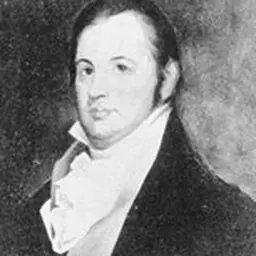
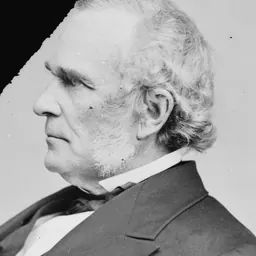
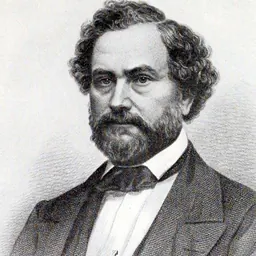
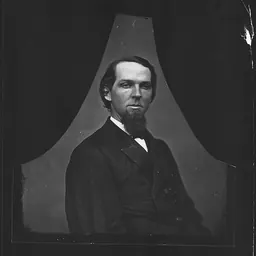

Related people
Same field, nearest in time



Contemporaries
People whose lives overlapped Orris S. Ferry's




Frequently asked questions
Who was Orris S. Ferry?
Union Army general (1823-1875)
When was Orris S. Ferry born?
Orris S. Ferry was born on 15 August 1823 in Bethel.
When did Orris S. Ferry die?
Orris S. Ferry died on 21 November 1875 in Norwalk.
What was Orris S. Ferry's occupation?
Orris S. Ferry was a politician, military officer, lawyer and judge.
What nationality was Orris S. Ferry?
Orris S. Ferry was American.
Sources & further reading
Cite this page
APA: Biography.guide. (2026). Orris S. Ferry. https://biography.guide/orris-s-ferry/
MLA: "Orris S. Ferry." Biography.guide, https://biography.guide/orris-s-ferry/.
Chicago: "Orris S. Ferry." Biography.guide. https://biography.guide/orris-s-ferry/.
Data last updated: 2026-09-20 · Spot an error? Report a correction.
Page generated 2026-09-27 05:18 UTC