
About Omar Dokka
Lived 1964 – 2013 (aged 49). Omar Dokka was a Russian politician.
Early life Umarov was born in April 1964 in the small village of Kharsenoi (Kharsenoy) in the southern Shatoysky District region of the Chechen–Ingush Autonomous Soviet Socialist Republic, into what he described as an intelligentsia family According to some sources, Umarov might have been convicted during his teenage years between 1980 and 1982 for either hooliganism, negligent homicide, or manslaughter. including all of his immediate family, have been kidnapped by "unidentified armed men"; some were promptly released, but the others have disappeared and may be dead.
Shortly after the Beslan hostage-taking raid in 2004, during which Umarov's close relatives were held for several days at Khankala military base near Grozny,
Umarov's wife and son were later freed, but his elderly father and the younger brother both "disappeared"; in April 2007, Umarov stated that his father had been murdered in captivity. In August 2005, Umarov's sister, Natalia Khumaidova, was abducted in the Chechen town of Urus-Martan; she was released days later, after local residents protesting for her return rallied and blocked a federal highway.
Following the Khasav-Yurt Accord that ended the war in 1996 and the presidential election of Aslan Maskhadov in January 1997, Umarov was named by Maskhadov to head the Chechen Security Council, tasked with helping to contain growing chaos in the ruined republic. In that position, he intervened in July 1998 to quash armed clashes between Chechen moderates and Islamic extremists in the city of Gudermes. In early 2000, Umarov sustained a serious wound to his face and jaw as he was leaving the surrounded Grozny, and was hospitalized in a neutral country, probably Georgia He was regarded as an ally of Shamil Basayev, then based in the south-eastern Vedensky District.
In 2003, Umarov led his men in the heavy fighting around the town of Shatoy and, according to the Russian sources, ordered the bombing of Ingushetia's FSB headquarters in the Ingush capital of Magas and the attack on electrical infrastructure facilities in the city of Kislovodsk in Stavropol Krai. After Gelayev's death in February 2004, many of his remaining men joined Umarov's group. The next summer, together with Basayev, Umarov was one of the leaders of a large-scale raid by Chechen and Ingush fighters that killed scores of Ingushetia's officials and members of the security forces and briefly seized control over the republic's largest town, Nazran.
Through 2005, there were numerous inaccurate reports of Umarov's death or grave injury. In January, he was reported to have been killed in a gun battle with Russian special forces near the Georgian border. In March, he was reported to have been seriously wounded by a Spetznaz assassination team. In September, the MVD announced it had found "Umarov's grave", and the following month, in October, he was once again falsely reported dead in the rebel raid on Nalchik, the capital city of Kabardino-Balkaria. On 2 June 2005 he was appointed as the vice president of the separatist government of the Chechen Republic of Ichkeria (ChRI).
Chechen presidency As Vice President of Ichkeria, Umarov was automatically elevated to the position as supreme leader of the ChRI following the death of President of Ichkeria Sheikh Abdul-Halim Sadulayev on 17 June 2006. Having become president, Umarov held such posts as the head of the State Defense Council; Amir (commander) of the Madzhlis Shura of the Caucasus; Supreme Commander of the Armed Forces of the Chechen Republic of Ichkeria; and finally, Amir of the Mujahideen of the Caucasus. In his first published comments since assuming the role of president, Umarov vowed to expand the conflict to "many regions of Russia", praised his predecessor Sadulayev, indicated that a special unit was being formed to fight Chechnya's "most odious traitors" (a remark believed to refer to pro-Moscow Chechen leaders) and stressed that Chechen fighters and their allies would attack only military and police targets within Russia, including in the newly declared Urals and Volga Region Fronts.
On 27 June 2006, Umarov appointed the maverick Chechen commander Shamil Basayev to the position of vice-president of the separatist government, simultaneously releasing him from his position as first deputy prime minister. However, Basayev was killed soon afterward, in July 2006. In October 2007, Umarov posthumously restored the disgraced field commander Arbi Barayev to the rank of brigadier general, which had been stripped by Maskhadov in 1998; this was a considered especially strange move given Barayev's infamy and reputed close links with the FSB.
On 18 August 2006, Umarov was falsely announced to have surrendered at the Gudermes residence of Ramzan Kadyrov, the Russian-backed leader of Chechnya, under a Russian amnesty provision enacted after Basayev's death. However, Russian authorities later reversed it to a claim of surrender of Umarov's "younger brother and former head of bodyguards". Umarov maintained he has no younger brother and the later reports identified the alleged surrenderee as Doku's older brother, Akhmad, instead. Chechen separatists said that the older Umarov had disappeared two years before when he supposedly gave up and called it "a PR stunt". Umarov previously called the amnesty as "a hopeless attempt by the Kremlin regime to shroud the real situation in lies."
On 23 November 2006, large numbers of Defense Ministry and FSB troops, without the participation of Chechen police, supported by helicopters and artillery barrages, were reported to have surrounded Umarov and his forces in a forest near the village of Yandi-Katar in the Achkhoy-Martanovsky District, on the internal border between Ingushetia and Chechnya. According to Kommersant, Umarov was wounded in the operation but managed to escape the pursuit. He spent the winter months traveling across the mountains to the nearby republic of Kabardino-Balkaria to meet with local jamaats fighting Russian authorities in the region and consolidate the Caucasian Front, the pan-Caucasian Islamic militant network set up by Sadulayev. In April 2007, a group of fighters that might have been personally led by Umarov shot down a special forces helicopter with the Spetsnaz GRU troops near Shatoy, killing at least 18 Russian soldiers.
Leadership of the Caucasus Emirate On 7 October 2007, Umarov proclaimed the Imarat Kavkaz (Caucasus Emirate, aimed at uniting Northern Caucasus into a single Islamic state) and at once declared himself its Emir, thereby converting the Chechen Republic of Ichkeria into a vilayat (province) of the new emirate, which would encompass several other republics of Russian Federation. The move to establish the Emirate was quickly condemned by Akhmed Zakayev, by then until recently Umarov's own minister of foreign affairs. Zakayev, living in exile in London, called upon all separatist fighters and politicians to pledge allegiance directly to the Chechen parliament in an attempt to isolate his former subordinate from power. Zakayev expressed regret that Umarov had caved to pressure from "provocateurs" and committed a "crime" that undermines the legitimacy of the ChRI. In a one-day period two former senior field commanders, Isa Munayev and Sultan Arsayev, issued statements publicly siding with Zakayev and distancing themselves from Umarov. However, all of the prominent active field commanders in Chechnya, with the sole exception of Amir Mansur (Arbi Evmirzayev, the leader of the Islamic Jamaat of Chechnya who was killed in 2010) and some small-time commanders (such as Amir Khamza of the Islamic Brigade of Chechnya and Amir Surkho of the Staraya Sunzha Sabotage Group), had sided with Dokka Umarov on the decision.
Prominent Radio Liberty journalist Andrei Babitsky reported in November 2007 that Umarov had again travelled to Kabardino-Balkaria to rest and recuperate for the winter months. Babitsky said that Umarov was in a poor state of health after taking a fragmentation wound to his mandible (it is possible Umarov received the wound in 2006 when he broke out of a Russian encirclement on the Chechen/Ingush border
On 9 May 2009, Kadyrov claimed Umarov had been reportedly severely wounded and that four of his bodyguards were killed in an operation commanded by Kadyrov's cousin and deputy, Adam Delimkhanov. Early rumors claimed Umarov had been killed, and in June the Russian authorities forensically examined the four burned corpses to see whether they included that of Umarov. The next month, however, Umarov himself phoned the Radio Free Europe/Radio Liberty to say he is alive; and in an interview conducted in July 2009 with Prague Watchdog Umarov claimed that the last time he had been wounded was in 1995 during the First Chechen War. Umarov's possible death was reported once again in March 2011, when Russian government said an air strike and special forces raid on a rebel base in Ingushetia killed 17 Chechen and Ingush militants including his deputy Supyan Abdullayev, but Umarov's body was not found there too.
On 1 August 2010, the Russian Islamist website Kavkaz Center claimed Umarov had officially announced his resignation for health reasons and appointed his military deputy Aslambek Vadalov as his successor. He appointed Vadalov saying "that jihad should be led by younger and more energetic commanders." Although he added that he would "continue to wage jihad and will do his utmost to help the new leadership. [Stepping down] does not mean that I give up jihad. I will do whatever I can by word and deed." On 4 August, he contradicted the claim issued by him on video saying "Due to the situation in the Caucasus I consider that it is impossible for me to quit my duties. The previous declaration is annulled. It is a falsification. I declare that my health is good to serve Allah. And I will serve the word of Allah and work to kill the enemies of Allah in all the time that he gives me to live on this earth." He called the initial video a "fabrication," but did not say why there was a conflict. Later in 2010, Vadalov and the Arab mujahid Muhannad attempted to overthrow Umarov as the leader of the Caucasus Emirate. The "supreme judge" of the group, Sayfullah and Emir Adam, the "governor of Ingushetia province", continued to support Umarov. Umarov blamed the split in the organization for Muhannad, who was killed by Russian forces in April 2011, paving the way for re-unification. In July 2011, the insurgents' supreme Islamic court ruled in favour of recognizing Umarov as the leader of the Caucasus Emirate. Umarov then warned Russia that it would be the target of a new strengthened insurgency as he promised a year of "blood and tears" as a result of the new unity.
On 16 January 2014, Kadyrov claimed Umarov had been killed by Russian government forces and that his grave was being sought. On 18 March 2014, the Kavkaz Center announced Umarov had been "martyred". It reported that the Command of the Caucasus Emirate confirmed Umarov's death but did not offer further details, which might indicate his death either in battle or of natural reasons. ) was reportedly named as his successor. According to circulating rumors, Umarov might have been poisoned while visiting a rebel winter base in Chechnya during the fall 2013, or killed by an artillery strike also during that same period. The FSB's National Anti-Terrorism Committee issued the following statement: "Foreign media periodically publish information about the liquidation of Doku Umarov, but the Russian special services at this moment do not have such information and will not comment on it." On 18 July 2014, a photo showing the dead body of Umarov was published on the Instagram account of head of the Chechen Republic Ramzan Kadyrov. The photo came from a militant video showing the burial of Umarov.
Attitudes towards targeting civilians Although Umarov announced in 2006 an end to violence against civilians, three years later, in 2009, he stated he does not believe there are any civilians in Russia, but that civilian casualties would be limited as much as possible. Umarov's controversial appointment of Basayev to the post of prime minister in 2006 was preceded by a public statement rejecting attacks against civilians as a tactic. In another statement in 2004 Umarov wrote: "Our targets are the Russian occupation forces, their military bases, command headquarters and also their local collaborationists who pursue and kill peaceful Muslims. Civil objects and innocent civilians are not our targets." In a July 2009 interview with Prague Watchdog, when asked if people should expect a repetition of events like the Moscow hostage crisis, Umarov responded: "If that is the will of Allah. Shamil [Basayev] did not have the opportunities I have right now. […] As far as possible we will try to avoid civilian targets, but for me there are no civilians in Russia. Why? Because a genocide of our people is being carried out with their tacit consent." In December 2009, the Caucasus Emirate (via Kavkaz Center) took responsibility for the derailment of Nevsky Express, an "act of sabotage" which claimed the lives of 28 people (including government officials and Russian business executives), reportedly ordered by him personally.
In January 2010, in a statement about the upcoming "military actions", Umarov said the re-created Riyad-us-Saliheen Brigade of Martyrs will now operate in the Russian cities outside the Caucasus and "the war will come to their homes", possibly indicating the new wave of bombings such as those conducted by the group in Moscow and elsewhere in 2002–2004 under Basayev's orders. He warned that more attacks were to come on Russian soil because of perceived repressions of Chechnya by Prime Minister Putin. His practice of claiming responsibility for such attacks resulted in some media dubbing him "Russia's bin Laden."
On 3 February 2012, Umarov made an about-face again. In a video posted online, ordered his subordinates to halt attacks on the civilian population of Russia, while leaving military and security personnel as legitimate targets. Umarov gave this order in response to nationwide protests against the Russian government. In June 2013, however, Umarov, accompanied by his deputy Aslan Byutukayev, called for his followers in and outside the Caucasus (in particular in Tatarstan and Bashkortostan) to use "maximum force" to ensure the 2014 Sochi Winter Olympics do not take place, claiming that Russia's "barbaric actions" in the region had forced him to retaliate. Umarov said: "Today we must show those who live in the Kremlin […] that our kindness is not weakness. They plan to hold the Olympics on the bones of our ancestors, on the bones of many, many dead Muslims buried on our land by the Black Sea. We as mujahideen are required not to allow that, using any methods that Allah allows us." Russian state mass media did not report his threat, but Russia's anti-terrorist committee said it was taking measures to "protect Russian citizens" and was "paying special attention to questions of preparation for hold major sporting events of a global scale" while the Sochi 2014 Organising Committee announced that security would be a top priority.
Legal status Doku Umarov was regarded as the most-wanted man in Russia and was put by the Russian police on Interpol's international wanted list. In March 2008, Chechnya's chief prosecutor, Valery Kuznetsov, launched a criminal case against Umarov for "inciting inter-ethnic hatred and calling for the overthrow of the Russian government on the Internet" (the penalty for this being just a fine of up to 500,000 rubles and a ban on holding management positions). According to Kommersant, Umarov was earlier on Russia's wanted list, but all the previous and much more serious charges against him (involvement in acts of terrorism, kidnappings for ransom, murders and robberies) were suspended in 2005. The paper noted that the Zakayev-led Chechen separatist government in exile was investigating Umarov for "attempting to liquidate the independent Chechen state" by declaring the creation of the Caucasus Emirate. The Caucaus Emirate itself has been officially labeled by Russia as a terrorist organization since January 2010.
Since 10 March 2011, Umarov has been on the United Nations Security Council's Al-Qaida and Taliban Sanctions Committee list of individuals allegedly associated with al-Qaeda and the Taliban for "participating in the financing, planning, facilitating, preparing, or perpetrating of acts or activities by, in conjunction with, under the name of, on behalf of, or in support of, recruiting for, supplying, selling or transferring arms and related materiel to and otherwise supporting acts or activities of" his own organizations (the Caucasus Emirate and its Brigade of Martyrs suicide attack wing) as well as Uzbekistan's Islamic Jihad Union and the Islamic Movement of Uzbekistan. The reward was announced in a joint statement of U.S. President Barack Obama and Russian President Dmitry Medvedev on cooperation in counterterrorism. U.S. Assistant Secretary of State for Public Affairs Philip J. Crowley also published a statement stating that "the action taken today against Umarov supports the U.S. effort to degrade Umarov's ability to exert operational and leadership control over Caucasus . We are determined to eliminate the group's ability to direct violent attacks and to disrupt, dismantle, and defeat Umarov's network."
On 8 April 2014, the director of the Russian Federal Security Service Alexander Bortnikov confirmed the earlier announcement of Kavkaz Center made on 18 March of the same year about Umarov's death.
Umarov was removed from the US State Department's Rewards for Justice list in April 2014. According to the website, "Suspects may be removed from the RFJ list for a variety of reasons, including when they are taken into custody by law enforcement or security forces, or are confirmed dead by an official authoritative source."
Religious beliefs and world views "Barely religious until late in life", Umarov used to be known as practitioner of the region's "traditional Islam", as opposed to "Wahhabis". In 2006, responding to Russian claims that he was an Islamic extremist, he described himself as a "traditionalist" and said: "Before the start of the first war in 1994, when the occupation began and I understood that war was inevitable, I came here as a patriot. I'm not even sure I knew how to pray properly then. It's ridiculous to say I'm a Wahhabist or a radical Muslim." Umarov denied that Chechen separatism is linked to al-Qaeda or any other international jihadi groups, saying that the rebels' priority is liberty and independence from Russia and peace for the Caucasus. His deputy Anzor Astemirov later recalled how Umarov told them that "of course we must rely on Allah, not on England, not on America, not on the West, not on anyone except Allah, and we must get rid of all these delusions." In the video in which Umarov claimed responsibility for the Domodedovo International Airport bombing, he criticized the United States and Russia as hypocrites for not following their own principles and surrendering world power to China due to the senior status of Chinese culture. In March 2013, Umarov urged the Chechen diaspora members to not get involved in the Syrian civil war and instead to join his forces in the North Caucasus. The ideology that Umarov espoused from the declaration of the Caucasus Emirate until his death would describe him as a Salafist-Takfiri jihadist.
Don’t just read it —
keep it.
Full-length biographies made to live with: read them, listen on the way to work, watch them tonight.
- E-book
- Audio
- Video
Instant download · yours to keep · every purchase keeps this site free
Important facts
People in Omar Dokka's life
Named in this biography and alive at the same time

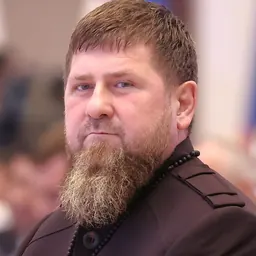
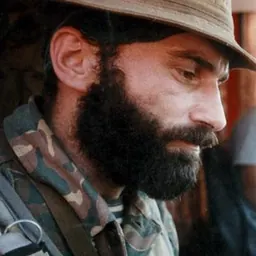
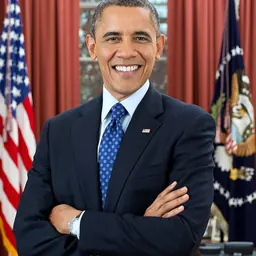
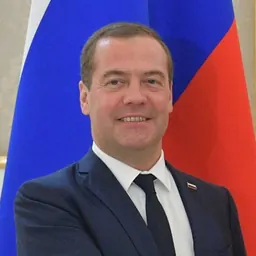
Related people
Same field, nearest in time




Contemporaries
People whose lives overlapped Omar Dokka's


Frequently asked questions
Who was Omar Dokka?
Chechen warlord (1964-2013)
When was Omar Dokka born?
Omar Dokka was born on 13 April 1964 in Kharsenoi.
When did Omar Dokka die?
Omar Dokka died on 7 September 2013 in Caucasus.
What was Omar Dokka's occupation?
Omar Dokka was a politician.
What nationality was Omar Dokka?
Omar Dokka was Russian.
Sources & further reading
Cite this page
APA: Biography.guide. (2026). Omar Dokka. https://biography.guide/omar-dokka/
MLA: "Omar Dokka." Biography.guide, https://biography.guide/omar-dokka/.
Chicago: "Omar Dokka." Biography.guide. https://biography.guide/omar-dokka/.
Data last updated: 2026-09-20 · Spot an error? Report a correction.
Page generated 2026-09-27 05:16 UTC