
About Omar Cáceres
Lived 1904 – 1943 (aged 39). Omar Cáceres was a Chilean poet.
Luis Omar Cáceres Aravena (Cauquenes, July 5, 1904–Renca, c. September 6, 1943),Refn|While these are the most widely accepted dates of his birth and death, some sources also indicate he may have been born in 1905
His only book, Defensa del ídolo (1934), caused a great impact in its time, In 1996, the work was rescued by Pedro Lastra, from the few surviving copies of the first edition. This reissue allowed for greater access to his work. Cáceres is now considered one of the leading figures of in Chile. He had at least one brother, Raúl Cáceres Aravena, who worked as a Spanish-language teacher at the Liceo de Viña del Mar.
He began his Law studies in 1922, which he ultimately left unfinished. Of a rather reserved personality, generally solitary and distant, The following year, in 1935, he was included in the controversial anthology by Anguita and Teitelboim, , This is the only known surviving prose text by the author, while Teitelboim suggested he may have immersed himself in hostile environments, disparagingly known as "lumpen."
In the first week of September 1943, under circumstances that remain unclear, his body was found in a rural ditch in the commune of Renca, in the northwestern sector of Santiago, with his head broken and his pockets empty. while others believe Cáceres took his own life by jumping into the San Carlos Canal. which was then beginning its second period of existence, after twenty years of inactivity.
Rediscovery of his work In October 1996 the first reissue of Defensa del ídolo appeared, prepared by the poet Pedro Lastra, who edited it from the few copies that survived the bonfire and were preserved by the National Library of Chile. and Venezuela.
In 2011, the National Library of Chile acquired a valuable collection of additional documents, including unpublished manuscripts, personal correspondence, and original photographs of the author. such as the Chilean Andrés Sabella
Style Carl Gustav Jung, founder of analytical psychology. has written extensively about the search, in Cáceres's poems, for the "Self," the central archetype of the collective unconscious. According to general critical consensus, his work corresponds to his own personality: introspective and hermetic, profound, questioning, lucid, refined, and in a constant state of exploration.
Framed within , his poems contain esoteric, Freudian, and pantheistic elements, along with violence, dehumanization, and the disintegration of the "poetic I." Indeed, rather than a search for the "I," associated with the ego, Cáceres sought to point instead to the "Self," in a Jungian sense, to which the former is subordinate.
Works
Poetry
1934: Defensa del ídolo
In anthologies
1931: (ed. ) 1935: (ed. Eduardo Anguita and Volodia Teitelboim)
In magazines
1955: Hacia (no. 5, September; ed. Andrés Sabella)
About the author
Later included in:
Don’t just read it —
keep it.
Full-length biographies made to live with: read them, listen on the way to work, watch them tonight.
- E-book
- Audio
- Video
Instant download · yours to keep · every purchase keeps this site free
Important facts
People in Omar Cáceres's life
Named in this biography and alive at the same time
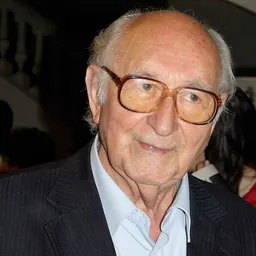

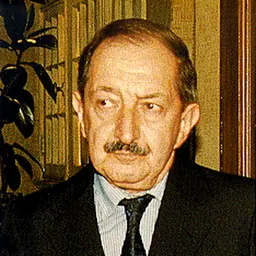
Related people
Same field, nearest in time

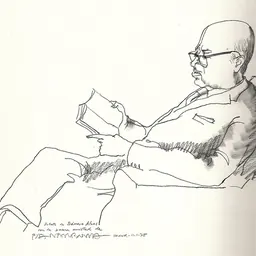
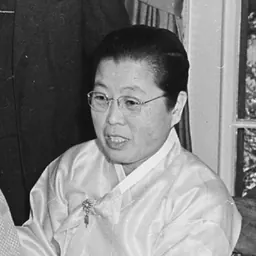
Contemporaries
People whose lives overlapped Omar Cáceres's





Frequently asked questions
Who was Omar Cáceres?
Chilean poet
When was Omar Cáceres born?
Omar Cáceres was born on 7 May 1904 in Cauquenes.
When did Omar Cáceres die?
Omar Cáceres died on 6 September 1943 in Renca.
What was Omar Cáceres's occupation?
Omar Cáceres was a poet.
What nationality was Omar Cáceres?
Omar Cáceres was Chilean.
Sources & further reading
Cite this page
APA: Biography.guide. (2026). Omar Cáceres. https://biography.guide/omar-caceres/
MLA: "Omar Cáceres." Biography.guide, https://biography.guide/omar-caceres/.
Chicago: "Omar Cáceres." Biography.guide. https://biography.guide/omar-caceres/.
Data last updated: 2026-09-20 · Spot an error? Report a correction.
Page generated 2026-09-27 05:23 UTC