
About Oluğ Möxämmät
Lived 1405 – 1445 (aged 39–40). Oluğ Möxämmät was a politician.
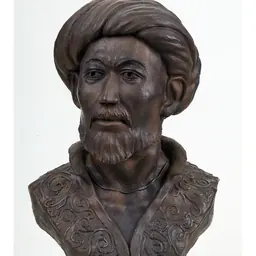
Ulugh Muhammad or Muhammad Khan (1405–1445; Chagatai, Volga Türki, and ; Kypchak/; written as by orientalists) was a medieval Tatar statesman, Genghisid, Khan of the Golden Horde (before 1436), ruler of Crimea, and the founder of the Khanate of Kazan, which he ruled from 1438–1445. He was the son of the oglan Ichkile Hassan and the cousin of Tokhtamysh. He received the nickname , meaning 'older' or 'large', in contrast to Küchük Muhammad, meaning 'younger' or 'small'.
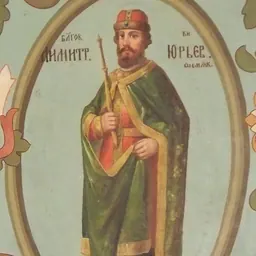
Ulugh Muhammad was Khan of the Golden Horde in 1419–1423, 1426, and 1428. In 1428–1432 he waged a stubborn struggle for possession of the Golden Horde with the representatives of a minor branch of the Tukaytimurids (one of the branches of the Gengisids). After being defeated, Ulugh Muhammad escaped to Volga Bulgaria vilayet in 1423. With the support of Vytautas, Ulugh Muhammad was able to regain the throne of the Golden Horde in 1426. He succeeded in spreading the power of the Horde to Crimea and established friendly relations with the Ottoman Sultan Murad II. Ulugh Muhammad sent an embassy to Egypt in 1428–1429. In 1431 the son and grandson of the ruler of Moscow, Dmitry Donskoy came to the court to Ulugh Muhammad in order to reach a decision about princely succession. Ulugh Muhammad ruled in favour of the grandson, Vasiliy II .
Family Ulugh Muhammad was most likely the son of Jalal ad-Din khan and the grandson of Tokhtamysh, although he may have been descended from Hassan Jefai, a relative of Tokhtamysh. Either way, he was a descendant of Jochi and therefore of Genghis Khan. Ulugh Muhammad's son Mustafa died fighting near Ryazan in 1444. His son Qasim Khan went to collect ransom after the battle of Suzdal, entered Russian service and in 1452 founded the Qasim Khanate. His son Mäxmüd of Kazan succeeded him.
Golden Horde Ulugh Muhammad first came to power following the death of Yeremferden. His main competitor for control of the Horde was his cousin Dawlat Berdi, the son of Yeremferden. For much of his reign Ulugh Muhammad controlled Sarai, and was therefore seen as the most legitimate ruler within the Horde, although Sarai was captured by his rival after the Siege of Sarai in 1420 and held by him for two years.
In 1422 Baraq Khan defeated both Ulugh Muhammad and Dawlat and drove them out of the country. While Dawlat remained in Crimea, Ulugh Muhammad fled to the Grand Duchy of Lithuania and pled for assistance from Vytautas the Great. With this assistance, he was able to march on Baraq and recapture Sarai.
After regaining control over the Khanate, Ulugh Muhammad marched on Crimea, where Dawlat Berdi had re-established himself following Baraq's defeat and death. After a series of indecisive skirmishes his invasion was cut short due to the death of Vytautas, which forced Ulugh Muhammad to concentrate his forces on Lithuania, where he supported Sigismund Kęstutaitis against Švitrigaila in the fight for the Lithuanian throne. Švitrigaila, in turn, supported Dawlat Berdi and later Sayid Ahmad I, as did Vasili II of Moscow.
Kazan Ulugh Muhammad lost control of the Golden Horde in 1436 and fled to Crimea. He quarreled with the Crimeans, led a 3000-man army north and took the border town of Belyov. In 1437 Vasili II of Moscow sent a large army against Ulugh Muhammad under the command of Dmitry Shemyaka, but they were defeated at the Battle of Belyov. Ulugh Muhammad subsequently moved to Volga and in 1438 captured Kazan, separating it from the Golden Horde. In 1439 he raided Muscovy, burning Kolomna and the outskirts of Moscow. Nothing is known of his life from 1439–1444, but in 1444–45 Ulugh Muhammad occupied Nizhny Novgorod and marched on Murom. Vasili II counterattacked in 1445 but was defeated and captured at the Battle of Suzdal, only to be ransomed. Ulugh Muhammad died a few months later, possibly murdered by his son Mäxmüd.
Genealogy Genghis Khan Jochi Tuqa-Timur Urung-Timur Saricha Tulaq-Timur Tuqa-Timur Toq-Timur Ali-Bek Tula-Timur Hassan Toq-Timur Ulugh Muhammad (1437–1446)
Children Mäxmüd of Kazan Yakub Yousuf Mostafa Qasim Khan
Don’t just read it —
keep it.
Full-length biographies made to live with: read them, listen on the way to work, watch them tonight.
- E-book
- Audio
- Video
Instant download · yours to keep · every purchase keeps this site free
Important facts
People in Oluğ Möxämmät's life
Named in this biography and alive at the same time



Related people
Same field, nearest in time



Contemporaries
People whose lives overlapped Oluğ Möxämmät's



Frequently asked questions
Who was Oluğ Möxämmät?
Khan of the Golden Horde
When was Oluğ Möxämmät born?
Oluğ Möxämmät was born in 1405.
When did Oluğ Möxämmät die?
Oluğ Möxämmät died in 1445 in Kazan.
What was Oluğ Möxämmät's occupation?
Oluğ Möxämmät was a politician.
Sources & further reading
Cite this page
APA: Biography.guide. (2026). Oluğ Möxämmät. https://biography.guide/olug-moxammat/
MLA: "Oluğ Möxämmät." Biography.guide, https://biography.guide/olug-moxammat/.
Chicago: "Oluğ Möxämmät." Biography.guide. https://biography.guide/olug-moxammat/.
Data last updated: 2026-09-20 · Spot an error? Report a correction.
Page generated 2026-09-27 05:29 UTC