
Oliver Edwards
Brevet major general in the Union Army during the American Civil War
About Oliver Edwards
Lived 1835 – 1904 (aged 69). Oliver Edwards was an American military officer and gardner gun.
Oliver Edwards (January 30, 1835 – April 28, 1904) was a machine company executive, an inventor, and a volunteer officer in the Union Army during the American Civil War.
Raised in Springfield, Massachusetts, Edwards moved to Illinois as a young man to pursue a career as a manager of manufacturing. At the start of the Civil War, he became adjutant of the 10th Regiment Massachusetts Volunteer Infantry and later aide-de-camp to Brigadier General Darius N. Couch. In the fall of 1862, he took command of the 37th Regiment Massachusetts Volunteer Infantry as colonel and led that unit through numerous major battles, including the Battle of Gettysburg. Just after Gettysburg, in July 1863, he was placed in command of a provisional brigade sent to assist in quelling the New York Draft Riots. During the Overland Campaign in the spring of 1864, he was placed in command of a brigade and, during the Valley Campaigns of 1864 he was briefly placed in command of a division of the VI Corps. For his service during these campaigns, Edwards was awarded the honorary rank of brevet brigadier general and later promoted to full grade brigadier general United States Volunteers. In 1866 he was awarded the honorary rank of brevet major general, United States Volunteers, to rank from April 5, 1865, for his service during the Appomattox Campaign.
After the war, Edwards returned to a career in manufacturing, most notably as manager of the Florence Machine Company in Northampton, Massachusetts and the Gardner Machine and Gun Company in England.
Civil War service
Adjutant and Aide-de-camp At the start of the Civil War in 1861, Edwards returned to Massachusetts with the intention to enlist as a private.
Edwards saw little action during his service with the 10th in the fall of 1861, the regiment being primarily occupied with building fortifications in the vicinity of Washington, D.C. at that time. In January 1862, Brig. Gen. Darius N. Couch, in command of the division to which the 10th Massachusetts belonged, asked Edwards to be his aide-de-camp. Edwards occupied this administrative position throughout the Peninsular Campaign and the Northern Virginia Campaign, assisting Couch in coordinating the movements of his division.
37th Massachusetts On August 9, 1862, Edwards was promoted to major and recalled to Pittsfield, Massachusetts to assist in organizing the 37th Massachusetts Infantry. As the regiment was still being organized, Edwards was promoted to colonel and command of the 37th Massachusetts.
Edwards had already seen numerous battles, but his first experience as a field commander in combat occurred during the Battle of Fredericksburg on December 13, 1862. His regiment played a minor role in the fight, however, as their brigade was held in reserve during the battle.
New York Draft Riots Federal troops fire on rioters in New York, 1863On July 30, 1863, the 37th Massachusetts became one of a small number regiments from the Army of the Potomac hand picked for duty in New York in the wake of the Draft Riots.
Brigade command Returning to the Army of the Potomac in October 1863, Col. Edwards and the 37th Massachusetts took part in the Mine Run Campaign, then settled into winter camp with the rest of the Army of the Potomac. In the spring of 1864, the 37th was engaged in the Overland Campaign, a rapid series of severe battles during which Lt. Gen. Ulysses Grant attempted to grind down the Confederate army and capture the Confederate capital of Richmond.
During the Battle of the Wilderness on May 6, 1864, Edwards was ordered to lead the 37th Massachusetts on a dangerous charge to check a Confederate advance and to provide cover for Brig. Gen. James S. Wadsworth's retreating division. Edwards led the 37th forward as they cleared of ground, only to be surrounded by Confederates. The retreat of the regiment was orderly, keeping up a constant fire under Edwards's direction; however, the regiment suffered 25 percent casualties during the engagement.
Maj. Gen. Phil Sheridan rallying troops at the Battle of Opequon, during which Edwards earned a promotion After the close of the Overland Campaign, in July 1864, Edwards's brigade was reorganized and became the 3rd Brigade, 1st Division of the VI Corps. Three divisions of the VI Corps were then transferred to the command of Maj. Gen. Philip Sheridan in the Shenandoah Valley and took part in the Valley Campaigns of the summer and fall of 1864.
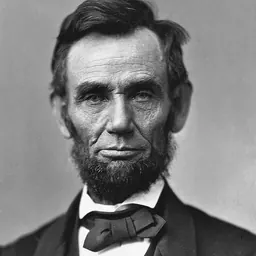
The turning point in this campaign for the Union Army came during the Battle of Opequon at Winchester, Virginia on September 19, 1864. During this engagement, Edwards was temporarily promoted to the command of the 1st Division of the VI Corps and performed well, earning the attention of Maj. Gen. Sheridan. Subsequently, Sheridan appointed Edwards the commandant of Winchester. On December 12, 1864, President Abraham Lincoln nominated Edwards for the award of the honorary grade of brevet brigadier general, United States Volunteers, to rank from October 19, 1864, for gallantry at the Battle of Spotsylvania and at the Battle of Opequon (Third Winchester). The U.S. Senate confirmed the award on February 14, 1865. When Sheridan embarked on his southward offensive through the Shenandoah Valley in October 1864, he asked Edwards to become his provost marshal general. However, Edwards preferred to retain command of his brigade and to return to the Army of the Potomac. However, the President did not present the nomination of Edwards for the promotion to the U. S. Senate until January 13, 1866. Although Edwards had been mustered out of the U.S. Volunteers on January 15, 1866, the Senate confirmed the promotion on February 23, 1866. On July 9, 1866, President Andrew Johnson nominated Edwards for the award of the honorary grade of brevet major general, United States Volunteers, to rank from April 5, 1865, for capturing Confederate Lieutenant General Richard S. Ewell, Major General Custis Lee, (son of Robert E. Lee), who was captured by David Dunnels White of the 37th Massachusetts Regiment, which was part of Oliver Edwards' command, and an entire brigade of Confederate soldiers at the Battle of Sayler's Creek, Virginia during the Appomattox Campaign. The U.S. Senate confirmed the award on July 23, 1866.
After the close of the war, Edwards continued his service in the army for the remainder of 1865 and was offered a permanent position in the Regular Army. He declined, however, resigned his commission on January 15, 1866, and was mustered out that day.
Post-war career After the war, Edwards returned to Warsaw, Illinois and his wife, Ann Eliza Johnston Edwards, whom he had married in September 1863 when on leave from the army. They had two children, John E. Edwards and Julia Katherine Edwards. He spent three years as postmaster in Warsaw and then returned to Massachusetts to continue his career in manufacturing.
In 1870, Edwards was hired by the Florence Machine Company in Northampton, Massachusetts and eventually became general superintendent of the company. During this time, Edwards patented a number of inventions, including the Florence ice skate and the Florence oil stove. He resigned his position with the Florence Machine Company in 1875 and returned to Warsaw, where he went into early retirement for several years. His plans changed, however, when he was offered the position of general manager of the Gardner Machine and Gun Company in England in 1882. The company manufactured Gardner guns, which had been invented in the United States but the rights to which were purchased by the British Army. Edwards managed the company for a few years; however, poor health required him to resign and return to Warsaw and retirement.
His remaining years were spent pursuing leisure interests and also supporting various organizations such as the Grand Army of the Republic. Edwards died in Warsaw on April 28, 1904.
Don’t just read it —
keep it.
Full-length biographies made to live with: read them, listen on the way to work, watch them tonight.
- E-book
- Audio
- Video
Instant download · yours to keep · every purchase keeps this site free
Important facts
People in Oliver Edwards's life
Named in this biography and alive at the same time


Related people
Same field, nearest in time




Contemporaries
People whose lives overlapped Oliver Edwards's




Frequently asked questions
Who was Oliver Edwards?
Brevet major general in the Union Army during the American Civil War (1835-1904)
When was Oliver Edwards born?
Oliver Edwards was born on 30 January 1835 in Springfield.
When did Oliver Edwards die?
Oliver Edwards died on 28 April 1904 in Warsaw.
What was Oliver Edwards's occupation?
Oliver Edwards was a military officer and gardner gun.
What nationality was Oliver Edwards?
Oliver Edwards was American.
Sources & further reading
Cite this page
APA: Biography.guide. (2026). Oliver Edwards. https://biography.guide/oliver-edwards/
MLA: "Oliver Edwards." Biography.guide, https://biography.guide/oliver-edwards/.
Chicago: "Oliver Edwards." Biography.guide. https://biography.guide/oliver-edwards/.
Data last updated: 2026-09-25 · Spot an error? Report a correction.
Page generated 2026-09-27 05:13 UTC