
About Oliver Brown
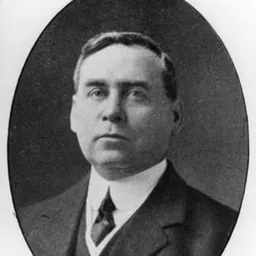
Lived 1903 – 1976 (aged 72–73). Oliver Brown was a journalist.
William Oliver Brown (1903 – 28 May 1976) was a Scottish nationalist political activist.
Early life Born in Paisley, Brown studied Latin and French at the University of Glasgow before teaching French at secondary schools, spending most of his career at Whitehill Secondary School and Pollokshields Secondary School. He contributed to both the English- and French-language editions of the Grand Larousse encyclopédique, and worked both as a courier for the British Council and a broadcaster on the BBC.
Early political activity Brown was a founding member of the National Party of Scotland in 1929. He stood for the party at the 1930 East Renfrewshire by-election, becoming the first National Party candidate to hold his deposit. Although he took 6,593 votes, on this occasion, it was just under one-eighth of the total, so he lost his deposit. He was a pacifist during World War II, and was active with Arthur Donaldson in discouraging young men from joining the Forces. In 1940, he launched the Scots Socialist journal, with Archie Lamont, Douglas Young, George Campbell Hay and Hugh MacDiarmid, acting as its editor until it ceased publication in 1949. Initially, the Scots Socialist was associated with the Scottish Secretariat Study Group, but by 1942, it was published in the name of Brown's own Scottish Socialist Party. It remained small, based around speeches he would give from his soapbox on the corner of Sauchiehall Street and Wellington Street in Glasgow, generally with fewer than ten supporters.
In 1945, Brown published Scotlandshire: England's worst governed province. In the introduction, he claimed that he was the best-known Scottish nationalist, with a record of opposing the closure of Scottish factories. At the 1950 general election, Brown stood in Greenock as an "Irish Anti-Partitionist and Scottish Nationalist", backed by the Irish Anti-Partition League, their Greenock branch being the largest in Scotland, with over 800 members. and took last place in the poll, with only 718 votes. Following the result, he claimed that "I appealed to the intelligent section of the electorate and the result shows that I have received their unanimous support".
Later political activity Brown became President of the Scottish National Congress in 1950, this SNP split being led by Roland Muirhead. However, he disapproved of its submission to the Royal Commission on Scottish Affairs and so resigned in 1954. That year, Brown claimed £3000 in damages from the Scottish Daily Mail, after it claimed that he was linked to an unsuccessful effort to blow up a new postbox marked "EIIR", in objection to the regnal number, the new queen being the first Elizabeth to rule in Scotland. He lost the case.
At the 1959 general election, the SNP selected Brown as their Prospective Parliamentary Candidate for Hamilton. However, with the election impending, he decided not to stand, claiming that it would be a waste of time and money. The SNP instead selected David Rollo to fight the seat, but Brown resigned from the party and instead became active in the Labour Party. In 1965, he applied for readmittance to the SNP, but this was rejected by the party's National Executive. He was enthused by the SNP's victory in the 1967 Hamilton by-election, quipping that it "caused a shiver to run along the Scottish Labour benches looking for a spine to run up". However, the club struggled, Boothby secretly founded a private army, and it ultimately dissolved into Siol nan Gaidheal.
Don’t just read it —
keep it.
Full-length biographies made to live with: read them, listen on the way to work, watch them tonight.
- E-book
- Audio
- Video
Instant download · yours to keep · every purchase keeps this site free
Important facts
People in Oliver Brown's life
Named in this biography and alive at the same time
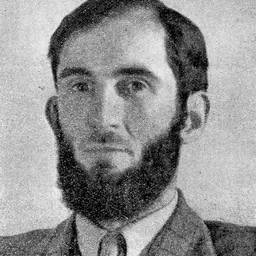




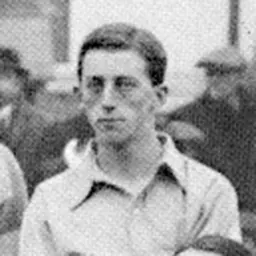

Related people
Same field, nearest in time
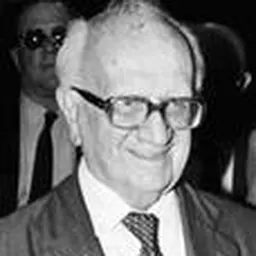
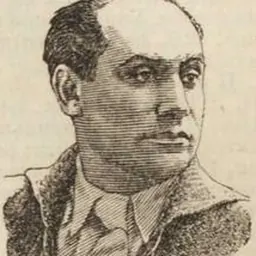




Contemporaries
People whose lives overlapped Oliver Brown's
Frequently asked questions
Who was Oliver Brown?
Scottish nationalist political activist
When was Oliver Brown born?
Oliver Brown was born in 1903.
When did Oliver Brown die?
Oliver Brown died on 28 May 1976.
What was Oliver Brown's occupation?
Oliver Brown was a journalist.
Sources & further reading
· DBpedia: Oliver Brown (Scottish activist)
Cite this page
APA: Biography.guide. (2026). Oliver Brown. https://biography.guide/oliver-brown-journalist/
MLA: "Oliver Brown." Biography.guide, https://biography.guide/oliver-brown-journalist/.
Chicago: "Oliver Brown." Biography.guide. https://biography.guide/oliver-brown-journalist/.
Data last updated: 2026-09-20 · Spot an error? Report a correction.
Page generated 2026-09-27 05:31 UTC