
Olha Kobylianska
Ukrainian writer and feminist
About Olha Kobylianska
Lived 1863 – 1942 (aged 78). Olha Kobylianska was an Austrian and Ukrainian writer, women's rights activist, opinion journalist, translator and feminist.
Olha Yulianivna Kobylianska (, ; 27 November 1863 – 21 March 1942) was a Ukrainian modernist writer, nationalist and feminist. A daughter of a Ukrainian nobleman and a Polonized German mother, Kobylianska was mainly self-educated, receiving only four years of formal schooling in the German language. She wrote her first works in German, beginning in 1880. Besides her fluency in German, she learned to speak in both the Ukrainian and Polish languages. Following the annexation of Bukovina to Soviet Ukraine, Kobylianska adopted Soviet citizenship, which resulted in her persecution following the return of Romanian authorities.
Biography
Origin
Kobylianska was born in Gura Humorului in Bukovina (now in Suceava County, Romania) in the family of a minor administration worker of Ukrainian noble descent from Central Ukraine. She was the fourth child of seven in the family of Maria Werner (1837–1912) and Yulian Yakovych Kobyliansky (1827–1912). She fell in love with Kobrynska's brother, Dr. Yevhen Ozarkevych.
In 1894, she became one of the initiators of the Association of Ruthenian Women in Bukovina, the program of which she included in her brochure Something about the idea of the feminist movement. who had championed Kobylians'ka's work and was comfortable with the theme of strong, independent, educated female characters who asserted their right for sexual fulfillment. However, the two later broke up and in 1901 Kobylians'ka met with the female writer Lesia Ukrainka (1871–1913). The meeting produced an intensely passionate union that was realised through correspondence as illness and circumstances prevented them from living together. Solomiia Pavlychko has noted the strong homoerotic motifs found in Kobylians'ka's published work, most notably Valse mélancolique.
Her other well known novels were Zemlya (Land, 1902) and V nedilyu rano zillia kopala (On Sunday Morning She Gathered Herbs, 1909). Of the latter, Vitaly Chernetsky wrote:The book's plot is based on a well-known Ukrainian folk song, "Oi ne khody, Hrytsiu..." ("O Don't Go Out, Hryts'..."). In it, a young man, Hryts', courts two young women simultaneously. One of the two women, in despair, poisons her beloved with an herb potion. Since the plot of the work is known to the reader in advance, attention is turned instead to its presentation: the narrative techniques employed, the description of nature, rural customs and rituals, and the additional subplots and details introduced by the author. The novel's plot is developed through the introduction of a new set of characters, nomadic Gypsies who move between [a rural area in the Ukrainian Carpathians] and the Hungarian plain and play a pivotal role in the text. This element of what contemporary cultural studies would term hybridity makes Kobylians'ka's novel stand out among the works of Ukrainian Modernists tackling folkloric themes. Simultaneously, some of her poetic and prose works in the abstract-symbolic style were published in various local magazines such as Svit and Ukrainian Hut.
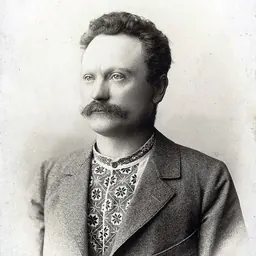
Mykhailo Starytsky later wrote a play under the same name V nedilyu rano zillia kopala. That work was also translated into several languages. Later Kobylianska met and traveled with fellow Ukrainians such as Lesia Ukrainka, Ivan Franko, Vasyl Stefanyk, and Mykhailo Kotsiubynsky, who influenced her cultural and political outlook. She collaborated with the interwar Ukrainian nationalist press and advocated for the secession of Bukovina from Romania and its unification with a Ukrainian state (either independent, or as a part of the Soviet Union). In 1927, while still living in Romania, she was admitted in the All-Russian Writers' Union, receiving a pension from the Soviet Union. Her works also began to be promoted in the Ukrainian SSR. Kobylianska stated: "We will find a way, if the Bolsheviks won't come". Before her trial was completed, on 21 March 1942, Olha Kobylianska died at the age of 78. Romanian authorities banned Ukrainians from paying their last respects to the writer, with only relatives attending the funeral.
Heritage and legacy
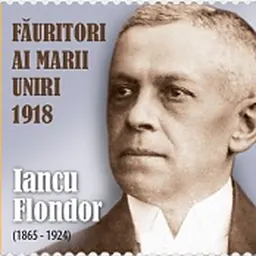
On 27 November 1940, after the Soviet occupation of Northern Bukovina, the executive committee of Chernivtsi Oblast renamed the main pedestrian street of Chernivtsi, previously named after Iancu Flondor, after the writer. A number of streets was subsequently named after her, including in Kyiv, Lviv, Dnipro and Zaporizhzhia.
In 1954, Chernivtsi Drama Theatre was named after her. In 1964, a small monument was installed in front of the entrance to the theatre. After the renovation of the theatre in 1977–1980, a new monument by sculptors Anatolii Skyba and Mykola Myroshnychenko was installed. The original monument was moved to the village of Dymka in Chernivtsi Raion.
In 2006, , awarded for the literary, artistic or journalistic work and scientific research on the topic of women in Ukrainian society, was founded.
Creative activity
Stories and novels
Man (1886) The Princess (1896) Through the Masonry (1911) By Situations (1913) Black Apostle (1926)
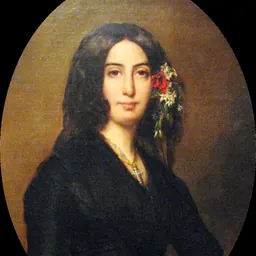
Short stories Pictures from the life of Bukovyna (1885) Spectacle (1885) The Dove and the Oak (1886) She got married (1886–1887) and George Sand. Kobylianska was interested in the Ukrainian peasantry, and often wrote about the lives of these people. She depicted the struggle between good and evil and the mystical force of nature, predestination, magic, and the irrational in many of her stories of peasant life. Her works are known for their impressionistic, lyrical descriptions of nature and subtle psychological portrayals.
Kobylianska's works have been published in many editions and selections. In 1944, a literary memorial museum dedicated to her was opened in Chernivtsi. "The Wolfhound" (1967) "The Melancholic Waltz" (1990, t / f; ) (1994, TV series, director C Turanyian)
In German Kleinrussische Novellen (Малоруські новели). Minden i. Westf. J. C. C. Bruns.
Don’t just read it —
keep it.
Full-length biographies made to live with: read them, listen on the way to work, watch them tonight.
- E-book
- Audio
- Video
Instant download · yours to keep · every purchase keeps this site free
Important facts
People in Olha Kobylianska's life
Named in this biography and alive at the same time
Related people
Same field, nearest in time


Contemporaries
People whose lives overlapped Olha Kobylianska's



Frequently asked questions
Who was Olha Kobylianska?
Ukrainian writer and feminist (1863–1942)
When was Olha Kobylianska born?
Olha Kobylianska was born on 27 November 1863 in Gura Humorului.
When did Olha Kobylianska die?
Olha Kobylianska died on 21 March 1942 in Chernivtsi.
What was Olha Kobylianska's occupation?
Olha Kobylianska was a writer, women's rights activist, opinion journalist, translator and feminist.
What nationality was Olha Kobylianska?
Olha Kobylianska was Austrian and Ukrainian.
Sources & further reading
Cite this page
APA: Biography.guide. (2026). Olha Kobylianska. https://biography.guide/olha-kobylianska/
MLA: "Olha Kobylianska." Biography.guide, https://biography.guide/olha-kobylianska/.
Chicago: "Olha Kobylianska." Biography.guide. https://biography.guide/olha-kobylianska/.
Data last updated: 2026-09-22 · Spot an error? Report a correction.
Page generated 2026-09-27 05:31 UTC