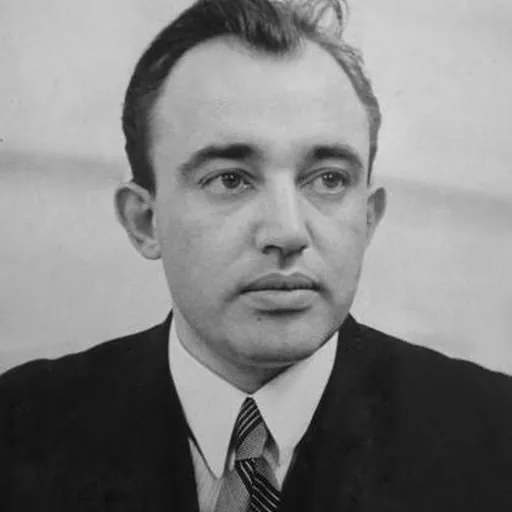
About Oleksandr Korniichuk
Lived 1905 – 1972 (aged 67). Oleksandr Korniichuk was a Russian and Ukrainian screenwriter, diplomat, writer, literary critic, politician and playwright.
Oleksandr Yevdokymovych Korniychuk (; ; – 14 May 1972) was a Soviet and Ukrainian playwright, literary critic and state official.
His plays include The Death of the Squadron (1933), Platon Krechet (1934), Bohdan Khmelnytsky (1938), his pro-collectivization comedy In the Steppes of Ukraine (1940), and The Front (1942). Korniychuk was a five-time Stalin Prize laureate (1941; 1942; 1943; 1949; 1951) and is regarded as a major proponent of Socialist Realism in Soviet drama.
Korniychuk served as the head of the People's Commissariat for Foreign Affairs of the Ukrainian SSR from 1943 to 1945. He was also a member of the Central Committee of the Communist Party of the Soviet Union (1952–1972), and the chairman of the Supreme Soviet of the Ukrainian Soviet Socialist Republic (1947–1953; 1959–1972).
Biography
Early life Oleksandr Yevdokymovych Korniychuk was born in Khrystynivka, Kiev Governorate, into a family of a railroad workers. At the age of 15, he started working at a railroad carriage repair works. In 1924 Korniychuk enrolled into the Kiev University (then known as the Kiev Institute of People's Education). After the graduation in 1929, he went to work in the Odessa and Kiev film studios, mainly as a script-writer. His debut play On the Edge (1929) examined the role of a man of arts in the new Socialist society. From the late 1920s to early 1930s, Korniychuk was an active propagator of internationalism, strictly opposing the local National Communist movement in the Ukrainian literature, led by Mykola Khvylovy. In 1944, Korniychuk became the first head (People's Comissar) of the Ukrainian SSR's newly formed Foreign Ministry (Narodny Comissariat, as it was then known). From 1943 to 1945, he was the first deputy of the Foreign Minister of the USSR.
Later life and career In the late 1940s, Korniychuk joined the higher ranks of the Ukrainian and Soviet political nomenclature. He was a member of the Communist Party's Central committees (USSR - 1949–1972, UkrSSR - 1952–1972), a Supreme Soviet of the Soviet Union deputy (1937–1972), the first deputy of the UkrSSR Prime Minister (1953–1954), the Chairman of the Ukrainian parliament (in 1947–1953, 1959–1972).
Korniychuk received his share of ideological chastising too. In 1951 the libretto for Konstantyn Dankevych's opera Bogdan Khmelnitsky he'd written with his wife Wanda Wasilewska met with harsh disapproval from Stalin, who demanded for a lot more of the Ukrainian people's fight against the "Polish oppression" to be shown. The pair added several scenes, making a point to emphasize the "historical roots of the Russian-Ukrainian friendship," and the opera was premiered in 1953. In 1954 Korniychuk's play Wings, satirizing the style of local party officials' leadership, outraged some members of the USSR CP Central Committee. Khrushchev had to intervene, allegedly saying: "The Tsar hadn't banned Gogol's Revizor, how can we then ban Korneychuk's Wings?"
Korniychuk's works of the 1960s showed less ideological fervour and more psychological depth, dealing with the Soviet people's moral dilemmas in the post-War Soviet Russia.
Olexandr Korniychuk died on 14 May 1972 in Kiev. He was buried at the Baikove Cemetery.
There is a street in Moscow named after Korniychuk (1976).
Plays On the Edge (Na Grani, 1926) The Stone Island (Kamyannyi ostriv, 1930) The Assault (Shturm, 1930) Violet Pike (Fioletova shchuka, 1932) The Death of the Squadron (Zahybel eskadry, 1933) Platon Kretchet (1934) – Stalin Prize first degree (1941) The Banker (Bankir, 1936) Pravda (1937) Bogdan Khmelnytsky (1939 )– Stalin Prize first degree (1941) In the Steppes of Ukraine (V stepakh Ukrayiny, 1941) – Stalin Prize first degree (1942) Partisans in the Steppes of Ukraine (Partyzany v stepakh Ukrayiny, 1942) Frontline (Front, 1942) – Stalin Prize first degree (1943) Mister Perkins’ Mission in the Bolshevik State (Missiya mistera Perkinsa v krayinu bilshovykiv, 1944) Please Come to Dzvinkove (Pryizhdzhayte v Dzvinkove, 1946) Makar Dibrova (1948) – Stalin Prize second degree (1949) Kalynovyi Hai (1950) – Stalin Prize third degree (1951) Wings (Kryla, 1954) Why Did Stars Smile (Chomu posmikhalysya zori, 1957) Over Dnieper (Nad Dniprom, 1960) The Diary Page (Storinka shchodennyka, 1964) The Cost to Pay (Rozplata, 1965) My Friends (Moyi druzi, 1967) Memory of the Heart (Pamyat serdtsya, 1969) – Shevchenko National Prize (1971)
Don’t just read it —
keep it.
Full-length biographies made to live with: read them, listen on the way to work, watch them tonight.
- E-book
- Audio
- Video
Instant download · yours to keep · every purchase keeps this site free
Important facts
People in Oleksandr Korniichuk's life
Named in this biography and alive at the same time
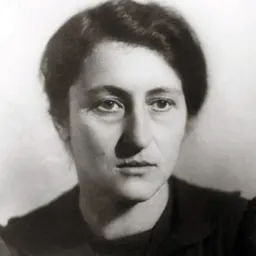
Related people
Same field, nearest in time



Contemporaries
People whose lives overlapped Oleksandr Korniichuk's





Frequently asked questions
Who was Oleksandr Korniichuk?
Soviet playwright (1905-1972)
When was Oleksandr Korniichuk born?
Oleksandr Korniichuk was born on 12 May 1905 in Khrystynivka.
When did Oleksandr Korniichuk die?
Oleksandr Korniichuk died on 14 May 1972 in Kyiv.
What was Oleksandr Korniichuk's occupation?
Oleksandr Korniichuk was a screenwriter, diplomat, writer, literary critic, politician and playwright.
What nationality was Oleksandr Korniichuk?
Oleksandr Korniichuk was Russian and Ukrainian.
Sources & further reading
· Wikipedia: Oleksandr Korniichuk
· DBpedia: Oleksandr Korniychuk
Cite this page
APA: Biography.guide. (2026). Oleksandr Korniichuk. https://biography.guide/oleksandr-korniichuk/
MLA: "Oleksandr Korniichuk." Biography.guide, https://biography.guide/oleksandr-korniichuk/.
Chicago: "Oleksandr Korniichuk." Biography.guide. https://biography.guide/oleksandr-korniichuk/.
Data last updated: 2026-09-22 · Spot an error? Report a correction.
Portrait: Wikimedia Commons · author & licence
Page generated 2026-09-27 05:01 UTC