
About Ōkubo Tadachika
Lived 1553 – 1628 (aged 74–75). Ōkubo Tadachika was a Japanese samurai.
, or also known as , was daimyō of Odawara Domain in Sagami Province in early Edo period, Japan. Ōkubo Tadachika was the son of Ōkubo Tadayo, a Fudai daimyō hereditary vassal to the Tokugawa clan in what is now part of the city of Okazaki, Aichi.
He entered into service as a samurai from age 11, and took his first head in battle at the age of 16. Ōkubo Tadachika appointed as Rōjū After the establishment of Tokugawa shogunate. He came to be regarded as one of Ieyasu's most experienced and trusted advisors, along with Honda Masanobu.
He was most known in history for his political career's demise due to the "Ōkubo clan's incidents", which caused him stripped from most of his domains control and exiled by the Shogunate.
He also known for his work of Mikawa Monogatari chronicle, which recorded the history of Tokugawa Ieyasu's rise to power and the early Tokugawa shogunate.
Biography Ōkubo Tadachika was born in 1553. He served Tokugawa Ieyasu from 1563 and made first appearance in history record during the siege of Horikawa Castle in Totomi in 1568. However, the castle were only captured in 1569. After it was captured, Ieyasu ordered Ishikawa Hanzaburo to massacre the castle prisoners and castle denizens, including women and children. It was recorded around 700 peoples beheaded on the banks of the Miyakoda River. Tadachika, witnessed this massacre and testified in his personal journal, Mikawa Monogatari, that "...both men and women be cut into pieces...".
For the most part of years until 1582, Tadachika participated in many Ieyasu's major military campaign such as the Battle of Anegawa, Battle of Mikatagahara, and the Battle of Nagashino. After the Honnō-ji Incident in 1582, he was among high-rank vassal who accompanied Ieyasu in the dangerous journey to escape into Mikawa through Iga Province.
Later in 1584, he also participated in the Tokugawa-Toyotomi conflict in the Komaki-Nagakute Campaign When Ieyasu transferred into Kantō region, he was given control of Hanyu Castle and received domain stipend worth of 20,000 koku in Musashi Province.
In 1593, he was assigned the post of Karō to Tokugawa Hidetada. Tadachika received the mandate to persrcute the Christians after meeting with Ieyasu at Sun Pu castle in 28 January, and appointed as General Commissioner in Charge of the Expulsion in 13 February.
Ōkubo clan's affair
In 1613-1614 there was a series of chain of events which caused the Ōkubo clan fell from favor of the shogunate. First the Ōkubo Nagayasu Incident. His domain was confiscated, and he was reassigned to a small 5,000 koku hatamoto holding in Ōmi Province. Shortly afterwards, he retired from public life, became a Buddhist monk by the name of Keian Dōhaku (渓庵道白). The second misfortune befall upon Ōkubo clan was when Tadachika career suffered, as his domains ownership were stripped and exiled.
After driven out of his Odawara Castle, all his vassals banished, and practically exiled to spend his life in Omi Province, Tadachika seek refugee to his old comrade, Ii Naomasa, who also the lord of the province, while his grandson, Senmaru, granted a fief of 20,000 koku at Kisai, in Musashi Province. There is also a theory recorded by Kuniteru Mitsuki that the reason why Tadachika were fell from favor of Shogunate at that moment was because Ieyasu, who was thinking of wiping out the Toyotomi clan, though that Tadachika were too close with the daimyo lords of the Saigoku region (western region of Japan), thus he though that Tadachika might advocate for the reconciliation between the Shogunate with the Toyotomi clan.
However, in recognition of Tadachika's long service for the Tokugawa clan and shogunate, Tadachika legitimate grandson, Ōkubo Tadatomo, was allowed to take over as head of the Okubo clan, while his adopted son who also named Ōkubo Tadatomo, returned to the lordship of the Odawara Domain. Furthermore, Ishikawa Tadafusa, who had been suspended due to his involvement in the so-called "Ōkubo affair", was allowed to return in consideration of the meritorious service of Ienari Ishikawa (the father of his adoptive family), and because of his military exploits at the Siege of Osaka, also appointed as the lord of Ōgaki Domain and Zeze Domain.
Appendix Footnotes
Don’t just read it —
keep it.
Full-length biographies made to live with: read them, listen on the way to work, watch them tonight.
- E-book
- Audio
- Video
Instant download · yours to keep · every purchase keeps this site free
Important facts
People in Ōkubo Tadachika's life
Named in this biography and alive at the same time

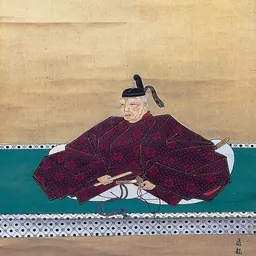
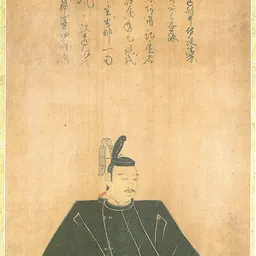
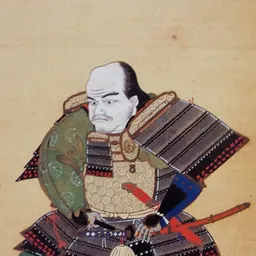

Related people
Same field, nearest in time

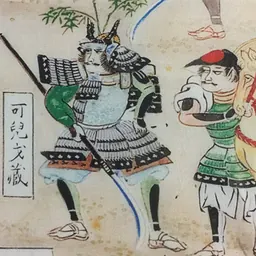
Contemporaries
People whose lives overlapped Ōkubo Tadachika's


Frequently asked questions
Who was Ōkubo Tadachika?
daimyo
When was Ōkubo Tadachika born?
Ōkubo Tadachika was born in 1553 in Okazaki.
When did Ōkubo Tadachika die?
Ōkubo Tadachika died on 28 July 1628 in Edo.
What was Ōkubo Tadachika's occupation?
Ōkubo Tadachika was a samurai.
What nationality was Ōkubo Tadachika?
Ōkubo Tadachika was Japanese.
Sources & further reading
Cite this page
APA: Biography.guide. (2026). Ōkubo Tadachika. https://biography.guide/okubo-tadachika/
MLA: "Ōkubo Tadachika." Biography.guide, https://biography.guide/okubo-tadachika/.
Chicago: "Ōkubo Tadachika." Biography.guide. https://biography.guide/okubo-tadachika/.
Data last updated: 2026-09-20 · Spot an error? Report a correction.
Page generated 2026-09-27 05:16 UTC