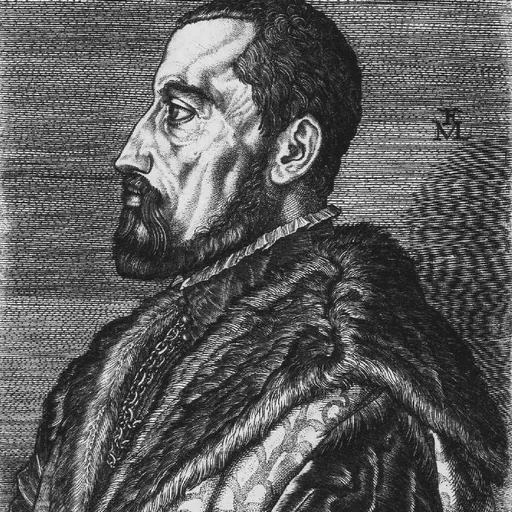
About Ogier Ghiselin de Busbecq
Lived 1522 – 1592 (aged 69–70). Ogier Ghiselin de Busbecq was a diplomat, writer, botanist and polymath.
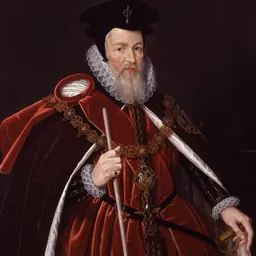
Ogier Ghiselin de Busbecq (1522 in Comines – 29 October 1592 in Saint-Germain-sous-Cailly; ), sometimes Augier Ghislain de Busbecq, was a 16th-century Flemish writer, herbalist and diplomat in the employ of three generations of Austrian monarchs. He served as ambassador to the Ottoman Empire in Constantinople and in 1581 published a book about his time there, Itinera Constantinopolitanum et Amasianum, re-published in 1595 under the title of Turcicae epistolae or Turkish Letters. His letters also contain the only surviving word list of Crimean Gothic, a Germanic dialect spoken at the time in some isolated regions of Crimea. He is credited with the introduction of tulips into Western Europe and to the origin of their name.
Early years
He was born the illegitimate son of the Seigneur de Busbecq, Georges Ghiselin, and his mistress Catherine Hespiel, although he was later legitimized. He grew up at Busbecq Castle (in present-day Bousbecque, Nord, France), studying in Wervik and Comines, which at the time were all part of Spanish West Flanders, a province of the Holy Roman Empire.
Busbecq's intellectual gifts led him to advanced studies at the Latin-language University of Leuven, where he registered in 1536 under the name Ogier Ghislain de Comines. From there, he went on to study at a number of well-known universities in northern Italy, including taking classes from in Venice.
Like his father and grandfather, Busbecq chose a career of public service. He started work in the court of the later Holy Roman Emperor Ferdinand I in approximately 1552. In 1554, he was sent to England for the marriage in Winchester of the English queen Mary Tudor to Philip II of Spain.
At the Ottoman court In 1554 and again in 1556,
Busbecq discovered an almost complete copy of the Res Gestae Divi Augusti, an account of Roman emperor Augustus' life and accomplishments, at the Monumentum Ancyranum in Ancyra. He identified its origin from his reading of Suetonius and published a copy of parts of it in his Turkish Letters.
He was an avid collector, acquiring valuable manuscripts, rare coins and curios of various kinds. Among the best known of his discoveries was a 6th-century copy of Dioscorides' De Materia Medica, a compendium of medicinal herbs. The emperor purchased it after Busbecq's recommendation; the manuscript is now known as the Vienna Dioscorides. His passion for herbalism led him to send Turkish tulip bulbs to his friend Charles de l'Écluse, who acclimatized them to life in the Low Countries. He called them "tulip", mistaking the Turkish word for turban (tulipant) which was often decorated with the flower (known in Turkish as lale). Busbecq has also been credited with introducing the lilac to northern Europe (though this is debated) as well as the Angora goat.
Life after Turkey He returned from Turkey in 1562 and became a counsellor at the court of Emperor Ferdinand in Vienna and tutor to his grandchildren, the sons of future Emperor Maximilian II. Busbecq ended his career as the guardian of Elisabeth of Austria, Maximilian's daughter and widow of French king Charles IX. He continued to serve the Austrian monarchy, observing the development of the French Wars of Religion on behalf of Rudolf II. Finally, in 1592 and nearing the end of his life, he chose to leave his residence in Mantes outside of Paris for his native West Flanders, but was assaulted and robbed by members of the Catholic League near Rouen. He died a few days later. His body is buried in the castle chapel at Saint-Germain-sous-Cailly near where he died, and his heart was embalmed and sent to the family tomb in Bousbecque.
Don’t just read it —
keep it.
Full-length biographies made to live with: read them, listen on the way to work, watch them tonight.
- E-book
- Audio
- Video
Instant download · yours to keep · every purchase keeps this site free
Important facts
People in Ogier Ghiselin de Busbecq's life
Named in this biography and alive at the same time


Related people
Same field, nearest in time


Contemporaries
People whose lives overlapped Ogier Ghiselin de Busbecq's

Frequently asked questions
Who was Ogier Ghiselin de Busbecq?
Flemish scholar (1522-1592)
When was Ogier Ghiselin de Busbecq born?
Ogier Ghiselin de Busbecq was born in 1522 in Comines.
When did Ogier Ghiselin de Busbecq die?
Ogier Ghiselin de Busbecq died on 28 October 1592 in Rouen.
What was Ogier Ghiselin de Busbecq's occupation?
Ogier Ghiselin de Busbecq was a diplomat, writer, botanist and polymath.
What nationality was Ogier Ghiselin de Busbecq?
Ogier Ghiselin de Busbecq's recorded nationality: County of Flanders.
Sources & further reading
· Wikipedia: Ogier Ghiselin de Busbecq
· DBpedia: Ogier Ghiselin de Busbecq
Cite this page
APA: Biography.guide. (2026). Ogier Ghiselin de Busbecq. https://biography.guide/ogier-ghiselin-de-busbecq/
MLA: "Ogier Ghiselin de Busbecq." Biography.guide, https://biography.guide/ogier-ghiselin-de-busbecq/.
Chicago: "Ogier Ghiselin de Busbecq." Biography.guide. https://biography.guide/ogier-ghiselin-de-busbecq/.
Data last updated: 2026-09-23 · Spot an error? Report a correction.
Portrait: Wikimedia Commons · author & licence
Page generated 2026-09-27 05:05 UTC