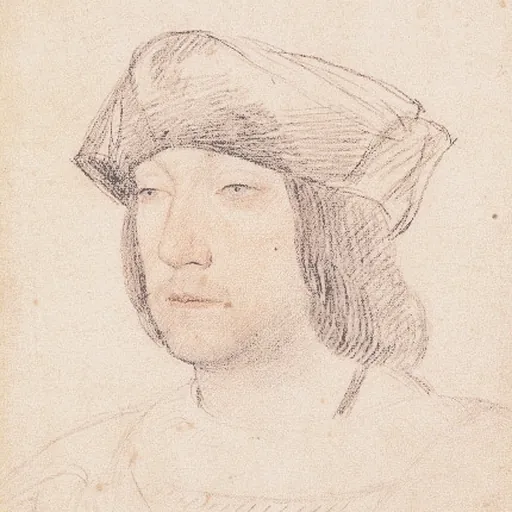
About Odet of Foix, Viscount of Lautrec
Lived 1485 – 1528 (aged 42–43). Odet of Foix, Viscount of Lautrec was a French military personnel.
Odet de Foix, Vicomte de Lautrec (1485 – 15 August 1528) was a French military leader, a knight of the Order of St. Michael and grand seneschal of Guyenne. As Marshal of France, he commanded the campaign to conquer Naples, but died from the typhus in 1528.
Biography An 1834 copy of a portrait of Odet de Foix preserved at the palace of Versailles, the original was preserved at Beauregard Castle. Odet was born between 1483 and 1485, the son of Jean de Foix and Jeanne d'Aydie. His siblings were André de Foix (Lord of Lesparre and Count of Montfort), Thomas de Foix (also Marshal of France), and Françoise de Foix (Countess of Châteaubriant, Official Mistress of king Francis I). He and his two brothers, served king Francis as captains; and the influence of their sister, who became the king's mistress, gained them high office.
Military career
War of The League of Cambrai (1508-1516) Following his entry to the military service, this was the first war he fought into, not yet as a Marshal of France, but as a Lieutenant General. Foix was then sent to the Italian Peninsula at the outbreak of the war, serving initially under the supreme command of Charles II d'Amboise. He participated in the decisive French victory over the Republic of Venice at the Battle of Agnadello The two successfully relieved the Siege of Bologna
On April 11, 1512, Odet de Foix, commanded the heavy cavalry and gendarmerie wings during the Battle of Ravenna. In the final actions of the battle, coinciding with the death of Gaston de Foix, Odet was overwhelmed and cut down by Spanish Infantry, he was presumed dead after sustaining more than twenty pikes and sword wounds but he was found breathing by his brother, Thomas de Foix-Lescun, and immediately evacuated to a field hospital. Due to his wounds and injuries, he was completely incapacitated for the rest of 1512. Following a prolonged recovery, he returned to active service under Francis I of France. He played an important role in the Franco-Venetian victory at the Battle of Marignano on September 14–15, 1515, which re-established French dominance over the Duchy of Milan and effectively concluded his actions in the war.
Governance of Milan (1516-1522) In 1516, King Francis I of France, appointed Odet de Foix, Governor-General of the newly reclaimed, Duchy of Milan. his logistical and strategic positioning soon deteriorated; he was outmaneuvered by Colonna's forces and a gathering Anti-French uprising within the city walls, Foix was driven out of Milan in late November 1521. He was forced to retreat eastward, consolidating his remaining forces in a defensive ring of strongholds along the Adda River, ending his governance in Milan.
Operations in Lombardy (Italian Wars 1521-1526) After his military retreat of Lombardy, he established a defensive line along the Adda River to regroup his forces and to wait for his reinforcements. During that time, Foix's mountainous northern flank along the Swiss border came under pressure and harassment from Imperial troops trying to sever his communications. Due to this, Foix directed a series of counter-maneuvers to the Imperial forces known as Operations in Val Vestino. However the counter-offensive stalled due to suffering a financial crisis as the French Royal Treasury failed to send funds, leaving the Swiss mercenary troops unpaid. Growing mutinous, Swiss mercenary captains delivered an ultimatum to Foix, demanding either: receive immediate payment, be allowed to be discharged and to be sent home, or be led into a battle at once. Meanwhile, the Imperial forces of Colonna marched down to Genoa to capture it, since Foix already left, the city surrendered in 1522. Desperate for his freedom, Francis I signed the Treaty of Madrid and swore an oath to give up all his claims in Italy, Burgundy, Artois and Flanders and even surrendering his two eldest sons, Francis III of Brittany and Henry II of France in January 14, 1526.
Pope Clement VII realizing the skyrocketing of Charles V in Italy, the Pope and the Venetian Republic were terrified and acted that they needed to drive the Imperial forces out of Italy.
On early 1527, Charles V's main Imperial army in Northern Italy, were made up of Spanish, Italian and German Protestant Landsknechts. Frundsberg was so distressed trying to calm down his German landsknechts, he suffered a stroke which then proved fatal. The mutinous Imperial army abandoned the northern front of Italy to the rich undefended southern Italian cities and forced Charles III to lead them to Rome or they will kill him. He then finally committed France to the war and pulled Odet de Foix from military retirement and made him Captain-General of the grand expedition forces. On October 1, 1527, Foix besieged the city and nearly 4 days later of French bombardment, the French breached the walls. Foix intended to preserve the city but his French soldiers and Venetian allies were bloodthirsty and furious. For over a week, the army initiated the Sack of Pavia,
With the city of Pavia utterly destroyed, Foix's Italian allies expected him to take the city of Milan, the capital of Lombardy. Foix's rapid advance broke the diplomatic resolve of the mutinous Imperial troops, so Pope Clement VII's captors managed to strike a deal with the Pope. On December 6, 1527, the Pope escaped Castel Sant'Angelo disguised as a peddler or servant and escaped from Rome to the League of Cognac's stronghold, Orvieto as he feared that the erratic Imperial forces might block his initial negotiations with them. Even though the Pope had already fled Rome, Foix continued to march to Rome which made the remaining Imperial forces, flee to Naples out of terror of the large French army. View of the Bay of Salerno where Moncada and Doria battled. By George Loring Brown Odet de Foix decided to not march to Rome but to the south, the city of Naples, as Rome was already a plague-ridden wasteland with dozens of bodies in the streets and to break Spanish-Imperial control over Naples. To fully besiege the city, he relied on his Genoese allies to blockade the ports, who was commanded by Admiral Filippino Doria, nephew of celebrated, Andrea Doria. Within weeks, the French camp became a massive grave yard resulting the deaths of countless others. Claude de Foix (1526-1549): The only daughter of the couple. Following the deaths of her siblings, she inherited the ancestral title of Vicomtesse de Lautrec (Viscountess of Lautrec). She married twice into prominent French aristocratic houses. Her first husband was Guy XVII, Count of Laval and secondly was Charles de Luxembourg, Vicomte de Martigues. Claude died without any heirs causing the Foix-Lautrec lineage to cease to exist. Francis de Foix (1528): The third son, died at infancy or early childhood, the same year with his eldest brother and his father.
Don’t just read it —
keep it.
Full-length biographies made to live with: read them, listen on the way to work, watch them tonight.
- E-book
- Audio
- Video
Instant download · yours to keep · every purchase keeps this site free
Important facts
People in Odet of Foix, Viscount of Lautrec's life
Named in this biography and alive at the same time
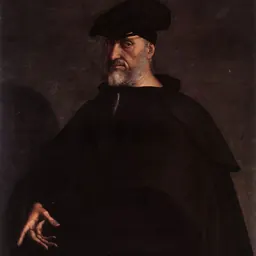
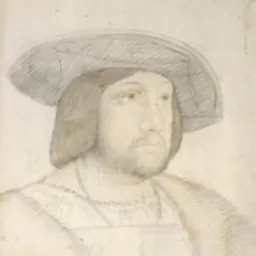
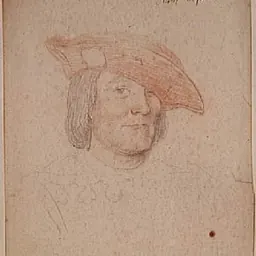
Related people
Same field, nearest in time

Contemporaries
People whose lives overlapped Odet of Foix, Viscount of Lautrec's


Frequently asked questions
Who was Odet of Foix, Viscount of Lautrec?
Marshal of France
When was Odet of Foix, Viscount of Lautrec born?
Odet of Foix, Viscount of Lautrec was born in 1485 in Guyenne.
When did Odet of Foix, Viscount of Lautrec die?
Odet of Foix, Viscount of Lautrec died on 15 August 1528 in Naples.
What was Odet of Foix, Viscount of Lautrec's occupation?
Odet of Foix, Viscount of Lautrec was a military personnel.
What nationality was Odet of Foix, Viscount of Lautrec?
Odet of Foix, Viscount of Lautrec was French.
Sources & further reading
· Wikipedia: Odet of Foix, Viscount of Lautrec
· DBpedia: Odet de Foix, Viscount of Lautrec
Cite this page
APA: Biography.guide. (2026). Odet of Foix, Viscount of Lautrec. https://biography.guide/odet-of-foix-viscount-of-lautrec/
MLA: "Odet of Foix, Viscount of Lautrec." Biography.guide, https://biography.guide/odet-of-foix-viscount-of-lautrec/.
Chicago: "Odet of Foix, Viscount of Lautrec." Biography.guide. https://biography.guide/odet-of-foix-viscount-of-lautrec/.
Data last updated: 2026-09-26 · Spot an error? Report a correction.
Portrait: Wikimedia Commons · author & licence
Page generated 2026-10-04 10:46 UTC