
About Oda Schottmüller
Lived 1905 – 1943 (aged 38). Oda Schottmüller was a sculptor, resistance fighter and dancer.
Oda Schottmüller (9 February 1905 – 5 August 1943) was an expressive dancer, mask maker and sculptor. Schottmüller was most notable as a resistance fighter against the Nazis, through her association with a Berlin-based anti-fascist resistance group that she met through the sculptor Kurt Schumacher. The group would later be named by the Gestapo as Die Rote Kapelle (English: "the Red Orchestra").
Author and researcher Geertje Andresen conducted an analysis of Schottmüller's estate, which resulted in the publication of a book on Schottmüller's life. Andresen's work describes a vindictive murder by the Nazi state of a German woman who was only tangentially linked to Die Rote Kapelle and whose association with the group constituted resistance.
Life Oda Schottmüller was the daughter of archivist Kurt Schottmüller and Dorothea Schottmüller (née Stenzler), the granddaughter of the historian Konrad Schottmüller, Oda's aunt—professor Frida Schottmüller, who was a custodian at the Kaiser-Friedrich Museum and a specialist in quattrocento sculptor —became Oda's legal guardian and the two resided in Berlin. Her family would not support her dream to be a sculptor and dancer, something she had practised at the Odenwald School. The performance was conducted by the Berlin Philharmonic in the 20000-seater open-air Dietrich Eckart theatre, now called the Waldbühne. Schwaen worked with Schottmüller to develop new dances to which he composed new music. Reviews stated it was an "incarnation of plastic ideas, to which she visually transforms her own physicality". She initiated a love affair with Schumacher, unaware that he was married. They shared a common bond that led to friendship driven in their opposition to National Socialism and their common interest in sculptural design.
Arrest On 16 September 1942, Schottmüller was arrested at her studio and sent to a holding cell in the prison on Alexanderplatz. She was accused of using her studio to host a radio set, In January 1943, she was sentenced to death by the Reichskriegsgericht "for aiding and abetting the preparation of a treasonable enterprise and enemy favouritism".
Archives The police records of Schottmüller's arrest did not survive; the only surviving materials are the letters that she sent from prison. The street was formerly named after the bacteriologist Hugo Schottmüller but the aristocratic Pallandt family intervened to rename it in honour of her.
Tributes and exhibitions The first tribute to Schottmüller was in 1946 by German theatre critic Paul Fechter who reported on the first art exhibition after the war that spoke about Schottmüller and Schumacher. There have been many more.
Geertje Andresen, formerly a research associate at the Memorial to the German Resistance, collaborated with Deutsches Tanzarchiv Köln in Cologne to conduct an analysis of the estate of Schottmüller. It resulted in the publication of a book and an exhibition that was created in cooperation with Hans Coppi; the latter was held on 16 November 2006 at the German Resistance Memorial Center.
Don’t just read it —
keep it.
Full-length biographies made to live with: read them, listen on the way to work, watch them tonight.
- E-book
- Audio
- Video
Instant download · yours to keep · every purchase keeps this site free
Important facts
People in Oda Schottmüller's life
Named in this biography and alive at the same time
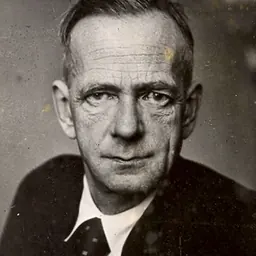


Related people
Same field, nearest in time



Contemporaries
People whose lives overlapped Oda Schottmüller's
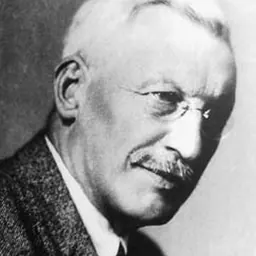


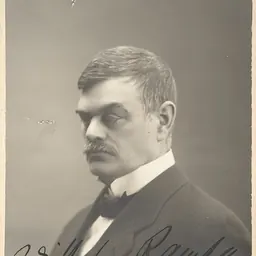

Frequently asked questions
Who was Oda Schottmüller?
German resistance fighter (1905–1943)
When was Oda Schottmüller born?
Oda Schottmüller was born on 9 February 1905 in Poznań.
When did Oda Schottmüller die?
Oda Schottmüller died on 5 August 1943 in Berlin-Plötzensee.
What was Oda Schottmüller's occupation?
Oda Schottmüller was a sculptor, resistance fighter and dancer.
What nationality was Oda Schottmüller?
Oda Schottmüller's recorded nationality: German Reich.
Sources & further reading
Cite this page
APA: Biography.guide. (2026). Oda Schottmüller. https://biography.guide/oda-schottmuller/
MLA: "Oda Schottmüller." Biography.guide, https://biography.guide/oda-schottmuller/.
Chicago: "Oda Schottmüller." Biography.guide. https://biography.guide/oda-schottmuller/.
Data last updated: 2026-09-22 · Spot an error? Report a correction.
Page generated 2026-09-27 05:24 UTC