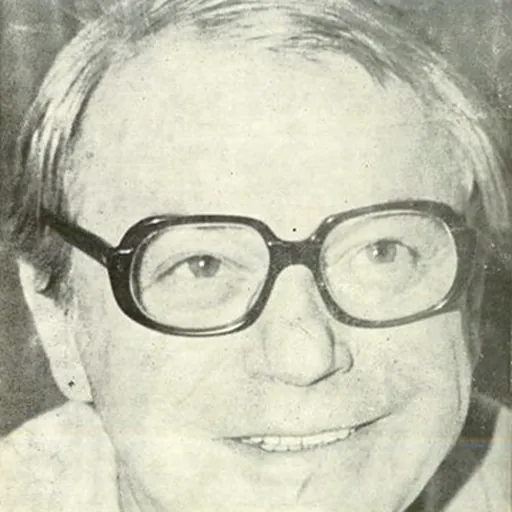
About Octavian Cotescu
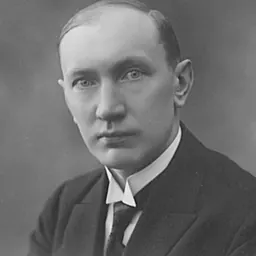
Lived 1931 – 1985 (aged 54). Octavian Cotescu was a Romanian actor and film actor.
Octavian Cotescu (born Octavian Coteț; 14 February 1931 – 22 August 1985) was a Romanian actor, stage director, and acting professor. Born into a working-class family in Dorohoi, he spent his childhood in various towns, traveling across the Romanian Kingdom. He settled in Iași as World War II was coming to an end, and began acting there as a young teenager; he entered the local drama conservatory, graduating at age nineteen. Young Cotescu had by then been in contact with the Romanian Communist Party's regional bodies, which established a Soviet-style republic in 1948. He was called up to a permanent employment at the Municipal (Bulandra) Theater in Bucharest. Though he had to be persuaded into leaving Iași, he remained a Bulandra actor for essentially the rest of his life. From 1960, he taught at the Caragiale Institute, serving as its rector in the 1980s.
Cotescu's development as an actor covered the late 1950s, still marked by adherence to the socialist-realist agenda, and the early 1960s, which witnessed a relative emancipation. Initially panned for his Bulandra shows, he built himself parallel careers as a voice actor with Electrecord (becoming especially loved as a children's reader) and as a regular presence on Romanian Television. His career took off in 1962, when he came into contact with playwright Teodor Mazilu. Alongside director Lucian Pintilie, they tested the vigilance of communist censors with Proștii sub clar de lună, which was eventually banned by an outraged party boss, Nicolae Ceaușescu. Cotescu still had separate collaborations with Mazilu and Pintilie, and was widely acclaimed for starring the latter's version of D-ale carnavalului (1967). He emerged as a favorite actor for Mazilu and another social satirist, Ion Băieșu, achieving an enduring, nation-level popularity, as Costel in Băieșu's sketch comedy series.
During the parallel consolidation of a Ceaușescu regime, Cotescu alternated compliance and acts of artistic rebellion—just as the regime itself veered between relative liberalism and repressive moods. With film and stage versions of Puterea și adevărul, he helped author Titus Popovici consolidate an early, still allegorical, variant of Ceaușescu's personality cult; during the 1970s, he also appeared in various roles, either positive or negative, which propagandized the regime's take on Marxist humanism. Cotescu himself was co-opted by the Front of Socialist Unity, serving one term (1975–1981) in the Great National Assembly. At the same time, he appeared in Pintilie's adaptation of the Government Inspector, which was banned for apparently mocking Ceaușescu, and dropped more subtle political hints in many of the comedies that used him—argued to have included his 1976 hit film, Operațiunea Monstrul.
Late in his career, Cotescu had critically well-reviewed roles at Teatrul Mic. He was in Thomas Bernhard's Minetti, and had twin roles in Cătălina Buzoianu's version of Master and Margarita. At Bulandra, he did Tartuffe and Bulgakov's Cabal of Hypocrites, both under Alexandru Tocilescu. His noted film roles of the 1980s were primarily in adaptations of Romanian literature classics, as with Mircea Mureșan's Blestemul pămîntului and Elisabeta Bostan's Fram series. Just before his death from a heart attack, Cotescu had returned to light-comedy films, as the father-in-law in Buletin de București, then as the eccentric artist in Sosesc păsările călătoare. He was outlived until 2022 by his wife and colleague, Valeria Seciu; their only child, Alexandru, became a monk on Mount Athos.
Biography Early life and debut The actor's birth name was Octavian Coteț, but he disliked the name for sounding non-artistic, and had it changed (the form "Cotescu", suggested to him by director Moni Ghelerter, was officialized in mid-1966). He was from Dorohoi in Western Moldavia, born there on 14 February 1931; he lived on Gloriei Street, the same as two other future actors, siblings Rodica and Ștefan Tapalagă.
Rehearsal of the adapted Mitrea Cocor at the Municipal Theater, 1952. Cotescu (standing in the background, first on the left), alongside Benedict Dabija, Ileana Predescu, and Leny Caler Cotescu was only persuaded into leaving the city after talks with his former professor, Ion Lascăr. Dramatist and critic Ecaterina Oproiu was pleasantly impressed by his Vosmibratov, played "with sensitivity and warmth". Later that year, he had his first collaboration with director Liviu Ciulei—as Kolosov, in Konstantin Trenyov's Lyubov Yarovaya.
His association with Demetrius' plays deepened in 1952, when he appeared in her Oameni de azi; in tandem, he was cast in Vassa Zheleznova (1953) and, as a Red Army soldier, in Aurel Baranga's Arcul de triumf (1954).
1950s flops and recovery According to threatologist Adriana Boantă, Cotescu advanced his career, in part, by mimicking Beligan's embrace of communist rhetoric, which initially came with an endorsement of strict socialist-realism. Theater columnist Traian Șelmaru once described him as one of the favorite pupils of Lucia Sturdza-Bulandra, who was a doyen and leading lady of the Municipal ensemble. In October 1954, while she was chairwoman of the Municipal, he represented the actors' cell within the Workers' Youth; in this capacity, they co-signed a pledge to do propaganda work at collective farms in Periș and Livedea. Sturdza-Bulandra became his protector, getting him to act in productions where she took the leading role, and also helped him obtain approval for Maria and Mioara's relocation to Bucharest (1954). In tandem, however, his portrayal of the schoolteacher in Sándor Bródy's A tanítónő was appreciated by Mihail Lupu of Scînteia, who remarked: This young actor's leading merit, we believe, is the artistry of making his turmoils constantly felt—not so much through his lines as through his highly meaningful silences, through his sad and timid glances, his clumsy gestures, and his awkward, withdrawn demeanor, from which he rarely allows himself to step out. All these traits were brought to life with a sobriety that does the performer credit.
Cotescu was Valentine in a 1957 staging of You Never Can Tell—which was also his first role in a play by George Bernard Shaw. In January 1959, he was cast as Vasile Alecsandri in a special Bulandra show, created by Zoe Stanca and Puiu Hulubai for the centennial of the Little Union. By August, he was playing Andrei, a peasant who grows attached to the cause of socialism, in Demetrius' Vlaicu și feciorii lui.
Late in 1959, Cotescu took third prize at the Young Creators' Republican Awards, for his Ivushkin in Bread and Roses (from a text by Afanasi Salynsky). In 1960, he was again taken on by Ciulei, appearing with Rebengiuc in The Lower Depths. in January 1959, did "The Gifts of the Little People", by the Brothers Grimm, as part of the children's evening segment on national radio. Also that year, his recitations of political poetry by Cicerone Theodorescu were featured on another LP, described by Viața Romînească magazine as one of the best Electrecord products up to that point. His Moldavian-pitched voice was widely seen as attractive, once described by journalist Annie Mănoiu as "gentle, clean and extremely nuanced." His second film credit came in 1963, when he starred opposite Albini in O dragoste lungă de-o seară, by Horea Popescu. The work was immediately controversial, and ended up irking the censorship apparatus. In the initial phases, they cut off a scene one in which the female protagonists commit suicide by throwing themselves into the orchestra pit. A high-ranking PCR cadre, Nicolae Ceaușescu, who reportedly attended the premiere, ended up agreeing with the negative assessments, and banned the play from being performed at Bulandra or elsewhere. Cotescu remained an admirer of Pintilie's, once informing him that "people call you our second Ciulei". Pintilie quipped: "And just who's the first one?"
The scandal occurred just shortly before Ceaușescu emerged as PCR general secretary, and subsequently as President of Romania. For almost two decades, Cotescu was closely, if separately, associated with both Pintilie and Mazilu. The former had him appear as several leads, including for Max Frisch's Fire Raisers and William Saroyan's My Heart's in the Highlands (both 1964). He also had noted roles under Valeriu Moisescu's direction: in Baranga's Fii cuminte, Cristofor (1964), then in Ecaterina Oproiu's Nu sînt Turnul Eiffel (1966).
In 1965, Cotescu had another credit as a voice actor, taping Man and His Mule, by George Ciprian, for Electrecord. He appeared at Teatrul Mic for one season, playing Harry in Luv, by Murray Schisgal, with Dinu Cernescu directing; he was also Edek in Tango, by Sławomir Mrożek, under Radu Penciulescu. One of their younger colleagues there was George Constantin, who recalled of Cotescu and other seniors: "besides the fact that they were great actors, they were also total cannibals: if you weren't careful, you'd find yourself ground to pieces! The stage itself had become a terrific battleground".
As Girimea and Costel From 1960, Cotescu had been assistant professor for A. Pop Marțian's class at the Caragiale Institute of Theater and Film Arts (IATC). He became romantically involved with the latter, at the same time as his close friend Rebengiuc was courting Mihuț; the couples double-dated for a while. At Bulandra, again under Pintilie's direction, he was Nae Girimea in D-ale carnavalului, a comedy by the Romanian classic Ion Luca Caragiale. Here, he shared the stage with Toma Caragiu, Ștefan Bănică, and Marin Moraru (the latter was sometimes replaced by Grigore Vasiliu Birlic). The casting choice was met with pleasure by poet and scholar Romulus Vulpescu, who found it to be an "essential contribution to the show's success": [Cotescu does Girimea as] the essentially nonchalant swindler, the detached suburban scoundrel, slow in action, contemptuous of agitation, [...] escaping with a clean face from any real danger he faces, and of which he is supremely ignorant. He is almost a "gentleman", this seducer from the periphery, a benign consumer of sensitive female hearts, seemingly unconcerned about catastrophes [...].
The play was a major hit—with critic Valentin Dumitrescu recalling that "adolescents of that era would huddle up like sardines in the [Bulandra] hall at Izvor". He also returned as the title character in Ciulei's 1968 version of Macbeth. Such breakthroughs also had a downside, underscored thirty years later by writer Aurel Leon—who observed that Costel "nearly crushed" Cotescu's artistic reputation. According to one report, Cotescu's appearances in tragedies were interrupted by spectators shouting: "That's Costel over there!" Early the next year, literary columnist George Pruteanu contrarily panned Băieșu's book of Tanța și Costel stories, arguing that the two characters only lived through Cotescu and Andronescu.
While achieving notoriety for comedic acts, Cotescu also advanced academically. From 1967, he was IATC junior lecturer,
Puterea și adevărul
After a years-long absence as a playwright, imposed on him by ongoing censorship, Mazilu returned with Tandrețe și abjecție, which was directed at Bulandra by Cornel Todea (1969). Cotescu had five different roles in that production, and took it on tour in West Germany. Mazilu's other work, Acești nebuni fățarnici, was directed by Emil Mandric in a 1970 production; Cotescu won acclaim as one of the leads, Iordache. On television, he and Stela Popescu did L'Affaire de la rue de Lourcine, by Eugène Labiche, in an offbeat version directed by Octavian Sava—and airing on 1 August 1970.
During 1971, Manole Marcus filmed Titus Popovici's political drama, Puterea și adevărul, welcomed by Căliman as the most important film made up to that point in Romania. Cotescu was Manu, a PCR cadre who drops from revolutionary, heroic, beginnings into a life of complacency and cowardice, which make him an obstacle to party unity. Popovici himself once credited Cotescu with having pushed for Manu to be rewritten as more believable, and stated that the actor's notes went into the definitive text. As argued by Căliman, Cotescu avoided the temptation of doing Manu as a grotesque being, and instead "offers viewers a tragic example of non-adherence to the lines of development in our Contemporary Society."
Puterea și adevărul was immediately rejected by the anti-communist playwright Ion Dezideriu Sîrbu, who suggested in his diary that the text was "written by a bigwig, about the bigwigs, for the bigwigs", and that its purpose was to "obscure the truth". The film has historical significance for documenting Ceaușescu's then-liberalizing tendencies, which came with a critical look at his deceased predecessor, Gheorghe Gheorghiu-Dej. In a 1999 overview, literary critic Gheorghe Grigurcu addresses the film as "ordered 'from above'", and rebellious only "with police approval". He includes it within a set of artistic works that were meant to showcase Ceaușescu as a Marxist humanist. Historian Bogdan Jitea likewise notes that the Pătrășcanu connection was actually encouraged by the authorities, and that Ceaușescu personally vetted Popovici's message.
In 1972, Cotescu worked with Popovici and Sergiu Nicolaescu on a war film called Then I Sentenced Them All to Death. His role was as a member of the village elite, who tries to save itself by sacrificing a social marginal (played by Amza Pellea); according to critic Eva Sîrbu, he made his character look "brilliantly obtuse", in an overall "vibrant and subtle" effort. Throughout the interval, Cotescu was active at Electrecord, which in 1971–1972 put out Movila lui Burcel, a historical narrative by Mănuceanu (in which he had a speaking role alongside Colea Răutu), as well as his reading of "The Little Match Girl" (by Hans Christian Andersen).
Gogolian clampdown and Bariera years
Also in 1972, Pintilie had another run-in with the communist censors: his version of Nikolai Gogol's Government Inspector, with Cotescu as one of the main actors, was banned by the regime after only three shows. Other actors were reportedly told that this was after Ceaușescu had recognized himself in the on-stage caricatures. Mureșan himself noted having taken a risk with such casting, since the strong association between author and character could make the entire project appear formulaic. The creative trio earned attention from critics of the say with its fresh take on communist storytelling—Vițu was a worker and an organizer of the wartime resistance movement. Ștefan Oprea of Cronica described his interpretation as "exceptional", adding: "Only he could so naturally blend wit and humor into the seriousness of the character, only he could give such elegant discretion to the sacrifice the hero chooses instead of betrayal." Similarly, Alice Mănoiu of Cinema mentioned Bariera as the only war-themed production in which communist fighters use humor against their enemies and captors.
Cotescu was again called upon by Ciulei for a 1973 stage version of Puterea și adevărul. As Boantă argues, Cotescu, like Nicolaescu and Pellea, became a full participant in that cult, with "servile a attitude, sometimes bordering on delusion."
Also in 1973, Cotescu reunited with Moisescu for Theodor Mănescu's play, Casa de mode. He was simultaneously cast, alongside Rebengiuc and Mircea Albulescu, in Marcus' Capcana. The project was revisited in 2006 by critic Cezar Paul-Bădescu, who noted that it was meant to glorify Securitate agents as "good guys", who defend regular folk from inhumane anti-communist partisans; the latter are depicted not just as murdering civilians, but also as "kill[ing] animals in the forest and then hav[ing] sex alongside the carcasses". Cotescu was the village Gendarme, and was praised by Căliman, on the original release, as one of Capcanas better characters. According to Bădescu, the role was entirely ideologized, serving to mock the old-regime National Liberal Party—whom the Gendarme represented locally. Alexandru Tatos employed him for a stage production of Băieșu's comedy, Chițimia. Around the same time, he also did voice work on Ion Pas' Familia Chiț-Chiț. He was additionally one of 104 local celebrities who had cameos in Tufă de Veneția, by the debuting filmmaker Petre Bokor (with Valentin Silvestru as the author of the sketches integrated as a screenplay). According to Ștefan Oprea, it is one only four or five feature-length comedy projects that were "at an honorable artistic level", for the entire 1970–1980 interval.
At an official level, Cotescu rallied with the Ceaușescu regime before single-list legislative elections in March 1975, joining the Front of Socialist Unity as a regime candidate. In his election manifesto, he called for total mobilization in support of the PCR, adding: "As an artist-citizen, I benefit today from the privileged presence of artists on the candidate lists, which was conceived of as a function of harmonious spiritual development, as promoted by our [communist] party." Running in the Baba Novac area of Bucharest, alongside the PCR's own Radu Beligan, he went on to serve a full term in the Great National Assembly, to 1981. His IATC student, Radu Gheorghe, argued in a 2008 interview that his teacher was only formally a communist, and that all political education was done in specialized classes; similarly, director Gelu Colceag described the IATC as an "oasis" of liberated thought, and suggested that Cotescu was only performing services so that he could receive "money for the Institute". On his own, Cotescu did Bunicul și doi delincvenți minori, written by Petre Sălcudeanu. Here, he was a wise and kind Miliția officer, who helps two streetwise urchins find their way in life. Towards the end of that same year, Cotescu seconded Caragiu in Carol Corfanta's Serenadă pentru etajul XII, which was a lighthearted cinematic ode to urban systematization, and as such propagandized for the regime. The film was panned by contemporaries such as Căliman, who was puzzled by the attribution of roles—Cotescu was "a manic university professor, who goes out with a rifle to meet the 'invaders' of various professions when they ring his doorbell."
Another Caragiu–Cotescu on-screen pairing was the 1977 Gloria nu cîntă, in which the latter of two also did a dance number. He was simultaneously cast as an unwavering bureaucrat in a 1977 film project, Iarba verde de acasă, with Stere Gulea directing. His final play under Moisescu's direction was Alexander Vampilov's Provincial Anecdotes (also in 1977). Also that year, he appeared in the Aurel Vlaicu biopic, done by Mircea Drăgan. Here, he played Alexandru Vlahuță, the poet and political activist.
Peak: Minetti and Pilate During late 1978, Cotescu and his assistant Ovidiu Schumacher directed their IATC class in a rendition of Valentin Kataev's comedy play, Squaring the Circle. According to critic Valeria Duncea, the show flopped, with the only highlight being a young Răzvan Vasilescu as Flavius. Ciulei's new adaptation of O scrisoare pierdută, done in 1979 at Bulandra, paired Cotescu with Rebengiuc and Mihuț. From 1979,
Constantin Vaeni directed Cotescu in the 1979 film Vacanță tragică, loosely based on several stories by Mihail Sadoveanu. Here, he was a democratically-minded bourgeois, forced to deal with a peasant uprising. The following year, Cotescu was again at Teatrul Mic, with a nationally celebrated adaptation of Mikhail Bulgakov's novel, Master and Margarita—done by Buzoianu and Mihaela Tonitza Iordache, with Seciu as Margarita. In her 2014 piece, Natalia Stancu describes it as one of several "life-changing shows" at Teatrul Mic, adding that the original audience "resonated to [Bulgakov's] truth that 'manuscripts don't burn'". Censorship norms were also tested by Seciu, who appeared topless in one scene. As observed by actor Marcel Iureș, this was a singular exception in the history of Ceaușescu-era theater, occurring at a time when her husband was still in the communist legislature.
Master and Margarita was lauded by columnists of the day as a must-see. Aurel Bădescu was impressed by Cotescu's dual rule as a "chillingly compose Pontius Pilate, ravaged by a profound sense of guilt", and as "a Professor Stravinsky, with his perverse smile." Mircea Zaciu similarly credited his "ferocious–naive duplicity" in the twin parts, while suggesting that Buzoianu's show "can aspire [...] to real competitiveness at a worldwide scale." Chronicling the show for Ramuri, Doina Modola dwelled on the synchronization between Pilate and Jesus, who was played by Ștefan Iordache: This magnetic actor [Iordache] fills an all-too-small stage, which is already overpopulated. He does so in lockstep with Pilate—Octavian Cotescu, who is unctuous, stiff, his eyes oozing with suffering, with slyness, with chronic and useless diplomacy, with animalistic, undignified fear, with mystical distrust of everything [...]—creating one of those valuable encounters in which the parties seek to cancel each other out.
Cotescu had another success as a voice actor when he and Seciu were both in a radioplay, done from Eugeniu Botez's Europolis and aired in February 1980 by the state company. His participation in adaptations of literary classics was also taken to the realm of film, in several 1980 projects. One was a version of Bietul Ioanide—from a novel by George Călinescu, adapted by Eugen Barbu, and with Dan Pița directing. He was cast therein as Pomponescu, one of the caricatures whereby Călinescu had expressed his contempt for the interwar intelligentsia. Cotescu finally appeared as Herdelea in Blestemul pămîntului, blestemul iubirii, filmed by Mureșan and Popovici from Rebreanu's epic. This role immediately described by Oproiu as an absolute peak of his film-work. In a contrasting chronicle, Ion Parhon opined that both he and Seciu (who had appeared as Savista) had not been allowed to give their best.
Marcelloni and Tartuffe Yet another literary adaptation was Înghițitorul de săbii, filmed by Alexa Visarion from stories by Alexandru Sahia; Cotescu had a noted cameo. Exploring the realm of children's movies, he starred with Adrian Vîlcu and Carmen Galin in Saltimbancii (1981) and Un saltimbanc la Polul Nord. These were adapted from Fram, ursul polar, by Cezar Petrescu, with Elisabeta Bostan directing; they were later also cut into a TV series, Fram. Saltimbancii in particular impressed the senior film critic D. I. Suchianu: Octavian Cotescu plays an old and stiff circus performer, terribly proud of his refined quality, that of "being funny". [...] Twice during the film he has tirades in which he reprimands and scolds those who allow themselves the impudence and foolishness to look with insulting contempt at the "funny ones", namely at those whose very craft and destiny are to make man more... human.
Between 1981 and 1985, Cotescu was rector of the IATC. Cotescu likewise organized a Mazilu Symposium, with authors Dumitru Solomon and Radu Cosașu among the guest speakers.
Also in 1982, at Bulandra, Alexandru Tocilescu directed Cotescu in two celebrated, and interrelated, productions: Tartuffe and Bulgakov's Cabal of Hypocrites. These twin shows earned him the annual national award for best male actor.
Băieșu reports that, by that moment, Cotescu was acting on stage despite being increasingly ill and having "dizzy spells". He once checked himself into hospital, but "without telling anyone." Cotescu also worked with director Virgil Calotescu and writer Francisc Munteanu on the 1983 comedy film, Buletin de București; well-liked by moviegoers, it showcased him and Draga Olteanu Matei as two fumbling parents, unaware that their daughter's marriage is one of convenience. At the time, Cotescu had been cast in O lebădă iarna, from a screenplay by Paul Everac. It was officially advertised as a communist retelling of themes found in Mihail Sebastian's classic-existential play, The Star Without a Name. Directed by Mureșan, it was officially launched at the film festival of Costinești, in August 1983.
Final activities and death Cotescu's career, including his Tocilescu shows, had gone on hiatus in June 1983—when he was hospitalized for heart issues at Fundeni, this time with a public notice. In January 1984, national television aired Sorana Coroamă-Stanca's production of a Caragiale comedy, the Stormy Night. Costescu was the bourgeois family-man, Dumitrache, while Seciu appeared as his adventurous wife, Veta. Reviewers panned aspects of this version: Constantin Radu-Maria was unpleasantly surprised by the "clown-like" Horațiu Mălăele, who appeared therein as Venturiano; however, he enjoyed Cotescu's "enormous buffoonery", which he saw as artful. At Scînteia Tineretului, Cleopatra Lorințiu agreed that the production was problematic, but also commended the other actors—and especially the interplay between Dumitrache and his subdued acolyte, Ipingescu (Mitică Popescu). In a 2017 review, Constantin Paraschivescu demanded leniency, praising Cotescu for his "uncommon nuance". Rather than entirely self-absorbed, his Dumitrache appeared genuinely hurt by hints that Veta was cheating on him.
At the time, the actor was mainly performing at the Oradea State Theater. The show was Samuil Alyoshin's Eighteenth Camel, as directed by Victor Ioan Frunză. Another Cotescu film, released in 1984, was Tudor Mărăscu's youth drama, called Singur de cart. Among the period reviewers of the day, Zeno Fodor opined that Cotescu's was a "dime-a-dozen bit part" with no justification.
Saizescu directed him in a social satire, The Secret of Bacchus, from a script by Popovici. Here, Cotescu appeared as a cowardly and opportunistic editor who prevents a principled journalist (played by Emil Hossu) from exposing a contraband ring. He spent part of the year filming with Saizescu in the Danube Delta; the project was another comedy, Sosesc păsările călătoare, for which they used a script by Fănuș Neagu. Cotescu was cast as an eccentric painter, seen by Saizescu himself as "the link with all my other movies."
Cotescu inaugurated the 1984–1985 Bulandra season with Popovici's Passacaglia, as produced by Mircea Cornișteanu. The work was specifically selected because of its political content, serving to mark the ruby jubilee of the anti-fascist coup. Also then, he earned attention for his secondary part in the original Star Without a Name, filmed for TVR by Eugen Todoran. Later in 1985, the Association of Theater and Music Artists granted Cotescu its Lifetime Achievement Award. In June, he and Saizescu were promoting Sosesc păsările călătoare at Botoșani. This reportedly gave Cotescu great joy, as he was able to revisit areas tied to his childhood, and of which "he knew every hill". He told Saizescu that the setting would have been good for filming another comedy, using one of Băieșu's stories as a starting point. Such projects were interrupted by his death. His fatal heart attack occurred in Sinaia on 22 August 1985. He was instead laid in state at Bulandra, that evening. This ceremony was attended by, among others, poet Ana Blandiana. She recalled the ceremony as a final Cotescu show, or a "happening directed by destiny itself", with students overcome with sadness and "great names of our stage" serving as honor guards. The funeral was ultimately at Bellu, where a one-year commemoration was held in August 1986. Calotescu's film Căsătorie cu repetiție, a sequel to Buletin, was released between these dates, and was described by Căliman as Cotescu's last on-screen performance. Such early records were amended in mid-1986, when Șerban Creangă completed post-production on his Clipa de răgaz. Cotescu appeared therein, but not with full credits, as his voice had been overdubbed. Creangă's project, dealing with industrial relations, opened to mixed reviews—though Cotescu was commended, the narrative was seen as unengaging. Posthumous releases also include the 1986 record version of another fairy tale, Harap-Alb.
In a 1990 interview, George Constantin listed Cotescu as one of the actors who, "however great they were", were still poor and in debt at the time of their death. Cotescu's widow Valeria continued her career before and after the revolution, becoming manager of Levant Theater, and working until her death in 2022. He later took orders in the Romanian Orthodox Church, changing his name to "Daniil", and lived in seclusion on Mount Athos—where he translated The Evergetinos into Romanian.
Octavian Cotescu's work in children's entertainment, part of which was released as an audiobook collection in 2024, In 2013, Cotescu's name was inscribed on a monument erected near the Bucharest Walk of Fame.
Don’t just read it —
keep it.
Full-length biographies made to live with: read them, listen on the way to work, watch them tonight.
- E-book
- Audio
- Video
Instant download · yours to keep · every purchase keeps this site free
Important facts
People in Octavian Cotescu's life
Named in this biography and alive at the same time



Related people
Same field, nearest in time


Contemporaries
People whose lives overlapped Octavian Cotescu's

Frequently asked questions
Who was Octavian Cotescu?
Romanian actor (1931–1985)
When was Octavian Cotescu born?
Octavian Cotescu was born on 14 February 1931 in Dorohoi.
When did Octavian Cotescu die?
Octavian Cotescu died on 22 August 1985 in Bucharest.
What was Octavian Cotescu's occupation?
Octavian Cotescu was an actor and film actor.
What nationality was Octavian Cotescu?
Octavian Cotescu was Romanian.
Sources & further reading
Cite this page
APA: Biography.guide. (2026). Octavian Cotescu. https://biography.guide/octavian-cotescu/
MLA: "Octavian Cotescu." Biography.guide, https://biography.guide/octavian-cotescu/.
Chicago: "Octavian Cotescu." Biography.guide. https://biography.guide/octavian-cotescu/.
Data last updated: 2026-09-23 · Spot an error? Report a correction.
Portrait: Wikimedia Commons · author & licence
Page generated 2026-09-27 05:06 UTC