
About Nycole Turmel
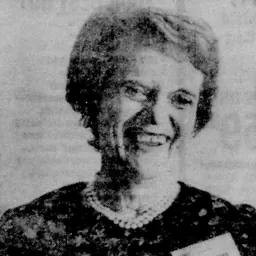
Born 1942. Nycole Turmel is a Canadian politician, trade unionist, labor leader, consultant and civil servant.
Nycole Turmel (born September 1, 1942) is a Canadian politician who served as the member of Parliament (MP) for Hull—Aylmer from 2011 to 2015. A member of the New Democratic Party (NDP), Turmel served as the party's interim leader from 2011 to 2012.
Turmel was first elected to the House of Commons of Canada in the 2011 federal election, representing the electoral district of Hull—Aylmer, and became interim leader of the New Democratic Party after leader Jack Layton took a leave of absence in the summer of 2011 for health reasons. When Layton subsequently died from complications due to cancer on August 22, 2011, Turmel became Leader of the Official Opposition, the second woman to be so appointed. She held both positions until the selection of Thomas Mulcair in the 2012 leadership election on March 24, 2012. She was defeated in her riding by Liberal Greg Fergus in the 2015 federal election.
Turmel is a long-time trade unionist and served as president of the Public Service Alliance of Canada from 2000 to 2006.
Personal life Nycole Turmel was born to Laval Turmel and Emilia Jacques in Ste-Marie-de-Beauce, Quebec, a nearly completely francophone area of Quebec, where she lived until the age of 18. Her father ran a dairy in the region, Laiterie Turmel, which produced and delivered milk, cream and ice cream. The family has a history of political involvement; her father served as a city councillor, as did one of her brothers. At 18, and newly married, she and her husband left her home region of the Beauce to move to Alma, Quebec, for work. She subsequently had three children and, after separating from her husband, raised them as a single mother. In 1990, Turmel left Alma and moved to Gatineau in order to take up a new job with her union. She has resided in Gatineau since.
Turmel is bilingual, speaking English as a second language, and is now married to a British-born Anglophone.
Career before politics In 1977, after she had moved to Alma, Quebec, Turmel began working as an employment counsellor assistant at the federal government's regional Canada Employment Centre. Turmel credits this experience as inspiring her to become active with her union, saying "I got involved in the union because of the injustices I was seeing." In particular, she says the clerical and regulatory (CR) employees, most of whom were women, were not being treated fairly. For example, the CR employees received less overtime reimbursement for meals than did other, male-dominated, employee groups. eventually serving as vice president of the CEIU in the late 1980s.
1980 CEIU Clerical and Regulatory strike In 1980, during a difficult round of collective bargaining, the 40,000 Clerical and Regulatory CEIU members went on what Our Times magazine described as the first big strike in the federal government—a strike that did not have the sanction of the union's national executive. Turmel tells the story as follows:
Women workers were being told by our union not to take strike action against an unfair employer. The male-dominated leadership at the time was out of touch with the reality faced by CRs in our workplaces. We were outraged by the way the union was treating us, but we were even more outraged at the employer. We took them both on, and we became leaders overnight. To drive our message home, we sent funeral wreaths and cactuses to the union's leadership. But we did a lot more than that in the workplace: we organized and we had fun! We would dress up in all sorts of costumes to greet our clients, and, at key moments, we would all toot our whistles, which would cause quite a storm. While her campaign for the presidency was unsuccessful, she became the alternate to the national president of the CEIU and moved to Gatineau. "I was not fully bilingual, my network was in Quebec and even though my children were grown up it was still difficult," Turmel explained.
Pay equity was a major issue in the PSAC. In 1984, the first human rights complaint against the federal government was filed. "I worked a lot on our pay equity struggle," said Turmel, "I was on the executive when we decided not to accept the government’s offer to settle and to wait for the court decisions. Many members were really upset at us. Years later we won the big fight and a lot of money for federal employees. This came with a recognition—long overdue—of the value of their work." It was during that time that Turmel suggested that a Member of Parliament “deserved to be roughed up because he did not respect the picket line,” a comment that has been featured on Conservative attack web sites. According to the Ottawa Citizen, her term as PSAC President was marked by a major shift toward social activism for the union. The newspaper writes that Turmel climbed to the highest ranks of PSAC by championing the cause of pay equity and that she was a key player in the union's $3.6-billion pay equity settlement, which gave her an important power base among women in the public service. Under her leadership PSAC created the National Aboriginal, Inuit and Metis Network. A Conservative attack web site described the fund thusly: "As a union head she demanded that taxpayers pay for a special fund to pay a campaign 'to fight globalization.'"
On September 11, 2001, PSAC members were on strike. Moments after the second plane flew into the World Trade Center in New York, Turmel, on behalf of PSAC members, suspended their legal strike action, with PSAC members returning to work providing services to Canadians and thousands of airline passengers from around the world. Days later, she pleaded for racial tolerance in a world that was quickly losing perspective and has said that racism then gained a stronger foothold in what were before considered to be tolerant and progressive communities. Weeks later, she with others challenged the loss of freedom articulated in the Canadian government's anti-terrorist legislation.
United Way From 1992 onwards, Turmel acted as one of the PSAC leaders helping to coordinate and officially lend the union's support to the United Way's Government of Canada Workplace Charitable Campaign. She also became treasurer of the Canadian Research Institute for the Advancement of Women in October 2010 and she represented workers on the Management Committee of Financial Assets of the QFL Solidarity Fund. She was active on the United Way Retiree Committee.
Political affiliations Turmel has been a member of the NDP since 1991. In the 1990s, she served as Associate President (Labour) of the party under leader Alexa McDonough, and she co-chaired, with Dick Proctor, the Social Democratic Forum on Canada's Future, a panel of "nine distinguished Canadians" which held broad cross-country consultations between March 1998 and January 1999 "to create a vision for the future of the federation" and canvass Canadians' ideas about progressive government. She also moderated the leadership process that saw Jack Layton elected as NDP leader in 2003.
As the president of PSAC, Turmel encouraged members of the union to vote for candidates—Liberal, NDP, and Bloc Québécois—that the union had endorsed for their progressive values and for being considered electable in their riding. During her time as a Bloc member, she gave four donations to the party, totaling $235. In January 2011, Turmel cancelled her membership in the Bloc Québécois and later filed papers to run as a New Democrat candidate. Turmel, however, was never a separatist: she says that she voted “no” in both the 1980 and 1995 sovereignty referendums, and has never voted for the Bloc. She also refused a request from former Bloc leader Gilles Duceppe to run as a Bloc candidate because of her disagreement with the party on the issue of Quebec sovereignty. Her campaign focused on local issues including getting legislative protection for Gatineau Park, a possible ferry between Aylmer and Kanata, and expanding the Rapibus transit project. She picked up key endorsements during the campaign, including from the Ottawa Citizen newspaper. Turmel went on to defeat longstanding Liberal incumbent Marcel Proulx by a shocking 23,000-vote margin. She is the first non-Liberal to win the riding in an election since its creation in 1914. The only other time it has been out of Liberal hands was from 1990 to 1993, when Gilles Rocheleau joined seven other MPs in forming the Bloc Québécois caucus; Rocheleau was heavily defeated in the 1993 election.
After the election, Turmel was named Chair of the NDP's National Caucus, with the unanimous support of her colleagues in the NDP caucus, and appointed critic for Public Works and Government Services Canada.
Interim NDP leader On July 25, 2011, NDP leader Jack Layton announced at a news conference that he was taking a temporary leave of absence for health reasons and recommended that Turmel be appointed interim leader for the duration of his absence. The recommendation was unanimously supported by the NDP caucus, and she became interim leader on July 28, 2011, when the party's federal council voted to support Jack Layton's recommendation. At the time, because Parliament was in summer recess and Layton was hoping to return when Parliament resumed in September, Turmel did not formally assume the role of Leader of the Official Opposition. She only assumed that office upon Jack Layton's death on August 22, 2011, and she stands as just the second woman to have held the role, after former Canadian Alliance MP Deborah Grey, who served in 2000 during that party's leadership race.
While serving as interim NDP leader, Turmel participated at the state funeral for Jack Layton, reading a biblical passage. Turmel yielded her position as interim NDP leader to Thomas Mulcair when he succeeded in the 2012 NDP leadership election on March 24, 2012.
NDP Shadow Cabinet Turmel was appointed as the Opposition Whip in the New Democratic Party's first shadow cabinet. She was defeated in the 2015 general election. Turmel endorsed Alberta MP Heather McPherson in the 2026 New Democratic Party leadership election.
Gatineau Park Legislation
Following through on a promise made during the 2011 federal election, Ms. Turmel introduced a private member's bill in the House of Commons to protect Gatineau Park on November 8, 2012. If passed, her Bill C-465 would establish the park's boundaries by act of parliament, as well as clarify the National Capital Commission's responsibilities with respect to Gatineau Park.
Several environmental groups supported introduction of Ms. Turmel's bill, including the Canadian Parks and Wilderness Society, Nature Québec, and the Conseil régional de l’environnement et du développement durable de l’Outaouais (CREDDO).
Another environmental group, however, the Gatineau Park Protection Committee (GPPC), said Ms. Turmel's bill fell short of meeting basic park protection criteria. According to the GPPC, both Bill C-465 and its successor, Bill C-565, place the interests of the park's private landowners above those of the public; encourage construction of more houses in Gatineau Park; and create confusion and contradiction in the National Capital Act. As well, the GPPC has said Ms. Turmel's legislation lacks a public-consultation mechanism, disregards the issue of Quebec's territorial integrity, and fails to make conservation the first priority of park management.
Accolades In 2006, Turmel received the Mitchell Sharp Award for Meritorious Service from the Government of Canada Workplace Charitable Campaign.
Publications
Electoral record
2009 Gatineau municipal election: Plateau–Manoir-des-Trembles District Candidate Votes %Maxime Tremblay 2,076 48.7%Nycole Turmel 1,980 46.5%Jean-Nicholas Martineau 205 4.8% Total valid votes 4,261 100.0%
Don’t just read it —
keep it.
Full-length biographies made to live with: read them, listen on the way to work, watch them tonight.
- E-book
- Audio
- Video
Instant download · yours to keep · every purchase keeps this site free
Important facts
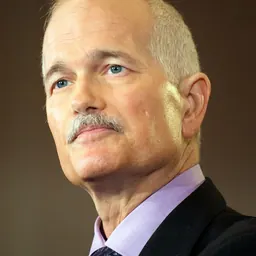
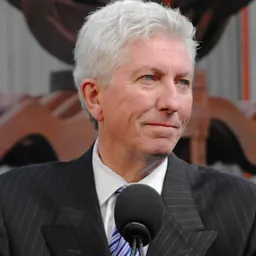
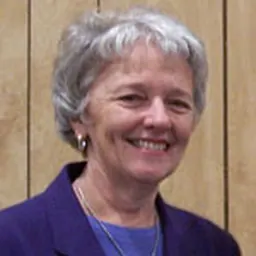
People in Nycole Turmel's life
Named in this biography and alive at the same time





Related people
Same field, nearest in time





Contemporaries
People whose lives overlapped Nycole Turmel's


Frequently asked questions
Who is Nycole Turmel?
Canadian politician
When was Nycole Turmel born?
Nycole Turmel was born on 1 September 1942 in Sainte-Marie.
What is Nycole Turmel's occupation?
Nycole Turmel is a politician, trade unionist, labor leader, consultant and civil servant.
What nationality is Nycole Turmel?
Nycole Turmel is Canadian.
Sources & further reading
Cite this page
APA: Biography.guide. (2026). Nycole Turmel. https://biography.guide/nycole-turmel/
MLA: "Nycole Turmel." Biography.guide, https://biography.guide/nycole-turmel/.
Chicago: "Nycole Turmel." Biography.guide. https://biography.guide/nycole-turmel/.
Data last updated: 2026-09-20 · Spot an error? Report a correction.
Page generated 2026-09-27 05:33 UTC