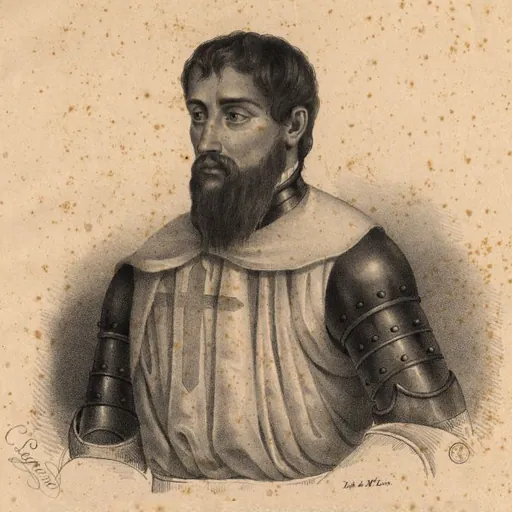
Nuno Álvares Pereira
Portuguese nobleman
About Nuno Álvares Pereira
Lived 1360 – 1431 (aged 71). Nuno Álvares Pereira was a military personnel, politician, military commander and commander-in-chief.
Dom Nuno Álvares Pereira, OCarm (; 24 June 1360 – 1 November 1431), known as Constable of Portugal, was a Portuguese general who played a decisive role in the 1383–1385 Crisis that assured Portugal's independence from Castile. He later became a mystic and was beatified by Pope Benedict XV in 1918, and canonised by Pope Benedict XVI in 2009.
Nuno Álvares Pereira is often referred to as the Saint Constable or as Saint Nuno of Saint Mary , his religious name. His grandfather was Dom Gonçalo Pereira, the archbishop of Braga from 1326 until 1349. He was descended from the oldest Portuguese and Galician nobility.
About a year after his birth, the child was legitimised by royal decree and so he was able to receive a knightly education typical of the offspring of the noble families of the time.
At 13 years of age he became page to Queen Leonor.
Military life Álvares Pereira began military service in 1373, when he was only 13, and helped stop an invasion from Castile. However, according to his own words, his first military campaigns were no more than skirmishes on the borders of Portugal. He was an impetuous and brave young man who soon showed himself to be an excellent leader.
When King Ferdinand I of Portugal died in 1383, his only heir was Beatrice, married to King John I of Castile. In order to preserve Portuguese independence, the nobles supported the claim of King Ferdinand's half-brother John, Master of Aviz to the throne. After his first victory over the Castilians, in the Battle of Atoleiros (April 1384), John of Aviz named Nuno Álvares Pereira protector and constable of Portugal, in practice supreme commander of Portugal's armies, and count of Ourém.
In April 1385, John of Aviz was recognized as king by the Cortes. This triggered an invasion of the country by King John I of Castile in support of his wife's rights to the throne. Nuno Álvares Pereira was engaged against the northern cities loyal to the Castilians. During this time of war, he fed the hungry populations of his Castilian opposition at his own expense. Dedicated to Mary, he fasted on Wednesdays, Fridays and Saturdays. The banner he chose as his personal standard bore the image of the cross, of Mary and of the saintly knights James and George. At his own expense he built numerous churches and monasteries, among which was the Carmelite church in Lisbon and the church of Our Lady of Victories at Batalha.
During the last year of his life, King John I went to visit and embrace him for the last time. He wept for he considered Nuno Álvares Pereira his closest friend, the man who had put him on the throne and saved his country's independence.
Nuno Álvares Pereira's tomb was lost in the famous 1755 Lisbon earthquake. His epitaph read:
Legacy
Álvares Pereira was beatified on 23 January 1918 by Pope Benedict XV. He was celebrated liturgically on 1 April as an obligatory memorial by the Order of Carmelites and as an optional memorial by the Order of Discalced Carmelites.
Álvares Pereira had been on the point of being canonised by decree in 1940 by Pope Pius XII. According to a recent statement by the postulator general of the Carmelite Order, his canonisation was postponed for diplomatic reasons (the Portuguese ambassador indicated that the time was not right).
On 3 July 2008 Pope Benedict XVI signed two decrees in Rome, promulgating the heroic virtues of Nuno Álvares Pereira and the authenticity of a miracle that had already been previously confirmed as such by medical and theological commissions. By this act, the pope formally canonised Friar Nuno de Santa Maria Álvares Pereira. The public celebration of his canonisation took place on 26 April 2009 in Saint Peter's Square in the Vatican City. The Carmelites now celebrate St Nuno on 6 November; the date also appointed for his feast in Portugal.
The Blessed Nuno Society is a mission society and prayer apostolate officially recognized by the Catholic Church as a diocesan Private Association of the Christian Faithful and affiliated with, the Catholic Diocese of Duluth, Minnesota.
Don’t just read it —
keep it.
Full-length biographies made to live with: read them, listen on the way to work, watch them tonight.
- E-book
- Audio
- Video
Instant download · yours to keep · every purchase keeps this site free
Important facts
Related people
Same field, nearest in time

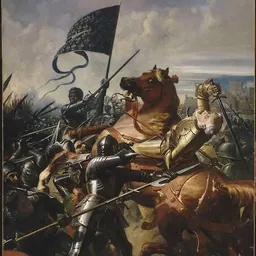
Contemporaries
People whose lives overlapped Nuno Álvares Pereira's
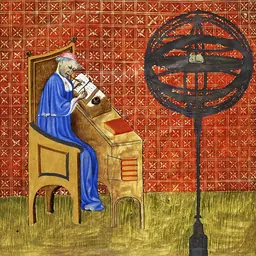


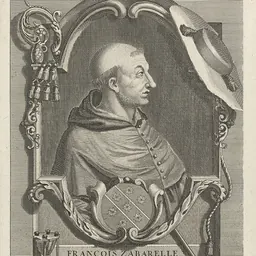

Frequently asked questions
Who was Nuno Álvares Pereira?
Portuguese nobleman
When was Nuno Álvares Pereira born?
Nuno Álvares Pereira was born on 24 June 1360 in Cernache do Bonjardim.
When did Nuno Álvares Pereira die?
Nuno Álvares Pereira died on 1 November 1431 in Carmo Convent.
What was Nuno Álvares Pereira's occupation?
Nuno Álvares Pereira was a military personnel, politician, military commander and commander-in-chief.
What nationality was Nuno Álvares Pereira?
Nuno Álvares Pereira's recorded nationality: Kingdom of Portugal.
Sources & further reading
· Wikipedia: Nuno Álvares Pereira
· DBpedia: Nuno Álvares Pereira
Cite this page
APA: Biography.guide. (2026). Nuno Álvares Pereira. https://biography.guide/nuno-alvares-pereira/
MLA: "Nuno Álvares Pereira." Biography.guide, https://biography.guide/nuno-alvares-pereira/.
Chicago: "Nuno Álvares Pereira." Biography.guide. https://biography.guide/nuno-alvares-pereira/.
Data last updated: 2026-09-22 · Spot an error? Report a correction.
Portrait: Wikimedia Commons · author & licence
Page generated 2026-09-27 05:02 UTC