
About Nuggehalli Raghuveer Moudgal
Lived 1931 – 2011 (aged 80). Nuggehalli Raghuveer Moudgal was an Indian biologist, known for Gonadotropin.
Nuggehalli Raghuveer Moudgal (4 March 1931 – 8 May 2011) was an Indian reproductive biologist, endocrinologist and the chairman of the Department of Biochemistry and dean of Faculty of Science at the Indian Institute of Science. He was known for his pioneering researches on gonadotropin and was an elected fellow of the Indian Academy of Sciences and the Indian National Science Academy. He was an associate of noted scientists, Choh Hao Li and Rodney Robert Porter and discovered the role of hormones in generating immune response in living beings, during his association with the former. The Council of Scientific and Industrial Research, the apex agency of the Government of India for scientific research, awarded him the Shanti Swarup Bhatnagar Prize for Science and Technology, one of the highest Indian science awards for his contributions to Medical Sciences in 1976.
Biography
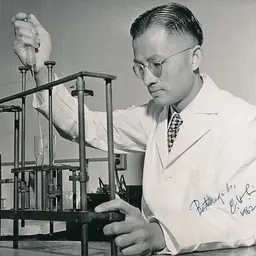
Raghuveer Moudgal was born on 4 March 1931 in Mysore, in the south Indian state of Karnataka, in a Hindu family to Vaidehi, a homemaker and N. Narasimha Moudgal, an electrical engineer with the State Electricity Board who reportedly contributed significantly to the electrification of the erstwhile Mysore state. He was the youngest of their three boys and two girls. His early schooling was at Seshadripuram High School, Bengaluru where he passed the matriculation in 1946. He moved to Kolhapur to complete his graduate studies at the University of Bombay in 1950, staying at his elder sister's house. Opting for a research degree for his post graduate studies, he joined the University of Madras and earned an MSc for his researches on the biochemistry of thyroid hormones. Continuing in Chennai, he pursued his doctoral studies under the guidance of P. S. Sarma, a noted biochemist, and secured a PhD in 1957. He went to the University of California, Berkeley in the US for his post-doctoral studies and worked as a post-doctoral fellow at the laboratory of Choh Hao Li, a Chinese-born US biochemist who would later describe the structure of somatotropin, a pituitary growth hormone.
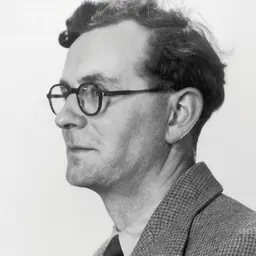
In 1961, he moved out of the US to continue his post-doctoral work in the UK at St Mary's Hospital Medical School, London on a Wellcome Trust fellowship. There, he joined the wards of Rodney Robert Porter, Nobel laureate biochemist, and spent a year at Porter's laboratory. On his return to India, he joined the All India Institute of Medical Sciences, Delhi as a CSIR Pool Officer. It was during this period his doctoral adviser, P. S. Sarma, invited him to join the Indian Institute of Science (IISc) as an assistant professor. At IISc, he continued his researches with the assistance of a grant from Ford Foundation and in 1969 he received an invitation from R. O. Greep of Harvard University for collaborative research. Moudgal stayed at Harvard for two years to supervise the work of Greep's Group and returned to IISc in 1971. He based his subsequent researches at the institute, simultaneously working as an associate professor and later as a professor. At the time of his retirement from official service in 1993, he was holding the positions of the Chairman of the Department of Biochemistry and the Dean of the Science Faculty.
Moudgal was pursuing his doctoral studies at Madras University when he married Biligiri Rao née Prapulla in 1957. which was detailed in one of his articles, Effect of ICSH on Early Pregnancy in Hypophysectomized Pregnant Rats, published in Nature in 1969. He discovered that neutralizing LH resulted in neutralization of several reproductive functions such as ovulation, implantation, and gestational progress and the discovery opened a new methodology in immunocontraceptive technology. He used these tumor cells for further investigations on Hormone-Receptor interactions, Cyclic adenosine monophosphate (cyclic AMP) production and steroidogenesis and experimentally demonstrated the extent of coupling and response with regard to cyclic AMP production and steroid output.
Bonnet macaques raised by him at Primate Research Laboratory made it handy for Moudgal in carrying out researches on follicle stimulating hormone in the primates and he discovered that immuno-neutralization of circulating FSH decreases the semen count, leading to oligozoospermia or azoospermia, but did not adversely affect libido. However, the researches could not be furthered due to laws related to preparation of protein-based pharmaceuticals. Still, his studies widened the understanding of conditions such as follicular maturation, atresia, spermatogenesis, primate reproduction and lactational amenorrhea. The pioneering work carried out by him led to the Indian Council of Medical Research recognizing his laboratory at IISc as a Centre for Advanced Research in Reproductive Biology, which as since been upgraded as Department of Molecular Reproduction and Developmental Genetics (MRDG). He documented his researches by way of several articles and his work has been cited by a number of authors and researchers. Besides, he edited two books, Gonadotropins and Gonadal Function and Perspectives In Primate Reproductive Biology and contributed chapters to many texts edited by others. He presented a research paper, Gonadotropins and Their Antibodies, at the Laurentian Hormone Research Conference (LHRC) held at Mont Tremblant, Canada in August 1973, thus becoming the first Indian scientist to present a paper at LHRC. His niece, Mrinalini Rao, whom he mentored, is a distinguished scientist at the University of Illinois.
Professional associations Moudgal, who was the secretary of the Society of Biological Chemists (India) from 1967 to 1969, served as the secretary-general of the Federation of Asian and Oceanian Biochemists (FAOB) during 1972–75 and was a member of the Endocrine Society and the Society for the study of Reproduction, both US-based societies.
Awards and honors Moudgal received the B. C. Guha Award in 1975, The Council of Scientific and Industrial Research awarded him Shanti Swarup Bhatnagar Prize, one of the highest Indian science awards in 1976. He received the Sreenivasaya Memorial Award from the Society of Biological Chemists (India) of the Indian Institute of Science in 1978 and he was selected for the Homi Bhabha Fellowship of the Homi Bhabha Foundation the same year. The Indian National Science Academy elected him as their fellow in 1979 and he received the Sanjay Gandhi Award for Science and Technology in 1984. The Indian Society for the Study of Reproduction and Fertility has instituted an annual oration, Prof. N. R. Moudgal Memorial Oration and an award, Prof. N. R. Moudgal Young Scientist Awards in his honor. His biography has been included in the volume 40 of the Biographical memoirs of fellows of the Indian National Science Academy.
Selected bibliography Books
Chapters
Articles
Don’t just read it —
keep it.
Full-length biographies made to live with: read them, listen on the way to work, watch them tonight.
- E-book
- Audio
- Video
Instant download · yours to keep · every purchase keeps this site free
Important facts
People in Nuggehalli Raghuveer Moudgal's life
Named in this biography and alive at the same time



Related people
Same field, nearest in time


Contemporaries
People whose lives overlapped Nuggehalli Raghuveer Moudgal's

Frequently asked questions
Who was Nuggehalli Raghuveer Moudgal?
Indian biologist, and endocrinologist 1931 - 2011
When was Nuggehalli Raghuveer Moudgal born?
Nuggehalli Raghuveer Moudgal was born on 4 March 1931 in Mysore State.
When did Nuggehalli Raghuveer Moudgal die?
Nuggehalli Raghuveer Moudgal died on 8 May 2011 in Dublin.
What was Nuggehalli Raghuveer Moudgal's occupation?
Nuggehalli Raghuveer Moudgal was a biologist.
What was Nuggehalli Raghuveer Moudgal known for?
Nuggehalli Raghuveer Moudgal was known for Gonadotropin.
What nationality was Nuggehalli Raghuveer Moudgal?
Nuggehalli Raghuveer Moudgal was Indian.
Sources & further reading
· Wikipedia: Nuggehalli Raghuveer Moudgal
· DBpedia: Nuggehalli Raghuveer Moudgal
Cite this page
APA: Biography.guide. (2026). Nuggehalli Raghuveer Moudgal. https://biography.guide/nuggehalli-raghuveer-moudgal/
MLA: "Nuggehalli Raghuveer Moudgal." Biography.guide, https://biography.guide/nuggehalli-raghuveer-moudgal/.
Chicago: "Nuggehalli Raghuveer Moudgal." Biography.guide. https://biography.guide/nuggehalli-raghuveer-moudgal/.
Data last updated: 2026-09-20 · Spot an error? Report a correction.
Page generated 2026-09-27 04:57 UTC