
About Nuala O'Faolain
Lived 1940 – 2008 (aged 68). Nuala O'Faolain was an Irish writer and journalist.
Nuala Brigid Anne O'Faolain (1 March 1940 – 9 May 2008) was an Irish journalist and writer. Her debut memoir, Are You Somebody?, published when she was in her mid-fifties, became a sensation in Ireland and a worldwide bestseller.
Born to a Dublin family with a journalist father who led a bohemian lifestyle, O'Faolain grew up poor and isolated. After studying English literature and spending time as an academic, she worked as a TV producer for the BBC and RTÉ, before becoming a newspaper columnist at The Irish Times in 1986. Her writing frequently touched on the role of women in Irish society.
Originally written as an introduction to a book of her columns, Are You Somebody? was first published in 1996 and was the number-one bestseller in Ireland for five months. In 1998, it topped the New York Times bestseller list. O'Faolain wrote two further non-fiction works: a second memoir, Almost There; and a biography, The Story of Chicago May, which won the Prix Femina étranger. She also published two novels, My Dream of You and Best Love, Rosie, the latter of which was released posthumously.
While being interviewed by her friend Marian Finucane on radio in April 2008, O'Faolain announced that she had been diagnosed with terminal cancer; she died four weeks later. She is regarded as one of the finest Irish writers of her generation, and has influenced the memoir form in Ireland.
Early life and career Nuala O'Faolain was born in Dublin on 1 March 1940, the second of nine children to Tomás O'Faolain (1911–1980) and Kathleen O'Sullivan (1915–1985). Originally a schoolteacher and Army lieutenant, under the pen name Terry O'Sullivan, her father became a prominent social diarist for the Evening Press in Dublin; he was distant from his children and engaged in extra-marital affairs which produced at least two half-siblings. Despite earning as much money as the newspaper's editor, Douglas Gageby, he did not share his income with his family. The family lived in poor conditions, frequently going hungry; her mother became an alcoholic. O'Faolain's sister Noreen recalled their mother going to the pub every day at 4 p.m. and not returning home until midnight.
O'Faolain spent several years working for RTÉ in Dublin.O'Faolain attended convent school in Dublin but was expelled aged fourteen after going home from dances with a married man. She then returned to Dublin to work at UCD as an academic in the English literature department, which brought her into contact with the bohemian Dublin literary scene of the late 1960s and early 1970s. During this period, O'Faolain showed little interest in Ireland, regarding the country as backward and unsophisticated, but a visit to the Merriman Summer School in County Clare in 1974 sparked new enthusiasm. In 1977, she moved back to Dublin to work for the public broadcaster, RTÉ, where she became a colleague of female journalists like Doireann Ní Bhriain, Marian Finucane, and Nell McCafferty – later her partner – who were making programmes about Irish society with a feminist bent. Brady was struck by her ability to "infuse ordinary people's everyday activities with value and interest". The column became a major success; O'Faolain was awarded journalist of the year in 1986. O'Faolain wrote about domestic violence, homophobia, the role of the Catholic Church, class, sexual mores, the Travelling community and Ireland's high birth rate. Her writing was outspoken and carried notes of humour. O'Faolain initially struggled to write in the first-person singular, remarking later "you don't crawl to the edge of 55 in Ireland by thinking you're somebody. You get there sideways." After psychological counselling and a creative writing course, she wrote a 200-page memoir, called Are You Somebody?. The memoir focused heavily on her childhood and her relationship to her parents; she told her friend, the author June Caldwell, that the book began and ended with accounts of their turbulent marriage because "I think out of some mixture of loyalty and being imprinted by pattern, I was trying to oblige them by ruining myself. I was tempted to join my mother in her despair all my life." A major focus of the book was O'Faolain's relationships with men, and her emotional inheritance of her mother's loneliness; even after achieving literary success, O'Faolain remarked of her mother that "her unhappiness seems much more real, still, than my happiness". The book was published in the United Kingdom in 1997; it also sold well there, and was widely praised by critics. In a review for The Independent, Melissa Benn wrote: "Rare is the book that you really cannot put down, the one that seems as necessary, poignant, impossible and joyful as life. This short work of memory and desire by one of Ireland's most prominent columnists is one of them." It reached number one on the New York Times bestseller list, and sold over 300,000 copies. In total, the memoir sold over a million copies worldwide. In a starred review, Kirkus Reviews said: "O'Faolain may be 'almost there' – free of turbulence and waste, out of the wild hills and onto calm water – but she may also be constitutionally incapable of such a condition: there's too much grit in her keen eye to let it rest easy upon the world." Almost There was also an international bestseller. In 2006, the book won the Prix Femina étranger, a French literary award for foreign writers decided by an all-female jury. On winning the prize, O'Faolain said: "The book is in every bookshop window in France and I wish May knew – she spent a lot of time in French jails for her part in her lover's burglary of the American Express office, still in the Rue Scribe, in 1903."
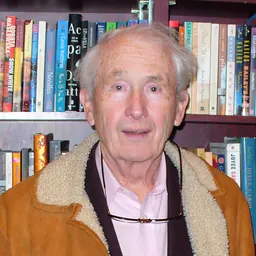
Fiction After the American success of Are You Somebody? in 1998, O'Faolain was offered a million-dollar advance to write a novel. She published the novel, My Dream of You, in 2001. The novel was a New York Times notable book of 2001 and a bestseller. O'Faolain experienced writer's block while attempting a second novel; Best Love, Rosie was published posthumously in 2009. The journalist Dónal Lynch wrote that O'Faolain's writing existed between the "nostalgia of Maeve Binchy and the horror of Frank McCourt". The academic Emer Nolan wrote that O'Faolain had a voice "that rapidly became associated with a unique blend of confessional self-revelation and cultural authority". In the foreword to posthumous collection of columns, A More Complex Truth, Fintan O'Toole praised as unique "her ability to write about, say, mobile phones and abortion, St Patrick's Day parades and sectarian violence, in exactly the same voice. She had perfect pitch for a note that was precisely halfway between the intimacy of a confession and the objectivity of reportage."
The academic Emer Nolan wrote that in Are You Somebody?, O'Faolain showed a lack of interest in conventional femininity, saying: "She takes it for granted that significant romantic relationships involve friendship of a particular kind: she recalls conversations, books, shared work and travel." She also writes frankly about the role of sex in Irish society in the 1970s, and the risks associated with unplanned pregnancy. She writes that her relationships with men are inclined towards what she calls "hero worship". In her entry in the Dictionary of Irish Biography, Patrick Maume wrote that her "identification with the figure of the neglected child resonated with the reassessment of the immediate Irish past that marked the 1990s and 2000s; her constant self-reinvention and self-questioning gave her writing a quality of open-endedness which enhanced its appeal for many readers." In her writings she often discusses her frustration at the sexism and rigidity of roles in Catholic Ireland that expected her to marry and have children, neither of which she did. O'Faolain wrote during the beginnings of the women's movement; her writings often dealt with misogyny.
In the late 1960s and early 1970s, she was in an intermittent relationship with an art critic, Tim Hilton, whom she met at Oxford and had planned to marry. At the time of O'Faolain's death, they had partly reconciled.
Illness and death O'Faolain was diagnosed with metastatic cancer while living in New York City in early 2008. She had experienced a strange feeling in the right side of her body and presented at the emergency department of a hospital, where she was told that she had primary tumours in her lungs which had spread to her brain and liver, and that her cancer was incurable. She refused chemotherapy. Both O'Faolain and Finucane were in tears during the interview, which was recorded in Galway, where O'Faolain was undergoing radiotherapy. O'Faolain told Finucane: "I don't want more time. As soon as I heard I was going to die, the goodness went from life". O'Faolain's frank discussion of her illness led to the interview being preceded by a warning that her comments may be upsetting to others with life-threatening conditions. Her funeral took place in the Church of Our Lady of the Visitation in Fairview in north Dublin on 13 May. O'Faolain's ashes were buried in Kilbarrack Cemetery in north Dublin with her maternal grandparents, Terence and Marion O'Sullivan, and her brother, Dermot Phelan. After Low-Beer complained that she had not mentioned him in her radio interview, she asked that her tombstone be inscribed "Beloved of John Low-Beer of Brooklyn."
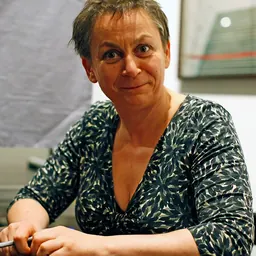
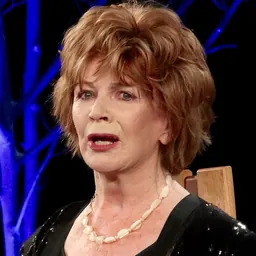
Legacy In 2012, RTÉ announced a major new documentary on her life. Every Single Minute, a 2014 novel by Hugo Hamilton, is based in his experiences travelling in Berlin with O'Faolain during her final illness. A book published in 2019 by the academic Emer Nolan, Five Irish Women: The Second Republic, 1960–2016, analysed O'Faolain's career and contribution to public life alongside those of Edna O'Brien, Sinéad O'Connor, Bernadette Devlin McAliskey, and Anne Enright. The book contrasted the relatively kind reception for O'Faolain's work, and the sympathetic response to her final illness, to the more hostile treatment of O'Brien and O'Connor.
O'Faolain's memoirs were considered a precursor to the first-person narratives which were significant in the 2015 Irish same-sex marriage referendum and the 2018 abortion referendum in creating a dialogue between writer and reader. Boxes of correspondence received by O'Faolain from readers of Are You Somebody? are now archived at the National Library of Ireland. The memoir and its rejection of shame influenced other women to write; Emilie Pine said that her work was "so brave and so loud that it becomes unavoidable, that's what actually broke the silence in the end". For an exhibition on O'Faolain at the Museum of Literature Ireland in 2020, the novelist Anne Enright said: "It was such a small society to bring out a little bomb of a book like that. It was an intense moment of gossip-making, you could not believe she was saying these things."
Awards 1985: Jacob's Award as producer of RTÉ television programme Plain Tales 2006: Prix Femina étranger, The Story of Chicago May
Books
My Dream of You, Riverhead Books, 2001. . Almost There: The Onward Journey of a Dublin Woman, Riverhead Books, 2003. . The Story of Chicago May, Riverhead Books, 2005. . Best Love, Rosie, New Island Books, 2009. . A More Complex Truth, New Island Books, 2010. , reprinted as A Radiant Life: The Selected Journalism of Nuala O'Faolain, Harry N. Abrams 2011. .
Don’t just read it —
keep it.
Full-length biographies made to live with: read them, listen on the way to work, watch them tonight.
- E-book
- Audio
- Video
Instant download · yours to keep · every purchase keeps this site free
Important facts
People in Nuala O'Faolain's life
Named in this biography and alive at the same time


Related people
Same field, nearest in time


Contemporaries
People whose lives overlapped Nuala O'Faolain's


Frequently asked questions
Who was Nuala O'Faolain?
Irish writer (1940–2008)
When was Nuala O'Faolain born?
Nuala O'Faolain was born on 1 March 1940 in Dublin.
When did Nuala O'Faolain die?
Nuala O'Faolain died on 9 May 2008 in Dublin.
What was Nuala O'Faolain's occupation?
Nuala O'Faolain was a writer and journalist.
What nationality was Nuala O'Faolain?
Nuala O'Faolain was Irish.
Sources & further reading
Cite this page
APA: Biography.guide. (2026). Nuala O'Faolain. https://biography.guide/nuala-o-faolain/
MLA: "Nuala O'Faolain." Biography.guide, https://biography.guide/nuala-o-faolain/.
Chicago: "Nuala O'Faolain." Biography.guide. https://biography.guide/nuala-o-faolain/.
Data last updated: 2026-09-20 · Spot an error? Report a correction.
Page generated 2026-09-27 05:20 UTC