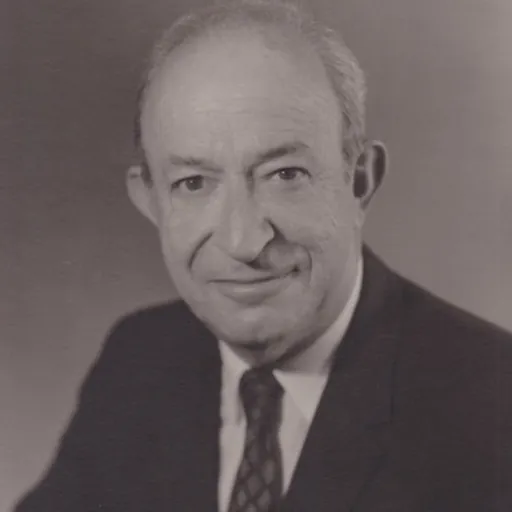
Norman Lloyd
American composer, music teacher, conductor, pianist and musicologist
About Norman Lloyd
Lived 1909 – 1980 (aged 70). Norman Lloyd was an American conductor, composer, musicologist, music educator, pianist and musician.
Norman Lloyd (November 8, 1909 – July 31, 1980) was an American pianist, composer, educator, author and supporter of the arts who scored works for modern dance, documentary film and classical chamber. Through his work as an educator, notably at Juilliard, he exerted a significant influence on the teaching of musical theory; and later as the author of books including the popular "Fundamentals of Sight Singing and Ear Training" (co-authored with Arnold Fish). He continued to influence and support the arts as creator of the Rockefeller Foundation's arts program and its first director. He was the son of David Lloyd, a steel mill worker and minor league baseball player, and grandson of William Lloyd, a coal miner who immigrated to the United States from Wales in 1845.
Career
His professional career began as an 11-year-old piano accompanist for silent films in the early 1920s. He received both his bachelor's and master's degrees from NYU, where he studied musical composition under Aaron Copland. It was also at NYU that Lloyd met fellow piano accompanist Ruth Dorothy Rohrbacher, whom he married in 1933 and with whom he collaborated on books and musical projects throughout his life. They had two sons, David and Alex. In the mid-1930s, Lloyd was hired to work as a pianist and composer in the newly created summer dance program at Bennington College, alongside choreographers Martha Graham, José Limón, Doris Humphrey and others. During the summers at Bennington, he scored many works for dance, including "Panorama" for Graham and "Lament for Ignacio Sanchez Mejias" with Humphrey choreographing for Limón. The Bennington collaboration of artists during those years is considered by many to be the foundation of modern dance as an American art form.
Lloyd went on to serve as Director of Education at the Juilliard School of Music in New York City from 1946 to 1949, where he established a new dance division with Martha Hill as director, and invited Graham, Limón and other Bennington choreographers to join the faculty. During this period, he and Juilliard president William Schuman designed a new and innovative approach to the study of musical theory entitled, "The Literature and Materials of Music," which shifted the emphasis away from textbooks and rigorous ear training to discussion and direct pedagogy by composers in the classroom. He and Schuman were committed to teaching music from a more holistic approach that would "make responsible adults of musicians." The new curriculum was intended to disrupt what the two men considered to be an overly insular culture and rigidly formal training regimen at Juilliard, and effectively altered the course of American musical education towards the more comprehensive and progressive path on which it remains today. as well as chamber works for the piano and violin. He worked tirelessly as a teacher and educator and his influence can be felt in the works of the many students who passed through Juilliard during his tenure. He eventually left Juilliard in 1963 to serve as Dean of the Oberlin College Conservatory of Music; he received a Doctorate of Music from the Philadelphia Conservatory of Music the same year. serving there as Director of Arts Programming until 1972. He published a number of books during his career, including the "Golden Encyclopedia of Music," "Fireside Book of Favorite American Songs" and "Fireside Book of Folk Songs." He played a pivotal role in the re-emergence and popularity of Scott Joplin's ragtime tunes some 30 years after the Depression when he persuaded Vera Brodsky Lawrence to edit, "The Collected Works of Scott Joplin." Clark, George. The Morning Record May 7, 1965 Calta, Louis. New York Times, November 6, 1971 Schonberg, Harold. New York Times April 25, 1958 Naxos, Classical Music Archives - Norman Lloyd, Artist Profile. Olmstead, Andrea. Juilliard: A History Norman Lloyd Biography, Rockefeller Archive Center Teck, Katherine. Making Music For Modern Dance. Swayne, Steve. Orpheus in Manhattan: William Schuman and the Shaping of America's Musical Life. Anna North on Alex North. Yonkers Herald
Don’t just read it —
keep it.
Full-length biographies made to live with: read them, listen on the way to work, watch them tonight.
- E-book
- Audio
- Video
Instant download · yours to keep · every purchase keeps this site free
Important facts
People in Norman Lloyd's life
Named in this biography and alive at the same time




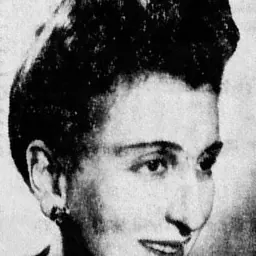
Related people
Same field, nearest in time


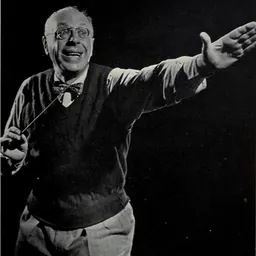
Contemporaries
People whose lives overlapped Norman Lloyd's





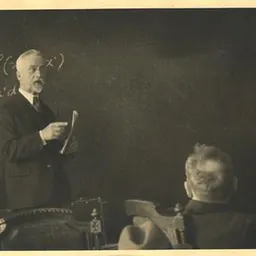
Frequently asked questions
Who was Norman Lloyd?
American composer, music teacher, conductor, pianist and musicologist
When was Norman Lloyd born?
Norman Lloyd was born on 8 November 1909 in Pottsville.
When did Norman Lloyd die?
Norman Lloyd died on 31 July 1980 in Greenwich.
What was Norman Lloyd's occupation?
Norman Lloyd was a conductor, composer, musicologist, music educator, pianist and musician.
What nationality was Norman Lloyd?
Norman Lloyd was American.
Sources & further reading
· DBpedia: Norman Lloyd (composer)
Cite this page
APA: Biography.guide. (2026). Norman Lloyd. https://biography.guide/norman-lloyd/
MLA: "Norman Lloyd." Biography.guide, https://biography.guide/norman-lloyd/.
Chicago: "Norman Lloyd." Biography.guide. https://biography.guide/norman-lloyd/.
Data last updated: 2026-09-22 · Spot an error? Report a correction.
Portrait: Wikimedia Commons · author & licence
Page generated 2026-09-27 05:02 UTC