
About Norman Lewis
Lived 1908 – 2003 (aged 95). Norman Lewis was a British writer, novelist, journalist, photographer and travel writer, known for Indigenous peoples.
John Frederick Norman Lewis (28 June 1908 – 22 July 2003) was a British writer. While he is best known for his travel writing, he also wrote twelve novels and several volumes of autobiography.
Subjects he explored in his travel writing include life in Naples during the Allied liberation of Italy (Naples '44); Vietnam and French colonial Indochina (A Dragon Apparent); Indonesia (An Empire of the East); Burma (Golden Earth); tribal peoples of India (A Goddess in the Stones); Sicily and the Mafia (The Honoured Society and In Sicily); and the destruction caused by Christian missionaries in Latin America and elsewhere (The Missionaries).
His newspaper article entitled "Genocide in Brazil" (1969) prompted the creation of Survival International—an organisation dedicated to the protection of indigenous peoples around the world.
Graham Greene described Lewis as "one of the best writers, not of any particular decade, but of our century". 343, Carterhatch Lane, Enfield, Middlesex, a suburb of London, to pharmacist Richard George Lewis (d. 1936) and his wife Louise Charlotte (née Evans; d. 1950). His parents became spiritualists after the deaths of Lewis's elder brothers, and hoped young Lewis would grow up to become a medium. A clever child, Lewis was bullied by other children, and sent by his parents to live for a couple of years with three deeply religious "half-mad aunts" in Wales. Having been educated at Enfield Grammar School, as a young man, Lewis tried a variety of ways to make a living in the Great Depression of the 1930s, including self-employed wedding photographer, auctioneer, umbrella wholesaler and briefly a motorcycle racer at Harringay Stadium and White City.
Lewis's different books give varying accounts of his British Army service in World War II. In his autobiography, Jackdaw Cake, he says he served in the Intelligence Corps in Algiers, Tunisia and Naples in 1942-44; elsewhere says he was eventually commissioned as a second lieutenant and served with the 1st King's Dragoon Guards, an armoured regiment in the Italian Campaign. His account of experiences during the Allied occupation of Italy, Naples '44 (1978) was called by The Telegraph "one of the great first-hand accounts of the Second World War." Shortly after the war he wrote books about Burma, Golden Earth (1952), and French Indochina, A Dragon Apparent (1951), which The Telegraph similarly praised as " the finest record of Indo-China before the devastation wrought by the Vietnam War".
Writing
Lewis was fascinated by cultures which were little touched by the modern world. This is reflected in his books on travels in Indonesia, An Empire of the East, and among the tribal peoples of India, A Goddess in the Stones.
Lewis wrote several volumes of autobiography, concerned primarily with his observations of the many places in which he lived at various times, including St Catherine's Island in South Wales near Tenby, the Bloomsbury district of London during the Second World War, Nicaragua, a Spanish fishing village (Voices of the Old Sea), Sicilian life, including the role of the Mafia, was a major theme, which he explored in The Honoured Society (1964) and In Sicily (2000). While never losing sight of the horrors inflicted by the Mafia, his accounts were not sensationalist. They were based on a detailed understanding of Sicilian society, and a deep sympathy with the sufferings of the Sicilian people. The Latin connection encouraged him to travel, resulting in his first book, Spanish Adventure (1935). The marriage had, however, failed by the start of the Second World War in 1939. He talked about "the intense joy I derive from being alive", and said that he was "exceedingly happy".
Don’t just read it —
keep it.
Full-length biographies made to live with: read them, listen on the way to work, watch them tonight.
- E-book
- Audio
- Video
Instant download · yours to keep · every purchase keeps this site free
Important facts
People in Norman Lewis's life
Named in this biography and alive at the same time

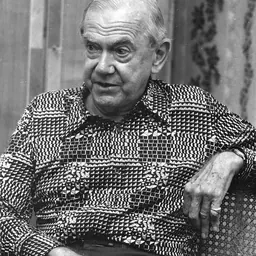



Related people
Same field, nearest in time




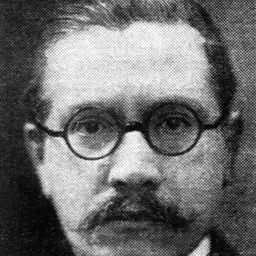
Contemporaries
People whose lives overlapped Norman Lewis's


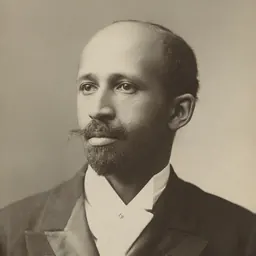
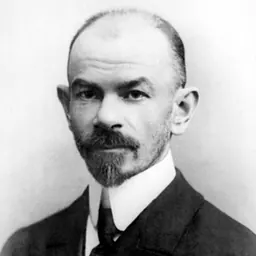
Frequently asked questions
Who was Norman Lewis?
British travel writer (1908–2003)
When was Norman Lewis born?
Norman Lewis was born on 28 June 1908 in London Borough of Enfield.
When did Norman Lewis die?
Norman Lewis died on 22 July 2003 in Saffron Walden.
What was Norman Lewis's occupation?
Norman Lewis was a writer, novelist, journalist, photographer and travel writer.
What was Norman Lewis known for?
Norman Lewis was known for Indigenous peoples.
What nationality was Norman Lewis?
Norman Lewis was British.
Sources & further reading
· DBpedia: Norman Lewis (writer)
Cite this page
APA: Biography.guide. (2026). Norman Lewis. https://biography.guide/norman-lewis-writer/
MLA: "Norman Lewis." Biography.guide, https://biography.guide/norman-lewis-writer/.
Chicago: "Norman Lewis." Biography.guide. https://biography.guide/norman-lewis-writer/.
Data last updated: 2026-09-22 · Spot an error? Report a correction.
Page generated 2026-09-27 05:24 UTC