
About Norman Kember
Lived 1931 – 2025 (aged 93–94). Norman Kember was a British biophysicist and peace activist, known for Iraq.
Norman Frank Kember (1931 – 3 September 2025) was a British biophysicist and peace activist. He was an emeritus professor of biophysics at Barts and The London School of Medicine and Dentistry and a Christian pacifist active in campaigning on issues of war and peace. As a Baptist, he was a long-standing member of the Baptist Peace Fellowship of North America and the Fellowship of Reconciliation. As a conscientious objector to military service, he worked in a hospital in the early 1950s, which stimulated his interest in medical physics. He was involved with the "Peace Zone" at the annual Greenbelt Festival.
In 2005, as a member of a delegation of Christian Peacemaker Teams (CPT) in Iraq, Kember was taken hostage with three other CPT members, leading to a widely publicised hostage crisis.
Kidnapping On 26 November 2005, Kember (a delegate) and three other Western peace workers with CPT (American Tom Fox and Canadians James Loney and Harmeet Singh Sooden) were kidnapped by a previously unknown group calling itself the Swords of Righteousness Brigade. On 25 March, in a phone-in discussion on BBC Radio 5 Live, Colonel Bob Stewart, a former British Commander under United Nations command in Bosnia and Herzegovina from September 1992 to May 1993 suggested that Kember and people like him were a liability, since he had ignored advice not to go to Baghdad and the security services, the British government and multinational forces had diverted valuable time and resources to rescue a "foolish, albeit well-intentioned, meddling civilian". His alleged lack of gratitude was criticised as not being characteristic of true Christian values.
Aftermath Kember arrived back in the United Kingdom on 25 March and released a written statement saying "I do not believe that a lasting peace [in Iraq] is achieved by armed force, but I pay tribute to their (the armed forces) courage and thank those who played a part in my rescue". Later that day, he also released a video statement in which he again thanked his rescuers, and those who had supported his family throughout his kidnapping.
A public interview with Kember was recorded at the Greenbelt Christian Arts Festival at Cheltenham in August 2006.
Kember wrote an account of his kidnapping, Hostage in Iraq, which was published in 2007. He considered it an irony that he travelled to Iraq to oppose the military intervention and was flown out of Baghdad in a military helicopter, guarded by machine guns. He also discussed whether his peace testimony has been compromised and what alternatives would have been at hand. In lectures and interviews, Kember stated that what saddened him is the fact that he was alive and well, while people in Iraq, servicemen as well as civilians, are constantly threatened and many have meanwhile lost their lives.
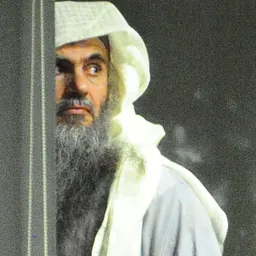
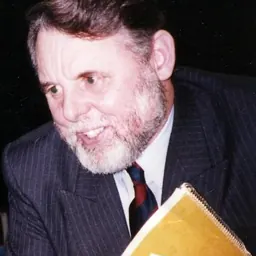
Pleas for his release Many individuals and groups asked for Kember's release; including: Terry Waite, radical Islamic cleric Abu Qatada, Egypt's Muslim Brotherhood, and Briton Moazzam Begg, a former detainee at the Guantanamo Bay prison.
Arrest of kidnappers On 7 November 2006, Iraqi troops arrested individuals suspected of involvement in the kidnap and imprisonment of Kember. The same day, Kember released a statement in which he refused to testify against them.
Hostage in Iraq A year after his release, Kember described his captivity in Baghdad in his book Hostage in Iraq. Writing for The Guardian newspaper, he praised his captors' conduct, saying that "I am almost surprised that we were treated so moderately by our captors – apart, that is, from the tragic, largely unexplained, decision to kill Tom Fox, the American Quaker."
In 2016, Kember reflected on his kidnap in an article for Ekklesia, saying "I do not regret my decision to go with the CPT to Baghdad".
Abu Qatada bail In May 2008, Kember provided bail security for the release of Abu Qatada. Qatada, who had appealed for Kember's release, entered the UK using a forged passport but was allowed to remain in the UK on appeal under the British Human Rights Act 1998 and European Convention on Human Rights, despite suspected continued terrorist involvement, and was held in prison until his release by the Special Immigration Appeals Commission.
Personal life and death Kember was born in London in 1931. He and Pat Cartwright were married in September 1960. They had two daughters, Jo and Sally.
Don’t just read it —
keep it.
Full-length biographies made to live with: read them, listen on the way to work, watch them tonight.
- E-book
- Audio
- Video
Instant download · yours to keep · every purchase keeps this site free
Important facts
People in Norman Kember's life
Named in this biography and alive at the same time






Related people
Same field, nearest in time





Contemporaries
People whose lives overlapped Norman Kember's
Frequently asked questions
Who was Norman Kember?
British biophysicist and peace activist
When was Norman Kember born?
Norman Kember was born in 1931 in England.
When did Norman Kember die?
Norman Kember died in 2025.
What was Norman Kember's occupation?
Norman Kember was a biophysicist and peace activist.
What was Norman Kember known for?
Norman Kember was known for Iraq.
What nationality was Norman Kember?
Norman Kember was British.
Sources & further reading
Cite this page
APA: Biography.guide. (2026). Norman Kember. https://biography.guide/norman-kember/
MLA: "Norman Kember." Biography.guide, https://biography.guide/norman-kember/.
Chicago: "Norman Kember." Biography.guide. https://biography.guide/norman-kember/.
Data last updated: 2026-09-22 · Spot an error? Report a correction.
Page generated 2026-09-27 05:26 UTC