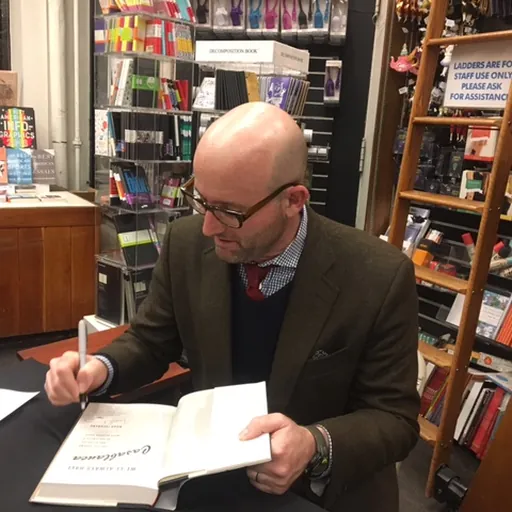
Noah Isenberg
American film scholar and historian
About Noah Isenberg
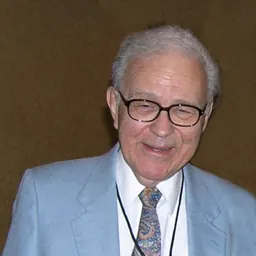
Born 1967. Noah Isenberg is an American film historian, university teacher and cultural studies scholar.
Noah William Isenberg (born June 28, 1967) is an American film scholar and historian. Isenberg is currently the Charles Sapp Centennial Professor and former Chair of the Department of Radio-Television-Film at The University of Texas at Austin. He previously served as Professor of Culture and Media at Eugene Lang College, where he was also the founding director of the Screen Studies program. In April 2026, he received the 2026 Guggenheim Fellowship in Film, Video, & New Media Studies.
Education Isenberg received his BA in History from the University of Pennsylvania, his MA in German Literature from the University of Washington, and his PhD in German Studies from the University of California at Berkeley.
Career
Positions Isenberg taught film studies and German at Wesleyan University from 1995 to 2004. In 2004, Isenberg began teaching as Professor of Culture and Media and the founding Director of Screen Studies at the New School in Greenwich Village. During the summer terms 2013 to 2017, Isenberg was a visiting professor of Film and Media studies at Dartmouth College, where he also held a visiting scholar position at the Leslie Center for the Humanities. In 2017, he was also a visiting professor of Film Studies at the University of Pennsylvania.
Work
Edgar Ulmer Isenberg has written extensively on Austrian-American film director Edgar Ulmer and his work. In 2004, he wrote his first article on Ulmer, highlighting the role of exile in Ulmer's work and aesthetics. On the basis of the article, Isenberg received a contract from the University of California for a biography of Edgar Ulmer. While researching Ulmer, Isenberg wrote a book-length study of Ulmer's film Detour, publishing it in 2008. He based that study on unpublished letters, interviews, and other archival materials, covering the film's production history, legacy, and subsequent interpretation. While writing the biography of Ulmer, Isenberg tried to strike a balance between expressing admiration for Ulmer's accomplishments while shying away from "the more hagiographic treatments" the director had received. Due to the uncertain nature of Ulmer's life, Isenberg claims the book is more of a work of "creative nonfiction" than a straightforward biography. The book was published in hardcover in 2014 as Edgar G. Ulmer: A Filmmaker at the Margins; a tenth-anniversary paperback edition is due out in 2024. The New York Times hailed the biography as "a page turner of a biography." Isenberg's work also notes the ways in which Ulmer's filmmaking career pays homage to Weimar cinema. Isenberg interviewed descendants of cast and crew members on the film for the book. It was published in 2017 as We'll Always Have Casablanca: The Life, Legend, and Afterlife of Hollywood's Most Beloved Movie, and was chosen as a Summer Book of 2017 in the Financial Times, while earning a spot on the bestseller list of the Los Angeles Times. In the book, Isenberg details the film's production history, as well as reactions to the film from both mainstream and African-American newspapers. He also draws attention to his conception of the film as primarily a refugee story rather than a romance. For his work on Wilder, he was selected as a 2026 Guggenheim fellow. Isenberg serves on the editorial board of the academic journals Film Quarterly and New Review of Film and Television Studies. He is also on the Editorial Advisory Board of the British Film Institute's Screen Studies list and of WeimarCinema.org. and was the recipient of an inaugural National Endowment for the Humanities Public Scholar Award in 2015-16. His writing has appeared in a number of diverse publications including The Nation, New York Times Book Review, The New Republic, Bookforum, Chronicle of Higher Education, The Paris Review Daily, The Daily Beast, Salon, the Times Literary Supplement, and the Wall Street Journal.
Select bibliography
Books (selected)
"Billy Wilder on Assignment: Dispatches from Weimar Berlin and Interwar Vienna" (Princeton, NJ: Princeton University Press, 2021) "We'll Always Have ‘Casablanca’: The Life, Legend, and Afterlife of Hollywood's Most Beloved Movie" (New York: W.W. Norton; London: Faber & Faber; Budapest: Európa, 2017) "Edgar G. Ulmer: A Filmmaker at the Margins " (Berkeley, CA: University of California Press, 2014) "Editor, Weimar Cinema: An Essential Guide to Classic Films of the Era" (New York: Columbia University Press, 2009) "Detour" (London: British Film Institute, 2008) "Editor and translator, with a critical introduction, The Face of East European Jewry by Arnold Zweig" (Berkeley, CA: University of California Press, 2004) "Between Redemption and Doom: The Strains of German-Jewish Modernism" (Lincoln, NE: University of Nebraska Press, 1999; paperback edition 2008).
Articles (selected)
"A Man In Transit" (The Nation, 2022) "The Making of Billy Wilder" (The Paris Review, 2021) "Why Movie Musicals Work" (The New York Times, 2019) "Making the Movies Un-American" (The New Republic, 2018) "Voluptuous Panic" (The New York Review of Books, 2018) "Hollywood's Biggest Stars Seen Inside and Out" (The New York Times, 2017) "The Poet of Ill Tidings" (The Nation, 2017) "Casablanca's Refugee Tale is shockingly Relevant for 2017" (The Daily Beast, 2017) "The Reluctant Enthusiast: Orson Welles on Casablanca" (The Paris Review, 2017) "The Making of Steven Spielberg (review essay on Molly Haskell, Steven Spielberg: A Life in Films)"(New Republic, 2017) "Eavesdropping on Weimar" (The New York Review of Books, 2016) "Maniacal Quests (review essay on Werner Herzog, Of Walking on Ice)" (The Nation, 2016) "Made in Hollywood: Budd Schulberg's Centennial" (The Paris Review Daily, 2014) "Grand Collusion (Rev. of Ben Urwand, The Collaboration: Hollywood's Pact with Hitler)," ( Bookforum, 2014) "Other Worlds: Edgar G. Ulmer's Underground Films of the 1950s" (Los Angeles Review of Books, 2013) "A Last Gasp of Stale Air: Edgar G. Ulmer's late noir Murder Is My Beat" (Moving Image Source, 2013.) "Play It Again, Sam’—and Again and Again" (Wall Street Journal, 2012.) ""Illuminations" (Rev. of Miriam Hansen, Cinema and Experience: Siegfried Kracauer, Walter Benjamin, Theodor W. Adorno" ( Bookforum, 2012)
Don’t just read it —
keep it.
Full-length biographies made to live with: read them, listen on the way to work, watch them tonight.
- E-book
- Audio
- Video
Instant download · yours to keep · every purchase keeps this site free
Important facts
People in Noah Isenberg's life
Named in this biography and alive at the same time

Related people
Same field, nearest in time





Contemporaries
People whose lives overlapped Noah Isenberg's




Frequently asked questions
Who is Noah Isenberg?
American film scholar and historian
When was Noah Isenberg born?
Noah Isenberg was born on 28 June 1967.
What is Noah Isenberg's occupation?
Noah Isenberg is a film historian, university teacher and cultural studies scholar.
What nationality is Noah Isenberg?
Noah Isenberg is American.
Sources & further reading
Cite this page
APA: Biography.guide. (2026). Noah Isenberg. https://biography.guide/noah-isenberg/
MLA: "Noah Isenberg." Biography.guide, https://biography.guide/noah-isenberg/.
Chicago: "Noah Isenberg." Biography.guide. https://biography.guide/noah-isenberg/.
Data last updated: 2026-09-22 · Spot an error? Report a correction.
Portrait: Wikimedia Commons · author & licence
Page generated 2026-09-27 05:01 UTC