
About Nili Mirsky
Lived 1943 – 2018 (aged 74). Nili Mirsky was an Israeli translator.
Nili Mirsky (; December 3, 1943 – January 30, 2018) was an Israeli editor, translator from Russian and German into Hebrew, and held a Ph.D. in French literature, Russian, and German. She taught in the literature department at the Tel Aviv University. She received numerous awards for her work, including the Tchernichovsky Prize for translation in 1989 and the Israel Prize for literature, in the field of translation, in 2008.
Biography Mirsky was born in Rehovot in 1943, the eldest daughter of Johanna Ilgovsky, originally from Lithuania, and Moshe Boleslavsky, and grew up in Tel Aviv. Her grandfather, Yehuda Boleslavsky, owned a Russian-language bookstore on Allenby Street, where she spent many hours as a child. She spoke only Russian with her grandmother, which helped her learn the language.
In 1957, she completed her studies at "Tchernichovsky" Elementary School in Tel Aviv, and in 1961, she graduated from "Tichon Hadash" high school.
She began her academic studies in 1962 at the Hebrew University of Jerusalem, majoring in Hebrew literature and English literature, and in the same year, she married Semyon Mirsky, a new immigrant from Russia. Consequently, she was exempted from military service in the Israel Defense Forces. In 1964, she halted her studies in Jerusalem and moved with her husband to Munich, Germany, where she studied art history and history at LMU Munich. Among her translations were works by Heinrich Böll, Andrei Platonov, Boris Pasternak, Andrei Bely, and many others. 250px Memorial plaque for Nili Mirsky in her homeBetween 1976 and 1979, Mirsky taught Russian and German literature in the Department of Comparative Literature at Tel Aviv University. In 1979, she decided to leave academia and dedicate herself to translation from Russian and German, accepting a position as a translator and editor at Am Oved. When "HaSifriya" (which later became "The New Library") was established under the Siman Kri'a/Hakibbutz Hameuchad Publishing House, she joined as a house translator.
In 1994, she returned to Am Oved, where she, alongside Ilana Hammerman, took over editing the publishing house's flagship series, "Sifriya La'am". She served as an editor alongside Tereza Byron-Freed and Moshe Ron. At the end of 2011, she left "Am Oved" and joined "Ahuzat Bayit Publishing".
Mirsky died on January 30, 2018, at the age of 74, after a year-long battle with cancer. She was buried in Yarkon Cemetery in Petah Tikva. In 1997 and again in 2007, she won the Ministry of Education's Translator Prize. In 2007, she received a Lifetime Achievement Award for translation from the Ministry of Culture. In 2008, she was awarded the Israel Prize for literature in translation.
Selected books translated by her
Translations from Russian The Whirlpool, by Konstantin Paustovsky, Am Oved, 1970. The Blind Musician, by Vladimir Korolenko, Adi Publishing, 1973. Ukrainian Stories, by Nikolai Gogol, Am Oved, 1980. Delayed Blossoming, stories by Anton Chekhov, Am Oved, 1981. Home of the Gentry, by Ivan Turgenev, afterword by Nili Mirsky, Am Oved, 1983. Netochka / White Nights, by Fyodor Dostoevsky, The Library, Hakibbutz Hameuchad / Siman Kri’a, 1986. Red Cavalry and Other Stories, by Isaac Babel, afterword by Nili Mirsky, The New Library, 1987. The Noise of Time, prose by Osip Mandelstam, annotations and afterword by Nili Mirsky, Am Oved, 1988. The Cherry Orchard, a four-act comedy by Anton Chekhov, afterword by Harry Golomb, Hakibbutz Hameuchad, 1988. Vasilisa the Beautiful, a collection of Russian folktales, 1989 (co-translated with Ilana Reichurger). Provincial Stories, by Anton Chekhov, afterword by Nili Mirsky, The New Library, 1990. Petersburg Tales, by Nikolai Gogol, The New Library, 1992. The Idiot, by Fyodor Dostoevsky, The New Library, 1993. A Dozen Russians, by Vladimir Nabokov, The New Library, 1994. Fathers and Sons, by Ivan Turgenev, The New Library, 1994. Moscow-Petushki, by Venedikt Yerofeyev, Am Oved, 1994. Childhood, by Maxim Gorky, Am Oved, 1995. Anna’s Body, or the End of Russian Avant-Garde, contemporary Russian fiction, Am Oved, 1999 (story selection and translation in collaboration with Mark Ivanir). Anna Karenina, by Leo Tolstoy, Am Oved, 2000. The White Guard, by Mikhail Bulgakov, Am Oved, 2002. The Gambler, from the notes of a young man, by Fyodor Dostoevsky, Am Oved, 2002. (revised edition published in 2017). In a Wonderful and Cruel World, stories by Andrei Platonov, Am Oved, 2007. The Brothers Karamazov, by Fyodor Dostoevsky, Am Oved, 2011. A Hero of Our Time, by Mikhail Lermontov, Ahuzat Bayit Publishing, 2013.
Translations from German
Prose Jörg Jenatsch, by Conrad Ferdinand Meyer, Dvir, 1977. Effi Briest, by Theodor Fontane, afterword by Nili Mirsky, Am Oved, 1981. Here I Am, Father, by Friedrich Torberg, Am Oved, 1982. Ahasuerus, the Wandering Jew, by Stefan Heym, afterword by Nili Mirsky, Am Oved, 1983. The Golden Pot and Other Stories, by Ernst Theodor Amadeus Hoffmann, Hakibbutz Hameuchad, 1983. Buddenbrooks: The Decline of a Family, by Thomas Mann, afterword by Nili Mirsky, Am Oved, 1985. Six Who Overcame All Obstacles, by the Brothers Grimm, illustrated by Claude Lapointe, Am Oved, 1986. Death in Venice and Other Stories, by Thomas Mann, The Library, Hakibbutz Hameuchad / Siman Kri’a, 1988. Hoffmann's Tales, by Ernst Theodor Amadeus Hoffmann, Hakibbutz Hameuchad, 1990. The Last World, by Christoph Ransmayr, Hakibbutz Hameuchad, 1991. Wittgenstein's Nephew: A Story of Friendship, by Thomas Bernhard, Am Oved, 1996. Death in Venice, by Thomas Mann, The Small Library, Hakibbutz Hameuchad / Siman Kri’a, 2005. Felix Krull: The Confessions of a Confidence Man, by Thomas Mann, Ahuzat Bayit, 2016. The Castle, by Franz Kafka, Ahuzat Bayit, 2019 (the last two chapters were translated by Ran HaCohen).
Essays On the Puppet Theatre, by Heinrich von Kleist The Task of the Translator, by Walter Benjamin
Don’t just read it —
keep it.
Full-length biographies made to live with: read them, listen on the way to work, watch them tonight.
- E-book
- Audio
- Video
Instant download · yours to keep · every purchase keeps this site free
Important facts
People in Nili Mirsky's life
Named in this biography and alive at the same time
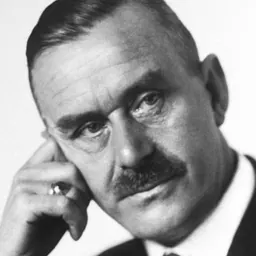

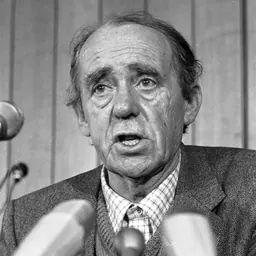
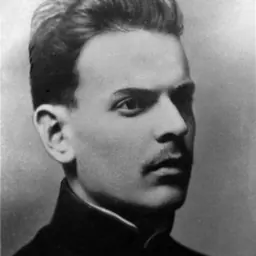
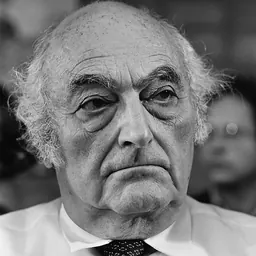


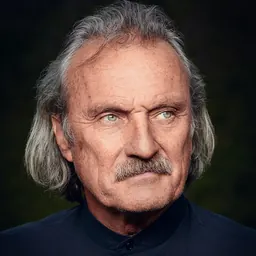
Related people
Same field, nearest in time


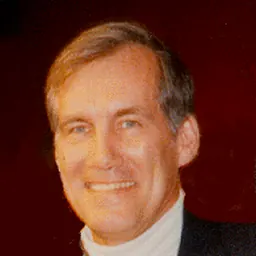

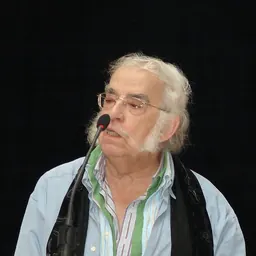
Contemporaries
People whose lives overlapped Nili Mirsky's
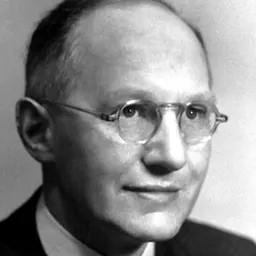


Frequently asked questions
Who was Nili Mirsky?
Israeli translator
When was Nili Mirsky born?
Nili Mirsky was born on 3 December 1943 in Rehovot.
When did Nili Mirsky die?
Nili Mirsky died on 30 January 2018 in Tel Aviv.
What was Nili Mirsky's occupation?
Nili Mirsky was a translator.
What nationality was Nili Mirsky?
Nili Mirsky was Israeli.
Sources & further reading
Cite this page
APA: Biography.guide. (2026). Nili Mirsky. https://biography.guide/nili-mirsky/
MLA: "Nili Mirsky." Biography.guide, https://biography.guide/nili-mirsky/.
Chicago: "Nili Mirsky." Biography.guide. https://biography.guide/nili-mirsky/.
Data last updated: 2026-09-20 · Spot an error? Report a correction.
Page generated 2026-09-27 05:19 UTC