
About Nikolay Nekrasov
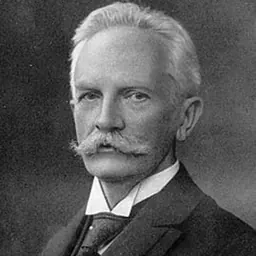
Lived 1900 – 1938 (aged 37). Nikolay Nekrasov was a Russian esperantist, poet, translator, writer, journalist and critic.
Nikolai Vladimirovich Nekrasov (18 December 1900 – 4 October 1938) was a Soviet Esperanto writer, translator, and critic.
Biography
Nekrasov was born in Moscow. A journalist, he worked in the publishing house Moscow worker. He learned Esperanto in 1915.
Esperanto activity, editorial work, and articles
In 1918–19, he was president of the Tutrusia Ligo de junaj esperantistoj (All-Russia League of Young Esperantists), and editor and typesetter of Juna Mondo (Young World). On 1 June 1922 Nekrasov together with Gregory Demidyuk founded the cultural review (The New Epoch), which became one of the organs of SAT. In 1923 he became a member of the Central Committee of (SEU) (ru: Soyuz Esperantistov Sovetskikh Stran), then under the leadership of Ernest Drezen.
He was especially concerned with the history and criticism of Esperanto literature, the ideology of the proletarian revolutionary Esperanto movement, the nationality problem and cosmoglottics. In La Nova Epoko he published several essays on Esperanto literature (about Baghy, Bulthuis, , , Mikhalski, Devkin, Schulhof, and others). His critiques set out mainly from an original sociological viewpoint, but he simultaneously paid much attention to the use of language in the works.
In the early 1930s he actively participated in the compilation and preparation of material on literature for the Enciklopedio de Esperanto. He also published many of Zamenhof's letters.
In 1931 he was one of the cofounders of (International Association of Revolutionary Esperanto Writers), and edited its first newspaper, (The New Stage).
Arrest, execution, and rehabilitation
Nekrasov was arrested in 1938, and accused of being "an organizer and leader of a fascist, espionage, terrorist organization of Esperantists". For this crime he was shot to death on 4 October 1938. His archive and library were obliterated; presumably many of his unpublished works and translations thus perished.
He was posthumously rehabilitated as innocent on 26 November 1957.
Works
Translated poetry
Kupra rajdanto (Copper rider) by Pushkin. Eŭgeno Onegin (Eugene Onegin) by Aleksandr Pushkin, SAT, 1931. Dekdu (Twelve) and Najtingala ĝardeno (Nightingale garden) by Alexander Blok. Blanka cigno (White swan) and La mortaj ŝipoj (The dead ships) by Konstantin Bal'mont. Nubo en pantalono (Cloud in pants) and Suno (Sun) by Vladimir Majakovskij. Monna Liza, by Gerasimov. Socialismo and Patrino (Mother) by Bezimenskij.
Translated prose
Ruĝa Stelo (The Red Star), by Aleksander Bogdanov, SAT, 1929. (with others) La Vojo de formiĝo kaj disvastiĝo de la lingvo internacia (The way of formation and spread of the international language), by Ernest Drezen, SAT, 1929 Historio de la mondolingvo (History of the world Language, by Drezen, EKRELO.
Original poetry
Fablo pri ĝilotinŝraŭbeto (Fabel of a little gelaten-screw), appeared in Sennacieca Revuo Testamento de Satano (Testament of Satan) Verda flamo (Green flame) Krono de sonetoj pri Esperanto (Crown of Sonnets), a commection of poems Mi moskvano (I, a Muscovite), appeared in Internacia Literaturo
Original prose
Bibliografio de Esperantaj presaĵoj en USSR dum 12 jaroj de la revolucio 1917-1928, Moscow, 1928 (A bibliography of esperanto material in print in the USSR during the 12 years of the revolution 1917–1928) Tra USSR per Esperanto (Through the USSR by means of Esperanto) Several essays on Esperanto-literaturo in La Nova Epoko (in Esperanto)
Nekrasov believed that in his original poems he followed the Russian symbolist poets, especially Bryusov, and so he took special care with the purity of his language style. It is known that the largest of his original works was the grand poem "Kazanovo" (en:Casanova) — which according to the impressions of those who read the manuscript, was at a very high level poetically. At least one copy of the manuscript still existed in the beginning of the 1960s, but later disappeared without a trace.
Quotes
"Art is a hammer to beat the world, not a mirror to reflect it."
Works readable on line Sennaciismo... burĝa?, from Sennacieca Revuo (Non-national review), 1924
Don’t just read it —
keep it.
Full-length biographies made to live with: read them, listen on the way to work, watch them tonight.
- E-book
- Audio
- Video
Instant download · yours to keep · every purchase keeps this site free
Important facts
People in Nikolay Nekrasov's life
Named in this biography and alive at the same time
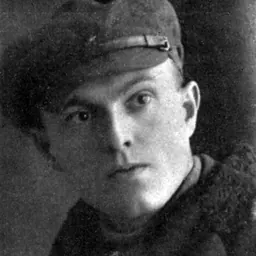
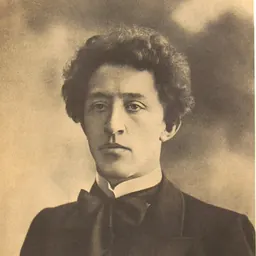
Related people
Same field, nearest in time
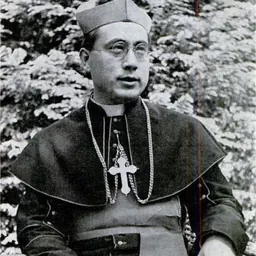




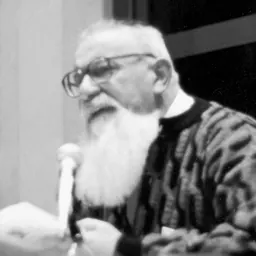
Contemporaries
People whose lives overlapped Nikolay Nekrasov's



Frequently asked questions
Who was Nikolay Nekrasov?
Russian writer and esperantist (1900-38)
When was Nikolay Nekrasov born?
Nikolay Nekrasov was born on 18 December 1900 in Moscow.
When did Nikolay Nekrasov die?
Nikolay Nekrasov died on 4 October 1938 in Soviet Union.
What was Nikolay Nekrasov's occupation?
Nikolay Nekrasov was an esperantist, poet, translator, writer, journalist and critic.
What nationality was Nikolay Nekrasov?
Nikolay Nekrasov was Russian.
Sources & further reading
· DBpedia: Nikolai Vladimirovich Nekrasov
Cite this page
APA: Biography.guide. (2026). Nikolay Nekrasov. https://biography.guide/nikolay-nekrasov/
MLA: "Nikolay Nekrasov." Biography.guide, https://biography.guide/nikolay-nekrasov/.
Chicago: "Nikolay Nekrasov." Biography.guide. https://biography.guide/nikolay-nekrasov/.
Data last updated: 2026-09-20 · Spot an error? Report a correction.
Page generated 2026-09-27 05:19 UTC