
About Nikolay Dukhonin
Lived 1876 – 1917 (aged 40). Nikolay Dukhonin was a Russian military officer.
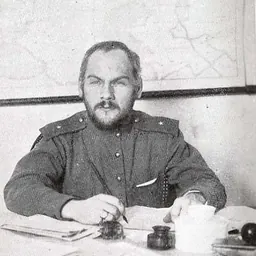
Nikolay Nikolayevich Dukhonin (; 13 December 1876 – 3 December 1917 ) was a Russian general who was briefly the last supreme commander of the Russian Army after the October Revolution before the Bolsheviks took control of it.
Biography Dukhonin was born in the Smolensk Governorate. He served in the Kiev Military District before the start of the First World War. There he gained some experience in intelligence work.
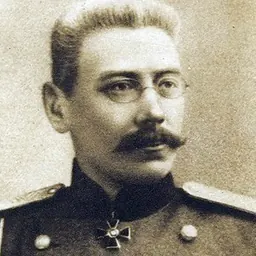
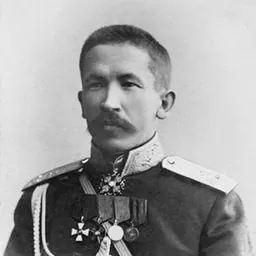
At the outset of the War, Dukhonin was given command of a Russian regiment. He was then assigned to the Third Army in Dubno under General Nikolai Ruzsky as senior adjutant of the intelligence department. In the spring of 1917 he was the chief of staff of the Southwestern Front, In August 1917, Dukhonin was Quartermaster General of the Southwestern Front, and was plucked from this relative obscurity by Alexander Kerensky to replace Mikhail Alekseyev as Chief of Staff at GHQ in Mogilev, as Alexeyev had resigned as a result of Lavr Kornilov's failed coup. It was Alexeyev who had suggested Dukhonin as his successor so that he could continue to influence affairs at Stavka in Mogilev.
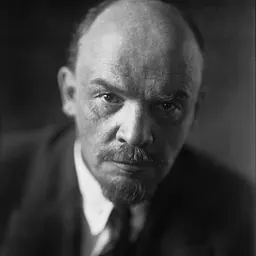
When Kerensky fled Petrograd and then Russia following the seizure of power by the Bolsheviks in the October Revolution, Dukhonin became de facto Supreme Commander, albeit of an army that was rapidly disintegrating, and over which he exercised very little control. During the initial stages of the Bolshevik seizure of power the Council of People's Commissars instructed Dukhonin to cease wartime hostilities and open negotiations with the Central Powers. Vladimir Lenin and Nikolai Krylenko visited Dukhonin in Petrograd to discuss an armistice proposal. Dukhonin's response was adamant: on 22 November he categorically declined the directive of the Council of People's Commissars. He had discussed such a development with diplomats from the Entente governments. Dukhonin told Lenin that such an order could only be issued by "a government sustained by the army and the country".
Lenin immediately proceeded to a wireless station and broadcast news of Dukhonin's dismissal as Commander-in-Chief and Krylenko's replacement in his stead. The following day a joint note was issued by the military missions of Britain, France, Italy, Japan and Romania, citing the Treaty of 23 August 1914 by which the allies agreed not to conclude an armistice except by common consent. These missions were based at the General Headquarters in Mogilev. His last action was to order the release of the officers being held prisoner at Bikhov, most notably Kornilov and Anton Denikin.
Dukhonin subsequently surrendered to Krylenko in Mogilev, but he was murdered by a mob (possibly supported by Krylenko's Bolshevik military escort) near the railway station on 3 December 1917. There are multiple conflicting accounts of Dukhonin's death. According to the account of the former colonel Andrew Kalpashnikoff, a mob of soldiers and sailors bayoneted him to death on the spot on order of Red Army officer Pavel Dybenko. Kalpashnikoff also states that the next morning the Bolshevik soldiers and sailors amused themselves by using his (now stripped naked) corpse for target practice, which they had placed on the platform with a cigarette in its mouth.
His family emigrated to Yugoslavia.
Don’t just read it —
keep it.
Full-length biographies made to live with: read them, listen on the way to work, watch them tonight.
- E-book
- Audio
- Video
Instant download · yours to keep · every purchase keeps this site free
Important facts
People in Nikolay Dukhonin's life
Named in this biography and alive at the same time

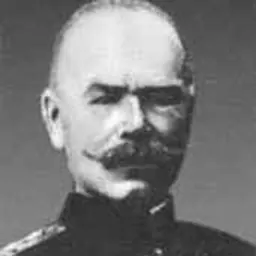

Related people
Same field, nearest in time


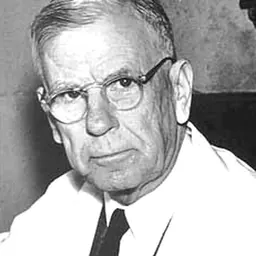


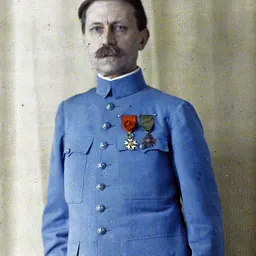
Contemporaries
People whose lives overlapped Nikolay Dukhonin's

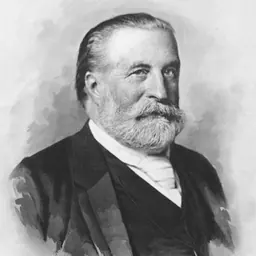
Frequently asked questions
Who was Nikolay Dukhonin?
Russian general (1876–1917)
When was Nikolay Dukhonin born?
Nikolay Dukhonin was born on 1 December 1876.
When did Nikolay Dukhonin die?
Nikolay Dukhonin died on 20 November 1917 in Mahilyow.
What was Nikolay Dukhonin's occupation?
Nikolay Dukhonin was a military officer.
What nationality was Nikolay Dukhonin?
Nikolay Dukhonin was Russian.
Sources & further reading
Cite this page
APA: Biography.guide. (2026). Nikolay Dukhonin. https://biography.guide/nikolay-dukhonin/
MLA: "Nikolay Dukhonin." Biography.guide, https://biography.guide/nikolay-dukhonin/.
Chicago: "Nikolay Dukhonin." Biography.guide. https://biography.guide/nikolay-dukhonin/.
Data last updated: 2026-09-25 · Spot an error? Report a correction.
Page generated 2026-09-27 05:11 UTC