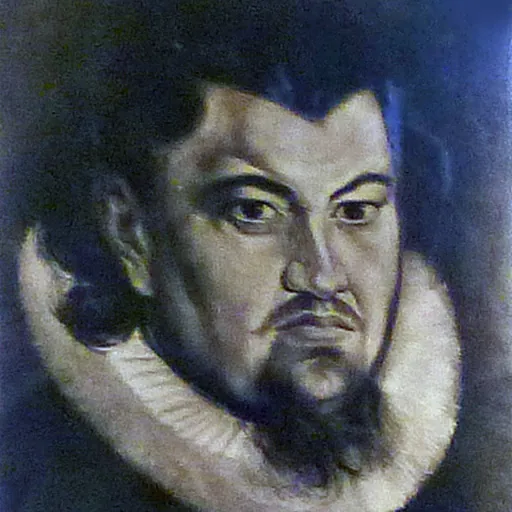
About Nikolaus Krell
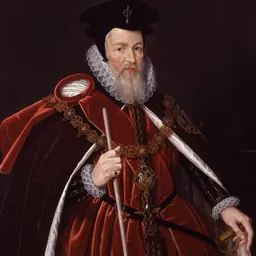
Lived 1550 – 1601 (aged 50–51). Nikolaus Krell was a German jurist and politician.
Nikolaus Krell (c. 1551 – 9 October 1601), chancellor of the elector of Saxony, was born at Leipzig, and educated at the university of his native town.
About 1580 he entered the service of Christian I, the eldest son of Augustus I, elector of Saxony, and when Christian succeeded his father as elector in 1586, became his most influential counselor. Krell's religious views were Calvinistic or Crypto-Calvinistic, and both before and after his appointment as chancellor in 1589 he sought to advance his own religious views at the expense of the reigning Lutheran Orthodoxy which was the sanctioned religion of Electorate of Saxony. Calvinists were appointed to many important ecclesiastical and educational offices; a translation of the Bible with Calvinistic annotations was published; and Krell took other measures to attain his end.
In foreign politics, also, he sought to change the traditional policy of Saxony of close collaboration with the Habsburg emperors, acting in unison with John Casimir, regent of the Electorate of the Palatinate, and reaching out to Henry IV of France and Elizabeth I of England.
These departures from Saxon tradition, coupled with the jealousy felt at Krell's high position and autocratic conduct, made the chancellor very unpopular, and when the elector died in October 1591 he was deprived of his offices and thrown into Georgenburg prison of the Königstein Fortress by order of Frederick William, duke of Saxe-Altenburg, the regent for the young Elector Christian II. In May 1593, in the Leipzig Calvinist storm the houses of wealthy Calvinist-minded merchants were stormed and plundered.
His trial was delayed until 1595, and then, owing partly to the interference of the imperial court of justice (Reichskammergericht), dragged on for six years. At length it was referred by Emperor Rudolph II to a court of appeal at Prague, and Krell sentenced to death. He was decapitated in the Jüdenhof in Dresden on 9 October 1601. He is commemorated by a paving stone with the inscription "Kr" at the spot of his execution in the Dresden Stallhof.
Krell was not the only individual accused of Crypto-Calvinism. The influential physician Caspar Peucer was also charged and subsequently imprisoned for years.
Don’t just read it —
keep it.
Full-length biographies made to live with: read them, listen on the way to work, watch them tonight.
- E-book
- Audio
- Video
Instant download · yours to keep · every purchase keeps this site free
Important facts
People in Nikolaus Krell's life
Named in this biography and alive at the same time
Related people
Same field, nearest in time




Contemporaries
People whose lives overlapped Nikolaus Krell's




Frequently asked questions
Who was Nikolaus Krell?
German politician (1550-1601)
When was Nikolaus Krell born?
Nikolaus Krell was born in 1550 in Leipzig.
When did Nikolaus Krell die?
Nikolaus Krell died on 9 October 1601 in Dresden.
What was Nikolaus Krell's occupation?
Nikolaus Krell was a jurist and politician.
What nationality was Nikolaus Krell?
Nikolaus Krell was German.
Sources & further reading
Cite this page
APA: Biography.guide. (2026). Nikolaus Krell. https://biography.guide/nikolaus-krell/
MLA: "Nikolaus Krell." Biography.guide, https://biography.guide/nikolaus-krell/.
Chicago: "Nikolaus Krell." Biography.guide. https://biography.guide/nikolaus-krell/.
Data last updated: 2026-09-20 · Spot an error? Report a correction.
Portrait: Wikimedia Commons · author & licence
Page generated 2026-09-27 04:58 UTC