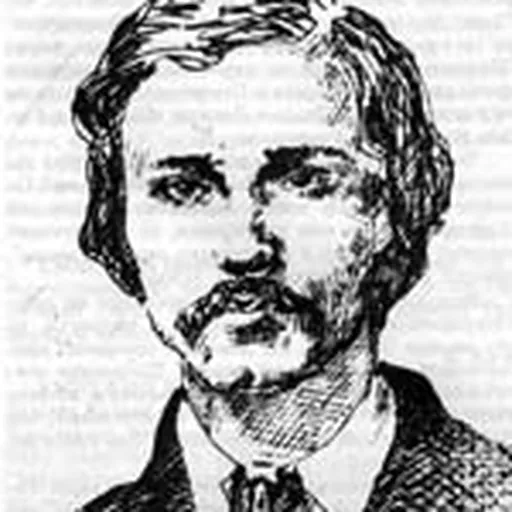
About Nikolai Uspensky
Lived 1837 – 1889 (aged 52). Nikolai Uspensky was a Russian writer, journalist and short story writer.
Nikolai Vasilyevich Uspensky (; 31 May 1837 – 2 November 1889) was a Russian writer, and a cousin of fellow writer Gleb Uspensky. Uspensky wrote extensively about the realities of peasant life in rural Russia around the time of the Emancipation Act of 1861 by Tsar Alexander II, achieving critical and commercial success. After experiencing increasing alienation and career decline, Uspensky committed suicide on 2 November 1889.
Biography Nikolai Vasilyevich Uspensky was born on 31 May (Old Style 18 May), 1837, in Stupino, a small village in Tula Governorate, Russian Empire, to a local clergyman. He had seven siblings, brothers Ivan, Alexander and Mikhail, and sisters Anna, Maria, Elizaveta and Seraphima. Despite his relatively privileged position as the son of a priest, Uspensky grew up surrounded by poverty and alcoholism-driven violence, and frequently socialized with peasant children and often labored with them.
In 1848, Uspensky joined the theological seminary in Tula where he was flogged on a daily basis. According to Korney Chukovsky, quote|Executions of this sort were the only pedagogical method known in this school. Flogging, vodka, bribery, cards, the atmosphere of servility and betrayal, outward piety and secret debauchery—such were the basic elements of Nikolai's upbringing for more than ten years. One thing he could take refuge in were wild shenanigans... in which his brilliant talents, otherwise pent up, could be realized to some extent. For, despite things that were going on around him his mirth was fountain-like, making him perform every minute some kind of trick, practical joke or mystification.
Uspensky was not a good student. He spent most of his time in local traktirs, playing pool and getting drunk, and was described as a "haggard loafer going on a downward spiral," but it was in those days that he started writing. In 1856, prior to graduation, Uspensky left the seminary and moved to Saint Petersburg to enroll in the Medical Surgical Academy. In less than a year, though, he was expelled after a bizarre incident in which he vandalized a medical cabinet, apparently without any reason.
Uspensky’s stories, describing the poverty and the misery of the peasants, the lives of Russian clergymen, and raznochintsy intellectuals, attracted the attention of many prominent radicals. In 1860 Nikolai Dobrolyubov recommended several of his stories for the school reader compiled by Alexey Galakhov.
In Rome, Uspensky met Vasily Botkin, an expert in antique culture, who tried to share his love for it with his companion. But Uspensky believed that Rome looked "ugly". "None of the art masterpieces could shield off from me emaciated faces and hopes in boots of poor people," he later wrote. In 15 years time he published his travellers' sketches, very naive, superficial and patchy, but full of sympathy for suffering lower class. "This unexpected success turned his head around", wrote Yakov Polonsky later. "Thank God, I am not devoid of talent. Don't know about the future, but now for my antagonists I'll stand like a bone in throat, won't let them get a step ahead of me," Uspensky told the journalist Martyanov. Uspensky's 'antagonists' were a group of emerging raznotchinsky writers—Alexander Levitov, Nikolai Pomyalovsky, Vasily Sleptsov—whom he was now regarding as dangerous competitors and, according to Martyanov, referred to as 'mite', 'scum' and 'dirt'. For several years Uspensky travelled through Russia, teaching in numerous schools and gymnasiums in Tula governorate, Orenburg, Saint Petersburg, and back at Yasnaya Polyana again, never staying at one place for long. Finally, driven by financial difficulties, he returned to Spasskoye to sell the land he had been given. Horrified, Turgenev asked his manager to interfere, "Should this man be so dishonest as to sell this plot to a third party?" he wondered in a letter. Negotiations proved futile and only after Turgenev agreed to buy back his own land that Uspensky agreed to leave the estate, still accusing the host of "having taken back his own gift." Turgenev wrote to Polonsky: "Nikolai Uspensky is a finished man, we might as well forget about him." All four of Nikolai Uspensky's short stories collections (published in 1871, 1872, 1875 and 1883) were either ignored or lambasted by the press. Uspensky responded with a short story about an affluent clergyman who drives his daughter to consumption by plunging her into poverty. Three years later Elizaveta indeed died of tuberculosis but the reason for this was the nomadic lifestyle of her husband, who was moving from one village to another, dragging his wife and their infant daughter behind. All the while he continued to wage war against his father-in-law, accusing him of financial crimes, writing letters to officials and staging public meetings to support his case. "It was painful to see how much talent and pathos has been wasted in those petty quarrels, but the root of the tragedy was that, having once risen from mires of provincial darkness, he—unlike many authors of the same raznochntsy breed (Chernyshevsky, Dobrolyubov, Pomyalovsky, Eliseev, Levitov)—once the literary world ejected him, returned to where he came from and sank down there," Chukovsky wrote. Having buried his wife in 1881, Uspensky took with him a harmonica, a stuffed crocodile and his two-year-old daughter Olga, and embarked upon the life of a tramp artiste, entertaining drunken audiences with literature 'lectures' and self-styled musical shows (featuring Olga dancing, dressed as a boy), looking for a glass of vodka by way of payment. Relatives attempted to kidnap Olga from Uspensky, but he would fight them off. Occasionally attempts were successful, and then Uspensky arrived to 'besiege' the house. "For me those were times of many tears. As a young man he was so kind, handsome and intelligent. And there he was now, sitting in a ditch, grey-haired, horrible-looking. I used to send him some bread and cried watching him, eating it in the dirt," remembered Elizaveta Vasilyevna, his sister, the major force behind those 'kidnappings'. At the age of ten Olga settled at her grandfather's house, and her desperate father started flooding his relatives with letters, written in a strange pseudo-religious style. For some time the ex-nihilist was assuring his friends (all of them local criminals known by nicknames only) that his intention was to make a holy trip to a monastery, where some 'inner voice' apparently summoned him, but that came to nothing and soon he resumed his 'literary gigs', keeping lives of martyr writers highest on his "price list", at the bottom of which resided Pushkin whom he still thought worthless. Influenced by Kondratyev, Uspensky started a series of 'revelatory' memoirs about Lev Tolstoy, Nekrasov, Turgenev and Gleb Uspensky. For the leftist critics, this only went to justify their opinion of Uspensky being a has-been, and even the conservative journalists like Viktor Burenin warned their readership against taking those writings as anything remotely credible. Gleb Uspensky wrote a letter demanding to stop publishing these slanderous pieces, and after the proof emerged showing that Uspensky’s memoirs on Nekrasov were libelous, the series abruptly stopped. All this served little to cheer up the author who was now described as "shabbily dressed, skinny and utterly depressed." In the autumn of 1889, Uspensky made his last trip to Stupino to see his beloved daughter, Olga, but the latter became so frightened as to refuse to come out. "How many of our readers have ever heard, let alone read this author?" asked Novosty (No. 295, 1889), and several issues later repeated the stereotypical opinion that this author "ridiculed peasants and his talent was evil and nasty..." The conservative press was more sympathetic, and on 29 October, in Grazhdanin Vladimir Meshchersky wrote: "The writer as we know belonged to the conservative camp, he was not the servant of the liberal muse and wasn't engaged in pouring out liberal/narodnik lamentations—that is why he died broke and hungry in the country where there is a Literary fund and in a huge city where there are numerous journals and newspapers."
Critical reception
In 1861 the Stories by Nikolai Uspensky came out in two miniature volumes and caused an uproar. Critics were almost unanimous in their hostility, accusing the author of "spitting onto people's beliefs and ways of life" and seeing nothing but cold cynicism behind the humour. "He's got a sharp but aimless eye focusing on whatever comes across without obvious reason," wrote Stepan Dudyshkin in Otechestvennye Zapiski. "He picks up every possible detail, totally irrelevant, not even thinking about somehow linking it to the main action," agreed Fyodor Dostoyevsky, writing in Vremya. "The indifferent nature of humour is essential to Uspensky's gift," Pavel Annenkov remarked several years later. "Intellectual indifference", "lack of care" and "mental hibernation" were typical to the author's prose according to Evgeny Edelson (Biblioteka Dlya Chtenya). Critics from the left mostly agreed with their colleagues from the liberal camp. Vsevolod Krestovsky expressed amazement at how totally devoid of ideas Uspensky's prose was. "He is rather good photographer. But his also is cold, impassive attitude towards the world he photographs in his sketches... He's never able to discern a poor man's cry from a drunkard's scream," Krestovsky noted. In his History of Modern Russian literature he wrote of Uspensky: "In his stories common people are presented in an extraordinarily ugly way. Each man is either a thief or a drunkard or a fool that’s never lived on Earth, every woman is an unbelievable idiot ... Whatever Uspensky managed to see or hear he used to show how ignorant, uncultured, ridiculous, trodden over Russian man is and how deep he’s sunk into the mire of stupidity, superstition and vulgarity". Rejection and even hatred dogged Uspensky up until his death and continued afterwards, each new generation of critics repeating what had been said earlier, never attempting to re-evaluate his legacy. The only exception was Georgy Plekhanov who, in the late 1890s, criticizing narodniks, tried to show how unjust they were in treating Uspensky, but he never came to write a comprehensive essay on him as he did on Gleb Uspensky and some minor authors like Karonin and Naumov. It was only in the Soviet times that Nikolai Uspensky has been re-discovered, his major work re-issued. Soon Uspensky made Dal irrelevant, according to Chukovsky. Even more devastating was a blow he rendered to the whole school of 1840s–early 1850s literature which took a maudlin, sentimental attitude towards Russian peasant.
Nikolai Uspensky is credited with being the first prominent raznotchinets writer in the history of Russian literature, the one who, according to Fyodor Dostoyevsky, "having come in the wake of Ostrovsky, Turgenev, Pisemsky and Tolstoy" proved to be the first to "not just present another upper class view on common people, but express those people's viewpoint," and to "tell the truth about the life of Russian people without embellishments or flattery," according to Nikolai Chernyshevsky.
Radical critics of Sovremennik hailed Uspensky as a new force in Russian literature, "the most happy discovery with, of course, nothing happy to write about," as Chernyshevsky put it. Later literary historians agreed that Uspensky was the first writer from the Russian lower class who came up with stark and cruel pictures of rural life. Uspensky is regarded as a precursor for Anton Chekhov's country prose cycle and, to a greater extent, for Ivan Bunin, who spent some time in 1890 to gather facts about Uspensky's life for future biographers.
English translations Porridge, and The Village Schoolmaster, (stories) from The Humor of Russia, Ethel Voynich/Stepnyak, Walter Scott Publishing, 1909. from Archive.org
Don’t just read it —
keep it.
Full-length biographies made to live with: read them, listen on the way to work, watch them tonight.
- E-book
- Audio
- Video
Instant download · yours to keep · every purchase keeps this site free
Important facts
People in Nikolai Uspensky's life
Named in this biography and alive at the same time




Related people
Same field, nearest in time
Contemporaries
People whose lives overlapped Nikolai Uspensky's



Frequently asked questions
Who was Nikolai Uspensky?
Russian writer and journalist (1837–1889)
When was Nikolai Uspensky born?
Nikolai Uspensky was born on 31 May 1837 in Russian Empire, Tula Governorate.
When did Nikolai Uspensky die?
Nikolai Uspensky died on 21 October 1889 in Moscow.
What was Nikolai Uspensky's occupation?
Nikolai Uspensky was a writer, journalist and short story writer.
What nationality was Nikolai Uspensky?
Nikolai Uspensky was Russian.
Sources & further reading
Cite this page
APA: Biography.guide. (2026). Nikolai Uspensky. https://biography.guide/nikolai-uspensky/
MLA: "Nikolai Uspensky." Biography.guide, https://biography.guide/nikolai-uspensky/.
Chicago: "Nikolai Uspensky." Biography.guide. https://biography.guide/nikolai-uspensky/.
Data last updated: 2026-09-22 · Spot an error? Report a correction.
Portrait: Wikimedia Commons · author & licence
Page generated 2026-09-27 05:01 UTC