
About Nikolai Makarov
Born 1955. Nikolai Makarov is a Russian and American university teacher and mathematician.
Nikolai Georgievich Makarov (; born January 1955) is a Russian-American mathematician. He is known for his work in complex analysis and its applications to dynamical systems, probability theory and mathematical physics. He is currently the Richard Merkin Distinguished Professor of Mathematics at Caltech, where he has been teaching since 1991.
Career Makarov belongs to the Leningrad school of geometric function theory. He graduated from the Leningrad State University with a bachelor's degree in 1982. He received his Ph.D. (Candidate of Science) from the Steklov Institute of Mathematics in 1986 under Nikolai Nikolski with thesis Metric properties of harmonic measure (title translated from Russian). He was an academic at the Steklov Institute of Mathematics in Leningrad. Since 1991 he has been a professor at Caltech.
In 1986 he was an Invited Speaker of the ICM in Berkeley, California. In 1986 he was awarded the Salem Prize for solving difficult problems involving the boundary behavior of the conformal mapping of a disk onto a domain with a Jordan curve boundary using stochastic methods. In 2020, he was awarded the Rolf Schock Prize, "for his significant contributions to complex analysis and its applications to mathematical physics".
His doctoral students include the Fields medallist Stanislav Smirnov, Alexei Poltoratski and .
Research Makarov works in complex analysis and related fields (potential theory, harmonic analysis, spectral theory) as well as on various applications to complex dynamics, random matrices and mathematical conformal field theory.
Makarov's most well-known result concerns the theory of harmonic measure in the complex plane. Makarov's theorem states that: Let Ω be a simply connected domain in the complex plane. Suppose that ∂Ω (the boundary of Ω) is a Jordan curve. Then the harmonic measure on ∂Ω has Hausdorff dimension 1.
Makarov has also studied diffusion-limited aggregation which describes crystal growth in two dimensions with Lennart Carleson and Beurling-Malliavin theory with his former student Alexei Poltoratski. He has studied the thermodynamic formalism for iterations of the rational functions with another of his former students Stanislav Smirnov, Fields medallist. He has studied the universality laws and field convergence in normal random matrix ensembles.
His most recent research concerns the mathematical conformal field theory and its relation to Schramm–Loewner evolution theory.
Selected publications English version:
with S. Smirnov: with L. Carleson: with L. Carleson: with I. Binder and S. Smirnov: with Y. Ameur and H. Hedenmalm: with N.-G. Kang: with S.-Y. Lee:
Don’t just read it —
keep it.
Full-length biographies made to live with: read them, listen on the way to work, watch them tonight.
- E-book
- Audio
- Video
Instant download · yours to keep · every purchase keeps this site free
Important facts
People in Nikolai Makarov's life
Named in this biography and alive at the same time

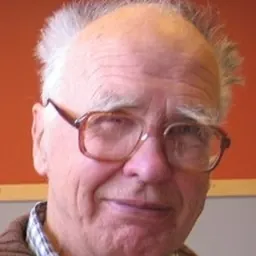

Related people
Same field, nearest in time



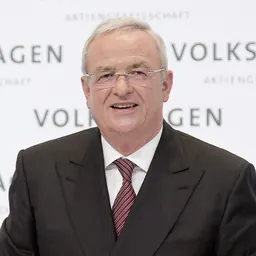

Contemporaries
People whose lives overlapped Nikolai Makarov's
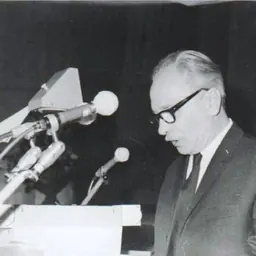
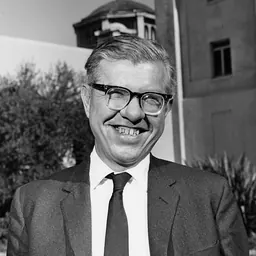

Frequently asked questions
Who is Nikolai Makarov?
russian-american mathematician
When was Nikolai Makarov born?
Nikolai Makarov was born in 1955.
What is Nikolai Makarov's occupation?
Nikolai Makarov is a university teacher and mathematician.
What nationality is Nikolai Makarov?
Nikolai Makarov is Russian and American.
Sources & further reading
· DBpedia: Nikolai Georgievich Makarov
Cite this page
APA: Biography.guide. (2026). Nikolai Makarov. https://biography.guide/nikolai-makarov-university-teacher/
MLA: "Nikolai Makarov." Biography.guide, https://biography.guide/nikolai-makarov-university-teacher/.
Chicago: "Nikolai Makarov." Biography.guide. https://biography.guide/nikolai-makarov-university-teacher/.
Data last updated: 2026-09-20 · Spot an error? Report a correction.
Page generated 2026-09-27 05:27 UTC