
About Nikolai Kamanin
Lived 1908 – 1982 (aged 73). Nikolai Kamanin was a Russian aircraft pilot, writer, politician, military personnel and soviet space program.
Nikolai Petrovich Kamanin (; 18 October 1908 – 11 March 1982) was a Soviet Air Force general and a program manager in the Soviet space program. A career aviator, he was awarded the title of Hero of the Soviet Union in 1934 for the rescue of SS Chelyuskin crew from an improvised airfield on the frozen surface of the Chukchi Sea near Kolyuchin Island.
In World War II he successfully commanded an air brigade, air division, and air corps, reaching the rank of Airforce Colonel General and Air Army commander after the war. It was at this time that his son, Arkady Kamanin, became a fighter pilot at the age of 14, the youngest military pilot in world history.
From 1960 to 1971, General Kamanin was the program manager of the cosmonaut training in the Soviet space program. He recruited and trained the first generation of cosmonauts, including Yuri Gagarin, Valentina Tereshkova, Gherman Titov and Alexei Leonov. Kamanin was the Soviet Air Force representative to the space program, a proponent of crewed orbital flight and air force influence over the Space Race. His diaries of this period, published from 1995 to 2001, are among the most important sources documenting the progress of the Soviet space program.
Early life
Nikolai Kamanin was born in Melenki, in Vladimir Governorate (now Melenkovsky District, Vladimir Oblast). Kamanin's grandfather was a wealthy shoemaker with his own workshop; however, his father, Pyotr Kamanin, broke with tradition and joined the Bolsheviks. He died in 1919 at the age of 49; mother, Stefanida Danilovna (1876–1964) lived all her life in Melenki. Stefanida and Pyotr Kamanin had 10 children; Nikolai survived all his four brothers. Alexander Ivanovich Kamanin, Nikolai's uncle, lived a very long life, including 50 years of religious hermitage, and had a reputation of a holy elder.
According to his son, Lev Kamanin, Nikolai Kamanin was actually born in 1909 and changed it to 1908 to cheat the Army admission staff when he volunteered in 1927. He passed the airforce physical test and completed the pilots' school in Borisoglebsk in 1929, trained by legendary pilot Victor Kholzunov. Kamanin was dispatched to the site of Russo-Chinese railroad conflict in the Far East, arriving one day after ceasefire. There, he joined the legendary Lenin Air Regiment, the first air force unit in Soviet history. Kamanin flew a two-seater reconnaissance airplane, including 11-hour endurance flights over the Sea of Japan. His crewmate, incidentally, was an ethnic Chinese.
Chelyuskin rescue
In February 1934, the steamship SS Chelyuskin was crushed by Arctic ice in the Chukchi Sea. The surviving 104 crewmembers and passengers set their base on pack ice. At that time, the United States grounded all Arctic flights after a string of accidents, and the only rescue force on hand was Anatoly Liapidevsky and his ANT-4 crew. After 28 failed attempts, Liapidevski located the ice camp on 5 March, landed and hauled out twelve of 104 survivors. A week later, on the second flight to ice camp, he crash-landed the airplane after an engine failure. The operation stalled. The Soviet government dispatched three groups of pilots from Far Eastern air bases.
The largest group of seven military and civilian reconnaissance pilots on Polikarpov R-5 biplanes, based in Primorsky Krai, was led by Kamanin (he later grounded one of the pilots for insubordination). The group sailed from Vladivostok 2 March 1934, disembarked at Olyutorka and landed at Vankarem airfield 1 April. Kamanin and Vasily Molokov flew from a temporary base in Vankarem settlement to the ice camp, saving 34 and 39 survivors. On their first flight from the ice camp, R-5 (designed as a two-seater) carried a crew of two, plus two men from Chelyuskin in the hull. The next flights added makeshift wing gondolas, carrying two more men per mission. Other pilots from the Kamanin team hauled them from Vankarem to Providence Bay seaport. The ice camp was completely evacuated 13 April 1934; Kamanin returned with the ship's bosun and eight riding dogs.
The next day, six pilots that flew to the ice camp and back (including Kamanin) and Sigizmund Levanevsky were announced as the first Heroes of the Soviet Union. Pilots who ferried survivors from Vankarem to Providence received the Order of the Red Star. Kamanin was assisted by major general and Hero of Soviet Union Leonid Goreglyad, Colonel Boris Aristov (a skilled navigator with 232 combat sorties experience), and other notable war pilots. The Center for Cosmonaut Training (present-day Star City, Russia) was initially led by Colonel Karpov, Kamanin's subordinate.
Preparation for crewed flight
Kamanin's diaries, first published in 1995, began on 17 December 1960, and explained the development of the Soviet crewed program and related internal politics. The diaries present at least four sides of his activities prior to Yuri Gagarin's flight, all of which continued until Kamanin's retirement:
Coordination of design bureaus developing life support systems for crewed spaceflight: spacesuits, parachutes, air regeneration etc. Kamanin's diaries present hims as a risk-taker, willing to go forward with incomplete systems to beat the Americans to orbit. Later, when the space programs focused on fully automatic controls, Kamanin asserted his viewpoint in favor of human controls. At the same time, during 1962 discussions on flight duration, he was always on the conservative side, voting for no more than two day spaceflights.
Tracking, search and recovery of landed craft, coordination and refinement of search and rescue efforts. For example, 9 March 1961, the Vostok 3A prototype flew a flawless mission. The capsule with Chernushka and Ivan Ivanovich landed in an open field near Stary Tokmak. Kamanin and Vladimir Yazdovsky arrived on site, encircled by curious villagers, and arranged recovery of the craft. The tracking network was considerably expanded after 1965, with a special naval group and installations in Cuba.
Management of cosmonaut training squad, probably the least time-consuming activity, started with selection of Air Force Group I in March 1960. Between 17–18 January 1961, Kamanin chaired the Examination Committee that evaluated the first six cosmonauts prepared for the Vostok program. Kamanin rated Yuri Gagarin, Gherman Titov and Grigori Nelyubov as the best candidates. He personally developed the cosmonaut flying manual and training schedule, traveled across landing areas with flight candidates and supervised last-minute training at Baikonur. Kamanin also campaigned for early disclosure of Soviet launches, as soon as the craft is in orbit, against Vershinin's original opinion. Kamanin's view was upheld 29 March when the state commission approved the first crewed launch.
Commissioner for all other space launches, including the first interplanetary space probes. He was skeptical about the value of these probes: "Venus launch is hardly a sensible endeavor: it delays crewed flight and decreases Rocket Force battle-readiness" ("Пуск на Венеру - затея едва ли разумная: она задерживает полет человека и снижает боеспособность ракетных войск"). Indeed, the first Venus mission failed - the Venera spacecraft was trapped in Earth's orbit. The second Venera, launched 12 February 1961, missed its target by 100,000 kilometers, which was a success for 1961 technology.
Gagarin's flight
By 5 April 1961, Kamanin was still indecisive, ranking Gagarin and Titov equally fit for the flight. Three days later, he recommended Gagarin, with Titov as backup. After the final training session (afternoon, 11 April), Kamanin parted with Yuri Gagarin. The next day, Gagarin lifted off in Vostok 1, made a full orbit and safely landed 23 kilometers from Saratov. Kamanin left mission control 20 minutes after launch, as soon as Gagarin reported that he is safe in orbit, and rushed to Stalingrad in an Antonov An-12 transport. Still airborne, Kamanin received a radio message that Gagarin had landed safely and was flown to Kuybyshev airport. Later, in 1966, he recorded that "As odd as it may seem, Gagarin's flight was the safest. Voskhod 2 was the most dangerous to date" ("Как это ни странно звучит, но самым надежным у нас был полет Гагарина. Самым опасным до настоящего времени являлся полет "Восхода-2").
Public relations
On 14 April, Kamanin accompanied Gagarin on his triumphant ride into Red Square and was the publicity mentor of Soviet cosmonauts until his retirement. In May–September 1961, Gagarin and Kamanin performed a world publicity tour, reaching countries like Iceland and Brazil.
This was followed by a near disaster in Crimea. For the first time, Kamanin reported Gagarin and Titov having serious personal problems, and attempted to repair their discipline and motivation. On 4 October 1961, Gagarin injured his head in a bizarre jump from a balcony, ending up in a hospital and failing to attend the opening of 22nd Communist Party Congress. This was a political blow to the air force, and Kamanin personally; Kamanin had to concentrate on politics to restore his former influence. On 20 October. the United States media, curious why Gagarin missed the Congress, started its own inquiries and speculations; Kamanin was called to intervene. On 24 October, Gagarin, bearing fresh evidence of plastic surgery on his torn eyebrow, made a brief appearance at the Congress; he later explained the scar as a routine tourist accident.
In December 1961, Gagarin and Kamanin flew on another tour, this time to India, Sri Lanka, and Afghanistan. Later, Kamanin had to persuade Vershinin to let him stay at home and concentrate on real work instead of meeting foreign dignitaries. He, however, appreciated the results of the United States tour (28 April - 12 May 1962), and the practical information released by John Glenn and Alan Shepard.
Another particularly challenging campaign followed the flight of Voskhod 1. Three cosmonauts landed 13 October 1964, the day when Nikita Khrushchev was ousted from power. Their triumphant return was compromised by uncertainty with new Soviet leadership and the accidental death of Marshal Sergey Biryuzov (19 October).
Women in space
Kamanin campaigned for training and launching women cosmonauts since Gagarin's flight, but the subsequent publicity assignments separated him from decision-making. However, on 25 December the Soviet government authorized selection of a second group of 60 trainees, including women. By the end of January 1962, Kamanin collected 58 women's resumes and picked 23 who still had to pass the physical tests. On 12 March, a group of five women was picked for active training; on 29 March he identified Valentina Tereshkova, Irina Solovyova and Tatyana Kuznetsova as the most capable for the flight. Another set of problems he handled was the life support systems for the women, notably the female spacesuits - an unexpected problem.
The group passed cosmonauts examinations on 28 November 1962 and was put on hold until the end of April 1963. Preparation to the flight was impossible without a firmly set launch date, and nobody in the government dared to give a go-ahead. On 24 April, the government finally ordered a joint flight of two available Vostok spacecraft - the only two craft in stock. Their shelf life was set at 15 June 1963 and could not be extended. Thus, the flight preparation of Valery Bykovsky and Valentina Tereshkova (approved to fly 21 May) was hurried by "use it or lose it" deadline. Kamanin and the cosmonauts relocated to Baikonur 27 May and stayed there until the launch. In fact, Tereshkova lifted off 16 June - one day past her craft's expiration date. Kamanin worked mission control shifts while she was in space and had to wake Tereshkova who, asleep, failed to respond. Both crafts landed safely but overshot the landing target by two degrees. Like Gagarin, Tereshkova bailed from the landing capsule and used her personal parachute. After the flight, Kamanin again was involved in a time-consuming publicity campaign - this time, centered around Tereshkova.
In 1965, after Voskhod 2, Kamanin proposed a flight of female crew on the next Voskhod. Gagarin and other (male) cosmonauts were strongly against it. The case was closed with cancellation of all planned Voskhod launches.
Political failures
Kamanin was engaged in the rivalry between various powers behind Soviet space program - on the air force side. His personal vision of the space program was more than once cut short by this political rivalries.
Establishment of a single space agency. Kamanin realized the need to eradicate friction between the Rocket Force, the Air Force and different industrial groups (Korolyov, Mikhail Yangel, Vladimir Chelomei). His political influence alone was not enough to achieve this; the closest achievable goal was to unite all military space efforts under a single command. In November 1963, the General Staff proposed placing all military space projects under the Commander of Air Force; Rodion Malinovsky, minister of defence, scrapped the project. A later pro-Air Force campaign (May–July 1964) also failed. Rivalry and duplicate functions continued on lower levels; for example, the Institute of Medical and Biological Problems (established 1964) competed with the older Institute of Aviation and Space Medicine for personnel and premises, etc.
Expansion of Vostok programme. Kamanin also realized that Korolyov's Soyuz project was in the very distant future, and relying on Soyuz alone would ground his cosmonaut squad for years. From 1961 to 1963, he campaigned for more Vostok crewed launches. His calls to build 8-10 Vostok spacecraft did not materialize (at some point in 1963, he seemed to succeed with a "build Vostoks" program, but it was soon folded down). As a result, there were only three Soviet crewed flights between the last Vostok (June 1963) and the first crewed Apollo flight (October 1968); Kamanin was on mission control for all three, including Vladimir Komarov's fatal flight. By June 1964, Kamanin realized that the Soviet side had lost the space race; he blamed Korolyov and Mstislav Keldysh for the lack of realistic long-term plans. It's not surprising that idle time worked against personnel morale and caused even more interdepartmental politics.
Head of Training Center problems. After demotion of Colonel Karpov, the first head of Cosmonaut Training Center, Kamanin initially supported nomination of General Odintsov. Odintsov was approved 5 April 1963, and in a few weeks proved himself completely incompetent to the task - a view allegedly supported by Korolyov and Marshal Rudenko. 17 July AirForce Military Council dismissed Odintsov; Kamanin campaigned to nominate 29-year-old Yuri Gagarin, but was stonewalled by his superiors Vershinin and Rudenko. However, in September Rodion Malinovsky reinstalled Odintsov; the situation normalized in November 1963 with appointment of General Nikolai Kuznetsov. After the death of Gagarin, Kamanin (himself ultimately responsible for all cosmonaut training) blamed Kuznetsov for a sequence of errors that allowed Gagarin and Seregin to take off on their fatal flight. Replacing Kuznetsov, again, became a long bureaucratic struggle.
Disaster years: 1966-1968
Korolyov. 1966 started with death of Sergey Korolyov. His successor, Vasily Mishin, backed by Mstislav Keldysh, started his own political campaign, targeted at capturing cosmonaut training facilities from the Air Force - which forever alienated Kamanin. In particular, Mishin promoted his own candidates into the space program; Kamanin deemed them inadequately trained to fly and insisted on Air Force candidates with a proven flight record. For some time, the future Soyuz missions had two competing crews - Air Force and OKB-1. Kamanin's cosmonauts were also assigned to the future Almaz, Spiral and two competing lunar projects. Probably as a reaction against Mishin, Kamanin rated Vladimir Chelomei and his staff very high, and his products - superior to Mishin's.
Komarov. Kamanin, as the state commissioner for the Soyuz 1 launch, was present at Baikonur throughout launch preparation that began 6 April 1967. Once the rocket lifted off on 23 April Kamanin took charge of the first mission control shift. Vladimir Komarov, on his second orbit, reported failure in solar panels - one of them failed to deploy. So far, the situation was manageable, and Kamanin dispatched Gagarin to the second mission control station in Yevpatoria. On the 13th orbit, the state commission realized there was an imminent danger and decided to land Komarov and cancel Soyuz 2. At 6:45 AM on 24 April, while Komarov was still alive, Kamanin boarded the plane departing to the landing area. In the air, Kamanin received the first (incorrect) news of Soyuz descending with a fully deployed parachute. He was not aware of disaster until meeting General Artamonov on the Orsk airfield. Kamanin lost an hour and half travelling to the crash site, only to see the capsule still on fire. Later, the Soyuz 1 parachute failure was linked to an insufficient pilot chute that failed to drag the main parachute from its container.
Gagarin and Seryogin. On 27 March 1968, Yuri Gagarin and Colonel Vladimir Seryogin were killed on a routine training flight in a Mig-15UTI jet trainer. Enquiries continued for more than a year and did not produce a clear answer. All cosmonaut flight training was suspended. Kamanin, as the person ultimately responsible for cosmonaut training, received a formal reprimand; without Gagarin and without any prospects of winning the space race, his own influence and influence of the Air Force on the space program deteriorated - while the American lunar program was steadily under way.
Retirement On November 11, 1969, Marshal Kutakhov notified the 62-year-old Kamanin of his upcoming transfer to "consultancy" — a soft retirement. Two weeks later, before that paperwork was completed, Kamanin sent a bitter letter to Minister of Defense Andrei Grechko, explaining his view on military space program and rejecting as unnecessary "consultancy" employment. Kamanin continued working as usual; the string of premature deaths continued with Pavel Belyayev (10 January 1970).
In 1970, the Soviet space program re-oriented from lunar travel to orbital stations. In February 1970, Kamanin estimated first Almaz (Chelomei) or DOS-7K (Mishin) to be ready in summer 1971, at best. Selection of cosmonauts for the first orbital station, again, became a tug of war between Mishin and Kamanin, while the Air Force continued recruitment of new military pilots like Vladimir Dzhanibekov. 19 May - 19 June, Kamanin conducted the usual flight preparation and flight control sequence of Soyuz 9; health problems of cosmonauts returning from an 18-day mission caused a major redesign of future flight programs and another clash with Mishin (Mishin insisted on 30-days flights, Kamanin set for no more than 24 days).
Salyut 1 was launched 19 April 1971; initial failures of on-board fans and the scientific equipment bay were not considered a major problem. The crew of Soyuz 10, launched four days later, docked with the stations, but failed to lock the docking gasket firmly. They did not have enough fuel for a second docking and a safe return, nor the spacesuits for an EV transfer, and the mission controller aborted the flight. For the first time in Soviet space program, Soyuz 10 landed at night.
On 21 May 1971, Kamanin arrived at Baikonur for his last mission launch. Soyuz 11 lifted off 6 June, docked with the station, and completed the program, but the crew was killed by decompression on their landing run. Kamanin was at the mission control at Yevpatoria throughout their fatal descent and left his own transcript of conversation and the silence that followed.
Kamanin retired after the accident, replaced by Vladimir Shatalov.
In retirement, Kamanin acted as the leader of the Communist Party committee of his apartment building. He also continued writing books and articles, and giving public talks. He died in 1982 at the age of 74.
Kamanin in media Arkady and Nikolai Kamanin (played by Alexander Porokhovshchikov) are the characters of a 1978 Soviet film, Then You Will See the Sky ("И ты увидишь небо").
Honours and awards Hero of the Soviet Union ("Gold Star", No. 2) Three Orders of Lenin (No. 414...) Order of the October Revolution Order of the Red Banner, twice Order of Suvorov, 2nd class, twice Order of Kutuzov, 2nd class Order of the Red Star Honorary Citizen of Vinnitsa, Bratislava, Plovdiv, Riga, Kaluga Medal "For the Victory over Germany in the Great Patriotic War 1941–1945" Medal "For the Capture of Vienna" Medal "For the Capture of Budapest" Jubilee Medal "XX Years of the Workers' and Peasants' Red Army"
Don’t just read it —
keep it.
Full-length biographies made to live with: read them, listen on the way to work, watch them tonight.
- E-book
- Audio
- Video
Instant download · yours to keep · every purchase keeps this site free
Important facts
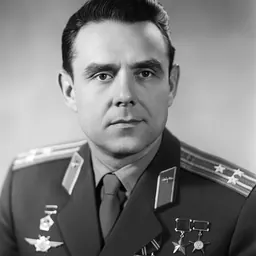
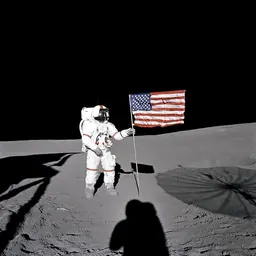
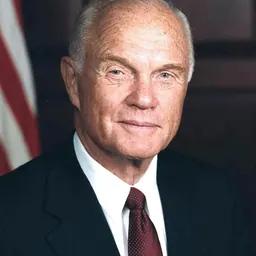
People in Nikolai Kamanin's life
Named in this biography and alive at the same time

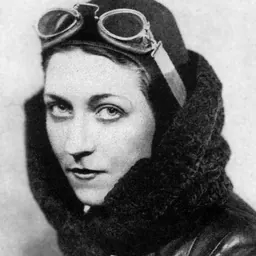
Related people
Same field, nearest in time



Contemporaries
People whose lives overlapped Nikolai Kamanin's

Frequently asked questions
Who was Nikolai Kamanin?
Soviet aviator and military commander (1908-1982)
When was Nikolai Kamanin born?
Nikolai Kamanin was born on 18 October 1908 in Melenki.
When did Nikolai Kamanin die?
Nikolai Kamanin died on 11 March 1982 in Moscow.
What was Nikolai Kamanin's occupation?
Nikolai Kamanin was an aircraft pilot, writer, politician, military personnel and soviet space program.
What nationality was Nikolai Kamanin?
Nikolai Kamanin was Russian.
Sources & further reading
Cite this page
APA: Biography.guide. (2026). Nikolai Kamanin. https://biography.guide/nikolai-kamanin/
MLA: "Nikolai Kamanin." Biography.guide, https://biography.guide/nikolai-kamanin/.
Chicago: "Nikolai Kamanin." Biography.guide. https://biography.guide/nikolai-kamanin/.
Data last updated: 2026-09-20 · Spot an error? Report a correction.
Page generated 2026-09-27 05:22 UTC