
About Nikola Vaptsarov
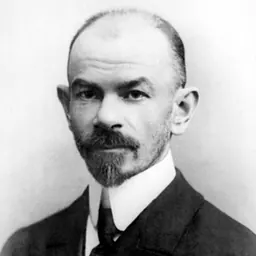
Lived 1909 – 1942 (aged 32). Nikola Vaptsarov was a Bulgarian poet, writer, military officer, anti-fascist and bulgarian resistance movement during World War II.
Nikola Yonkov Vaptsarov (; ; 7 December 1909 – 23 July 1942) was a Bulgarian poet and Communist Party activist. He worked most of his life as a machinist, and wrote in his spare time. He published the poetry book, Motor Songs.
In the latter part of his life, as a Macedonian nationalist, he was the driving force of the Macedonian Literary Circle until World War II, when it was disbanded and its attempts to awaken Macedonian identity were abandoned. Vaptsarov joined the resistance movement and, because of his subversive activities in favor of the Soviet Union and against the Bulgarian government and the German troops in Bulgaria, he was arrested, then tried, sentenced and executed the same day.
Life Vaptsarov was born in Bansko (then in the Ottoman Empire, today in southwestern Bulgaria), in 1909 into a mixed Bulgarian Exarchist-Protestant family. His father was a participant in the anti-Ottoman struggles and member of the Internal Macedonian Revolutionary Organization (IMRO); his mother was educated at the American College of Samokov and worked as a teacher.
Vaptsarov was trained as a machine engineer at the Naval Machinery School, which was later named after him, in Varna. His first service was on the Drazki torpedo boat. In this period, he embraced Marxism and spread the communist ideology during the 1930s. In April and May 1932, Vaptsarov visited Istanbul, Famagusta, Alexandria, Beirut, Port Said, and Haifa as a crew member of the Burgas vessel. In 1934, he joined the Bulgarian Communist Party. He continued writing, and a number of newspapers published his poems. He won a poetry contest with his poem titled "Romantika". thumb
In the late 1930s, Vaptsarov co-founded and directed the procommunist Macedonian Literary Circle, which promoted the idea of a Macedonian nation and language. According to him their aim was to analyse linguistic idioms, folklore, customs in order to stimulate Macedonian literature and to nurture revolutionary romanticism related to the IMRO as part of an artistic realism. Vaptsarov asserted that they needed to affirm the Macedonians as a distinct people in front of the world. He continued, however, writing only in standard Bulgarian. His only published poetry collection is Motor Songs (, 1940). According to Canadian-Macedonian historian Andrew Rossos, the cycle "Songs for the Fatherland" in the collection attests to his Macedonian national consciousness. The Macedonian Literary Circle disbanded itself in the spring of 1941, and its attempts to awaken Macedonian identity were abandoned.
He was arrested in March 1942. On 23 July 1942, he was sentenced to death and shot the same evening along with eleven other men.
Legacy Post-war Bulgarian communist authorities revered him as an activist and revolutionary poet, presenting his poetry collection as an example of proletarian literature. In 1953, he received posthumously the International Peace Award. His Selected Poems was published in London in the 1950s, by Lawrence & Wishart, translated into English with a foreword by British poet Peter Tempest. Vaptsarov Peak in eastern Livingston Island, Antarctica, is named after the famous Bulgarian poet. Vaptsarov's childhood home in Bansko and residence in Sofia are both museums. In Bulgaria, a prosecution office, journalists and social activists proposed a repeal of his death sentence.
In 1954, Macedonian students at the Pedagogical Institute in Dupnitsa and Sofia protested against the classification of Vaptsarov as Bulgarian and accused Bulgarian leaders of Macedonian origin of abandoning their heritage. Similar demands arose among students and teachers in Sandanski, which led to a state investigation and expelling of a teacher, and a Communist Party campaign for indoctrination on the Macedonian Question.
In August 1977, the People's Republic of Bulgaria sent a diplomatic note to the Socialist Federal Republic of Yugoslavia, protesting against the exploitation of his image in the Yugoslav media when a documentary about the "Macedonian revolutionary and poet" was broadcast on the first channel of Belgrade television. BCP's leadership condemned such cases as "crude attempts by the Yugoslav side to appropriate the work and image of the Bulgarian poet and revolutionary Nikola Yonkov Vaptsarov and to distort the historical truth…" The newspaper of the Union of Bulgarian Writers, Literary Front, was called upon to reject the "Yugoslav forgeries" with an article. In 1977, the Secretariat of the Central Committee of the Bulgarian Communist Party began organizing the "Vaptsarov Literary Days", which were to be held every two years in Bansko. On the anniversary, the Union of Writers introduced the "Vaptsarov Prize". The organizers of the Struga Poetry Festival in the Socialist Republic of Macedonia announced the celebration of the "Macedonian poet" in the official program for 1979. In response, the Union of Bulgarian Writers issued a declaration against the "Macedonization" of the "Bulgarian poet", which led to the refusal of Czechoslovak, Polish, Cuban, East German and Soviet poets to participate in the festival. The poet's brother, Boris Vaptsarov, a member of BCP's leadership, forbade Yugoslav Macedonians from celebrating the anniversary. The Bulgarian Academy of Sciences excessively published papers dedicated to the poet's work, as well as documents and memoirs relating to him. An international scientific seminar on Vaptsarov was also held in Sofia, while literary festivals were organized in Blagoevgrad and other cities. In SR Macedonia, translations in Macedonian of his poetry were published, and he was claimed as an ethnic Macedonian. The Union of Bulgarian Writers condemned the Macedonian authorities and asserted his Bulgarian ethnicity. In the manipulated version, the text included a claim that Macedonians have Bulgarian identity and would reject unification with FNR Yugoslavia, a state which did not exist or was even planned in 1938. On 4 February 2023, the club was subjected to vandalism. On 7 February 2023, members of the club submitted an application to register as an association with the same name, but the registration was denied by the authorities. In August 2023 the club was closed after the Appellation Court in Sofia officially rejected the appeal.
According to slavist Jolanta Sujecka: "(...) Vapcarov/Vaptsarov is part of Bulgarian literature, and not just because of the Bulgarian language of his poems. The Bulgarian dimension of his identity as well as the Macedonian and universal – international dimensions are part of his multi-layer consciousness."
Don’t just read it —
keep it.
Full-length biographies made to live with: read them, listen on the way to work, watch them tonight.
- E-book
- Audio
- Video
Instant download · yours to keep · every purchase keeps this site free
Important facts
People in Nikola Vaptsarov's life
Named in this biography and alive at the same time

Related people
Same field, nearest in time

Contemporaries
People whose lives overlapped Nikola Vaptsarov's



Frequently asked questions
Who was Nikola Vaptsarov?
Bulgarian communist writer (1909-1942)
When was Nikola Vaptsarov born?
Nikola Vaptsarov was born on 24 November 1909 in Bansko.
When did Nikola Vaptsarov die?
Nikola Vaptsarov died on 23 July 1942 in Sofia.
What was Nikola Vaptsarov's occupation?
Nikola Vaptsarov was a poet, writer, military officer, anti-fascist and bulgarian resistance movement during World War II.
What nationality was Nikola Vaptsarov?
Nikola Vaptsarov was Bulgarian.
Sources & further reading
Cite this page
APA: Biography.guide. (2026). Nikola Vaptsarov. https://biography.guide/nikola-vaptsarov/
MLA: "Nikola Vaptsarov." Biography.guide, https://biography.guide/nikola-vaptsarov/.
Chicago: "Nikola Vaptsarov." Biography.guide. https://biography.guide/nikola-vaptsarov/.
Data last updated: 2026-09-20 · Spot an error? Report a correction.
Page generated 2026-09-27 05:27 UTC