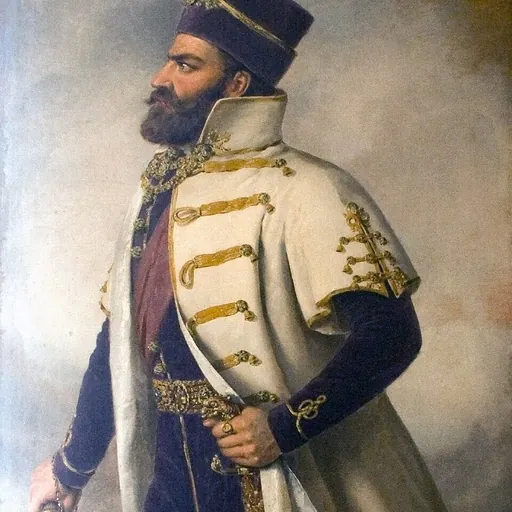
Nikola Šubić Zrinski
Croatian-Hungarian nobleman and general
About Nikola Šubić Zrinski
Lived 1508 – 1566 (aged 57–58). Nikola Šubić Zrinski was a Hungarian military leader, politician, generaloberst, military officer and ban.
Nikola IV Zrinski or Miklós IV Zrínyi (, ; 1507/1508 – 7 September 1566), also commonly known as Nikola Šubić Zrinski , (There never existed a historical person with a name of Nikola Šubić Zrinski neither did his family members call themselves as "Šubić Zrinski".) In the historical sources, he is simply known as Nikola Zrinski i.e. Miklós Zrínyi which in the English language translates as Nicholas of Zrin. In Croatia besides the real name he is also known as Nikola Šubić Zrinski, which is a 19th-century variation popularized by the same-titled opera, Zrinski came to be considered a role model of a faithful and sacrificial warrior, Christian hero as well as a national hero in both Croatia and Hungary, and is often portrayed in artworks.
Early life Nikola was a Croat. He was born as one of the six children of Nikola III of the Zrinski family from the noble tribe of Šubić, and of Jelena Karlović, sister of future Croatian Ban Ivan Karlović of the Kurjaković family from the noble tribe of Gusić. His birthplace is unknown, but it is generally considered to have been Zrin Castle. The same is about his birth date, for which different primary sources give dates ranging between 1507, 1508 and 1518, but according to them and other evidence it is considered to have been in 1507 or 1508, with 1508 most often cited in scholarship.
Activities Zrinski already distinguished himself in the early twenties during the Siege of Vienna in 1529, After the death of his father Nikola III in 1534, Nikola IV with older brother Ivan I inherited estates in Pounje, and they simultaneously started to fortify them as well as make contacts with the Ottomans, to whom they paid a yearly tribute like their father.
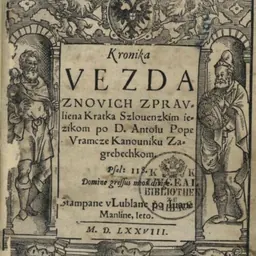
Fortress Kostajnica where Zrinski murdered Johann Katzianer, engraved by Gaspar Bouttats, 1686. In January 1539, Zrinski murdered the Imperial Army commander Johann Katzianer at Fortress Kostajnica because Katzianer had deserted the King Ferdinand I Habsburg, had started to conspire in favor of throne contestant John Zápolya, and had cooperated with the Ottomans. In 1542, according to Antun Vramec, he saved the Imperial Army forces from defeat at the Siege of Pest by intervening with 400 Croats, for which service he was appointed Ban of Croatia, a position which held until his death in 1556. In 1549 he was given the right to collect tax from the subjects by himself, and in 1561 the right to freely settle serfs on his estates. Some historians like Géza Pálffy consider he did manage to obtain it. Suleiman's forces reached Belgrade on 27 June after a forty-nine-day march. Learning of Zrinski's success in an attack upon a Turkish forces at Siklós in July, destroying several detachments,
Zrínyi's Charge on the Turks from the Fortress of Szigetvár, by Simon Hollósy, 1896. For over a month from 5 August to 7 September, Suleiman also died, but from natural causes, one day before the Ottomans won the siege. As Ottoman forces had suffered heavy casualties during the siege of Szigetvár, the army only managed to additionally capture the nearby fort Babócsa before Grand Vizier Sokollu Mehmed Pasha withdrew the army and ended the Ottoman conquest. or to new Sultan Selim II, but eventually, the head was buried by son Juraj IV Zrinski, Boldizsár Batthyány and Ferenc Tahy in September 1566 at the Pauline monastery in Sveta Jelena, Šenkovec, Croatia.
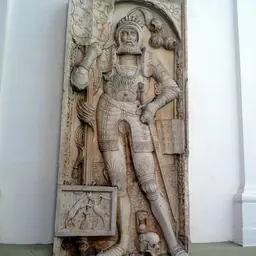
In Međimurje County Museum in Čakovec are preserved remains of the tombstone of a member of the Zrinski family, which most probably belonged to Nikola IV, and under which his head was likely buried. Due to his marriage to Katarina Frankopan, a sister of Count Stjepan Frankopan of Ozalj (d. 1577), her vast estates, including Ozalj and part of littoral cities like Bakar, became at his disposal in 1550 due to the inheritance contract. For some of them, Uršula, Katarina, and Doroteja is known that were educated at Güssing.
Legacy Zrinski's statue at the Feldherrenhalle, Museum of Military History, Vienna, Austria, 1865. Zrinski's heroic act at the siege of Szigetvár made him a well known European Christian hero, a defender and savior of Christendom, and "a model of a faithful and sacrificial warrior in the service of his ruler". He was also compared to Leonidas I. His cult of heroism was especially preserved among the Croats, Hungarians, and Slovaks. In Croatia, it also represented a symbol of Croatian identity, directed against Ottoman, Austrian and Hungarian political influence. Similarly, he gained some popularity during the Polish struggle for independence in second half of the 19th century and early 20th century. According to historians like Ágnes R. Várkonyi and Alojzije Jembrih, Zrinski had an "exceptional military talent, was a successful businessman, politician with a concept, and an endlessly passionate person".
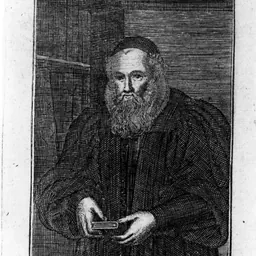
He was remembered in a first-hand report Podsjedanje i osvojenje Sigeta (1568) by Zrinski's scribe and chamberlain Franjo Črnko, which was immediately translated in Latin by Samuel Budina and published in the same year titled Historia Sigethi, totius Sclavoniae fortissimi propugnaculi..., with the second edition (1587) edited by Petrus Albinus. Other works include a historical epic Vazetje Sigeta grada (1584) by Brne Karnarutić, In the epic poem, the elder Zrinski is the main hero and has assured Zrinski's place in Hungarian culture as it remains in print today and is considered one of the landmarks of Hungarian literature. Compared to the Hungarian poem, which is an exception in Hungarian literature, the Croatian variation fits the Croatian literature tradition. Vladislav Menčetić's Trublja slovinska (1665) is the first Ragusan literature work that introduces the idea of antemurale Christianitatis for Croatian territories and celebrates Zrinski as a hero. Pavao Ritter Vitezović also wrote a related epic poem Odiljenje sigetsko (1684).
In the 18th century, his heroic act inspired school dramas in Jesuit Gymnasiums, including Andreas Friz's Nicolai Zriny ad Szigethum victoria (1738). The German author Theodor Körner wrote a tragedy, Zriny: Ein Trauerspiel (1812), after which August von Adelburg Abramović wrote the libretto for his opera Zrinyi (1868). The Croatian composer Ivan Zajc created an opera titled Nikola Šubić Zrinski (1876), as a patriotic work which is still performed regularly today. It includes an aria "U boj, u boj",
Since the 16th century, Zrinski featured in many engravings and paintings, of him as a portrait or during the siege mostly as leading the charge, like by Matthias Zündt, Miklós Barabás, Viktor Madarász, Mikoláš Aleš, Bela Čikoš Sesija and Oton Iveković among others. In 1914, the Czech painter Alphonse Mucha dedicated to Zrinski the painting titled Defense of Sziget against the Turks by Nicholas Zrinsky: The Shield of Christendom from his The Slav Epic cycle.
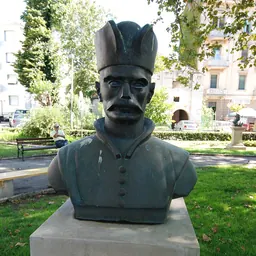
Nikola Šubić Zrinski Square and park in the center of Zagreb. By the imperial resolution of Emperor Franz Joseph I of Austria on 28 February 1863, Zrinski was included in the list of "Austria's most famous warlords and field commanders worthy of eternal emulation", in whose honor and memory was built a life-size statue of Carrara marble at the Museum of Military History, Vienna, in 1865 by sculptor Nikolaus Vay (1828-1886). There also exist several sculptures and busts of Zrinski in Zagreb, Čakovec and Šenkovec in Croatia, Budapest and Szigetvár in Hungary, and Heldenberg in Austria among others. Parks in Zagreb (see Nikola Šubić Zrinski Square), Koprivnica and Križevci among others are named after him.
The Order of Nikola Šubić Zrinski is the ninth-ranked honour order given by the Republic of Croatia, awarded since 1995 to Croatian or foreign citizens for acts of heroism.
Gallery
Annotations
Don’t just read it —
keep it.
Full-length biographies made to live with: read them, listen on the way to work, watch them tonight.
- E-book
- Audio
- Video
Instant download · yours to keep · every purchase keeps this site free
Important facts
Family & relationships
People in Nikola Šubić Zrinski's life
Named in this biography and alive at the same time




Related people
Same field, nearest in time



Contemporaries
People whose lives overlapped Nikola Šubić Zrinski's






Frequently asked questions
Who was Nikola Šubić Zrinski?
Croatian-Hungarian nobleman and general (1508–1566)
When was Nikola Šubić Zrinski born?
Nikola Šubić Zrinski was born in 1508 in Zrin Castle.
When did Nikola Šubić Zrinski die?
Nikola Šubić Zrinski died on 7 September 1566 in Szigetvár.
What was Nikola Šubić Zrinski's occupation?
Nikola Šubić Zrinski was a military leader, politician, generaloberst, military officer and ban.
What nationality was Nikola Šubić Zrinski?
Nikola Šubić Zrinski was Hungarian.
Sources & further reading
· Wikipedia: Nikola Šubić Zrinski
Cite this page
APA: Biography.guide. (2026). Nikola Šubić Zrinski. https://biography.guide/nikola-subic-zrinski/
MLA: "Nikola Šubić Zrinski." Biography.guide, https://biography.guide/nikola-subic-zrinski/.
Chicago: "Nikola Šubić Zrinski." Biography.guide. https://biography.guide/nikola-subic-zrinski/.
Data last updated: 2026-09-23 · Spot an error? Report a correction.
Portrait: Wikimedia Commons · author & licence
Page generated 2026-09-27 05:08 UTC