
Nikola Gruevski
Former politician from North Macedonia
About Nikola Gruevski
Born 1970. Nikola Gruevski is a Macedonian and Yugoslav politician, economist and head of government.
Nikola Gruevski (born 31 August 1970) is a former Macedonian politician who served as Prime Minister of Macedonia from 2006 until his resignation in 2016, in accordance with the internationally mediated Pržino Agreement due to the Macedonian political crisis, and led the party VMRO-DPMNE from 2004 to 2017. He was the longest serving post-independence Macedonian prime minister, serving more than nine years in office.
He instigated the controversial identity politics called antiquization and the project Skopje 2014. His rule in Macedonia (now North Macedonia) contributed to democratic backsliding and the regime he led was authoritarian. His government was responsible for the illegal wiretapping of 20,000 people in the country. In May 2018, he was sentenced to two years in prison on corruption charges, Gruevski was raised in a family that was neither privileged nor poor. His father (born in northern Greece) worked in furniture and design, and his mother was a nurse. After his parents' divorce, he was raised by his mother. When he was four, his mother went to work in Libya, like thousands of other Yugoslav citizens, and took him with her. After their return, he completed primary and secondary education in Skopje. Having graduated from the Faculty of Economics in Prilep of the St. Clement of Ohrid University in Bitola in 1994 (where he practiced amateur theater and boxing). Gruevski's grandfather, as part of the Greek army, fought in the Greco-Italian War and was killed by Italian forces during the Italian invasion of Albania. had extensive contacts with the Yugoslav security services. His family lost its political influence, including connections to oligarchs and secret service, after the death of Jordan Mijalkov.
Career
Finance and entry into politics Gruevski entered Republic of Macedonia's new finance sector, and was the first person to trade on Skopje's stock exchange. Gruevski established contact with members of the nationalist party VMRO-DPMNE. In 1996, he entered politics, becoming a local councillor in Skopje. In the next year, he began writing about economics. He introduced value-added tax, flat tax and returned property seized by the communists. He was a member of the Macedonian parliament from September 2002 to August 2006. Georgievski left the party to form his own party, VMRO – People's Party. His government included many people in their thirties as ministers. Vowing to focus on economic progress and job creation, Gruevski also vowed to deal with corruption and work towards Macedonia's entry into NATO and the EU. In 2006, he obtained a master's degree from the Faculty of Economics at the Ss. Cyril and Methodius University in Skopje with the thesis "Foreign Direct Investments, Economic Development and Employment". Balkan Insight reported that GDP grew around 5% in 2007 and 2008. Gruevski's historical negationism divided ethnic Macedonians between opponents and supporters of the myth of ancient origin. In the 2008 Bucharest NATO summit, Greece vetoed Macedonia's NATO accession, because of the Macedonia naming dispute. After the summit, Gruevski launched a case against it to the International Court of Justice (ICJ). His party campaigned for EU and NATO membership. This time, Gruevski created a government with DUI.
The US Department of State in its 2013 "Macedonia Human Rights Report" reported that the mainstream media rarely published views against the government. The European Union's Venice Commission commented that "If all laws (other than criminal laws) are to be enacted and enforced by a managing body rather than the constitutionally recognised lawmaker and executive, this zone becomes a sort of a 'State within a State' separate from the existing constitutional structure" and could become "a haven for 'dirty money.'" The World Media Freedom Index 2014 by the organization Reporters Without Borders ranked Macedonia in the 123rd place out of 179 countries.
SDSM demonstrated in 2015 that Gruevski and Mijalkov were responsible for the illegal wiretapping of 20,000 people in Macedonia, Gruevski had wiretapped allies and opponents. The wiretaps revealed a rule based on manipulative electoral results, privatization of the public administration and the regulatory bodies, and massive violations of privacy. In May 2015, mass protests begun due to the reveal about the wiretapping scheme.
An investigation in 2015 conducted by experts led by German jurist Reinhard Priebe, hired by the European Commission, concluded that his government misused the security service "to control top officials in the public administration, prosecutors, judges and political opponents." Per political scientist Vassilis Petsinis, Gruevski, who was a former ally of the US-led war on terror, gradually turned Macedonia away from the Western world towards Russia. Bieber stated that Gruevski's government never formally abandoned the goal of Euro-Atlantic integration, preserving its association with the European People's Party. The latter has opposed the Prespa agreement between Greece and Macedonia, and supported VMRO-DPMNE's hardline position against it.
Post-premiership (since 2016) The country's president and close ally of Gruevski, Gjorge Ivanov, disregarded the Pržino Agreement and pardoned all people involved in the wiretapping scandal on 12 April 2016. However, the decision caused mass protests (known as "Colorful Revolution"). Due to domestic and international pressure, a month later, Ivanov revoked the pardons. Mass protests continued until July when the EU mediated between the political parties again until a new agreement was reached. This time, it was decided that early elections would take place on 11 December 2016. Gruevski won his fourth parliamentary election in a row in December 2016.
In January 2017, the Macedonian Special Prosecutor's Office launched the 'Tank' investigation in which two individuals were accused of using their official position and authority in the period from February to October 2012 to complete an illegal public procurement of an armored Mercedes-Benz car worth and "fulfil the wishes" of Gruevski who was prime minister at the time. SDSM formed a new coalition government in 2017 under Zoran Zaev.
In December 2017, Gruevski resigned from the party's leadership, following the party's major defeat by SDSM in local elections. He portrayed foreign ambassadors and George Soros as external forces threatening Macedonia. In June 2018, he received a PhD from the Economics Faculty of University of Cyril and Methodius in Skopje.
The parliament failed to remove his mandate as a member of parliament. On 9 November 2018, the Skopje Criminal Court rejected Gruevski's appeals for a postponement of his prison sentence and on 10 November he did not appear for the start of his two-year sentence. The Macedonian authorities issued an arrest warrant against him. Despite his passport having been confiscated, Gruevski successfully escaped and concerns arose that he probably used a Bulgarian one. However, according to Bulgarian authorities, Gruevski has never applied for Bulgarian citizenship. It was later confirmed by Albanian police that, with the aid of the Hungarian government which escorted him using Hungarian diplomatic vehicles, Gruevski had passed through Albania, Montenegro and Serbia, before arriving in Hungary.
Interpol alerted that Gruevski is wanted under an international arrest warrant and the Macedonian government filed a formal extradition request.
On 20 November 2018, Gruevski was granted political asylum by the Hungarian authorities. He has condemned the Prespa agreement and stated that Prime Minister Zoran Zaev "scammed" and "tricked" the Macedonian people over the name change of the country and that Greek politicians imposed an unfavorable deal upon Macedonia that outlines exclusive claims over "antique history" by Greece. Gruevski has also opposed the Friendship Treaty with Bulgaria from 2017.
On 27 June 2019, Gruevski appeared handcuffed in a court in Budapest in a hearing closed for the public for his extradition requested by North Macedonia. Later that day the court in Budapest announced that his extradition was rejected. According to the judge, the conditions needed for his extradition were not fulfilled. According to Balkan Investigative Reporting Network's analysis of data from the country's finance ministry in November 2019, 95% of the €26.6 million spent on media by Gruevski's government were transferred to three private national broadcasters – Sitel (10.2 million), Kanal 5 (8.5 million) and Alfa TV (6.3 million). All three served as the mouthpieces of his government. Gruevski's closest allies and the owners and editors of the three channels also had close ties.
On 21 July 2020, Gruevski's position as an honorary president of VMRO-DPNME was removed as part of the policy to democratize the party. In October 2020, he was named in a new money laundering probe launched by the authorities in North Macedonia. In September 2020, the Skopje Criminal Court sentenced him in absentia to a year and a half in prison, after he and Mile Janakieski were found guilty of inciting the attack on the Centar municipality from June 2013.
On 19 March 2021, German politician Tobias Zech resigned from the Bundestag due to allegations that he received a large sum of money to campaign for Gruevski. After Gruevski escaped to Hungary, Zech continued business relations with North Macedonia through cannabis-related company PharmCann Deutschland AG in partnership with Zlatko Keskovski, a former counter-intelligence officer of North Macedonia.
In April 2022, the Skopje Criminal Court sentenced him in absentia to seven years in prison for unlawfully acquiring over €1.3 million from VMRO-DPMNE, and instigating a money-laundering scheme to cover his tracks and buy property. Per the verdict, Gruevski used money from donations made to the party, which he obtained between 2006 and 2012, while serving as prime minister, and then used it to buy attractive sites using an offshore company registered in Belize. At the same time, he was added to the US Treasury's Specially Designated Nationals List of individuals facing Balkans-related sanctions and the US Department of State's corruption related sanctions. Gruevski appealed against his April 2022 sentence, but he lost the appeal in 2023, with the Appeals Court raising his sentence to nine years in prison. On 14 July 2026, the Skopje Criminal Court acquitted him for abuse of position to build VMRO-DPMNE's headquarters in Skopje in a retrial.
Personal life Gruevski is fluent in English, while also knowing French and German.
Awards and recognition
Recognitions 2014: Order St. Nicholas – Highest Award of Štip 2015: Order Baptist (Preteca) from Saint Jovan Bigorski Monastery
Awards Vienna Economic Forum award – for contribution to national and regional economic development (2011)
Don’t just read it —
keep it.
Full-length biographies made to live with: read them, listen on the way to work, watch them tonight.
- E-book
- Audio
- Video
Instant download · yours to keep · every purchase keeps this site free
Important facts
People in Nikola Gruevski's life
Named in this biography and alive at the same time


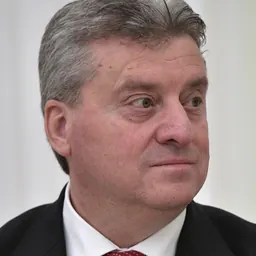



Related people
Same field, nearest in time
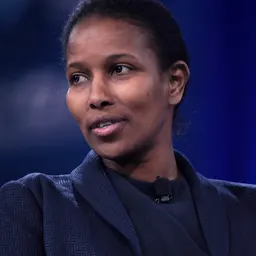




Contemporaries
People whose lives overlapped Nikola Gruevski's
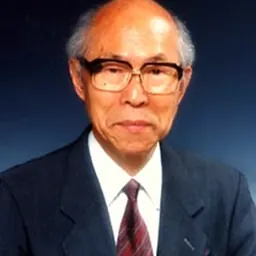
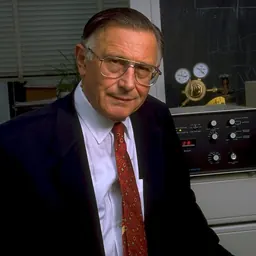

Frequently asked questions
Who is Nikola Gruevski?
Former politician from North Macedonia
When was Nikola Gruevski born?
Nikola Gruevski was born on 31 August 1970 in Skopje.
What is Nikola Gruevski's occupation?
Nikola Gruevski is a politician, economist and head of government.
What nationality is Nikola Gruevski?
Nikola Gruevski is Macedonian and Yugoslav.
Sources & further reading
Cite this page
APA: Biography.guide. (2026). Nikola Gruevski. https://biography.guide/nikola-gruevski/
MLA: "Nikola Gruevski." Biography.guide, https://biography.guide/nikola-gruevski/.
Chicago: "Nikola Gruevski." Biography.guide. https://biography.guide/nikola-gruevski/.
Data last updated: 2026-09-20 · Spot an error? Report a correction.
Page generated 2026-09-27 05:23 UTC