
About Nikhil Banerjee
Lived 1931 – 1986 (aged 54). Nikhil Banerjee was an Indian sitarist and composer.
Pandit Nikhil Ranjan Banerjee (14 October 1931 – 27 January 1986) was an Indian classical sitarist of the Maihar Gharana. Along with Pandit Ravi Shankar and Ustad Vilayat Khan, he emerged as one of the leading exponents of the sitar. He was a recipient of the Indian civilian honour of the Padma Bhushan.
Early life Nikhil Banerjee was born in 1931 into a Brahmin family in Calcutta, Bengal Presidency, British India. Belonging to the priestly class, taking up music as a professional career was traditionally discouraged in his family, as music was not considered a respectable profession for educated families at the time. Despite these social restrictions, Banerjee's interest in the sitar developed during early childhood by listening to his father, an amateur sitar player, practice daily.
Banerjee faced early resistance from his extended family under the joint family system, particularly from his grandfather, who was concerned that musical studies would compromise his formal education. At around five years of age, his father bought him a small sitar. By the age of seven, his father began systematically training him in scales and musical fundamentals.
Banerjee was regarded as a child prodigy. He won the All-Bengal Sitar Competition and made his public performance and broadcasting debut at age nine, becoming the youngest musician employed by All India Radio in Calcutta. Due to school commitments and strict family discipline, his early public performances were largely confined to the vicinity of Bengal.
Nikhil Banerjee is revered for his mastery in both melodic and rhythmic aspects of Indian music. His unique style of sitar playing is considered to have completeness, emotion and depth. His interpretation of ragas was usually traditional, although he is credited with creating at least two new ragas. His usage of a completely "bandh" or "closed" jawari in the Maihar style sitar allowed for a much greater amount of sustain (since the strings are not buzzing against the bridge as much) as can be heard in his unique sound. Though his strings do not sound as "closed" as Ustad Vilayat Khan's sitar playing, it was only due to the technical differences in their physical sitars (and jawari was changed specifically for the Jor strings etc.) that the sitars sounded in "different" style.
According to the San Francisco Chronicle, Banerjee's "technique is a phenomenon, faster than cheetahs, more secure than the dollar." Music and Musicians observed that "his improvisations always sound completely natural and spontaneous." In an obituary the New York Times wrote "the extraordinary fluidity and assurance of his rhythmic ideas and phrasing set a standard that would have left the more international 'stars' of Indian music behind."
Partial discography
The following is a summary of some recent CD issues. A more comprehensive discography can be found in the external links.
Afternoon Ragas (1970), released in 1992 Live: Misra Kafi (1982) The Hundred-Minute Raga: Purabi Kalyan (live) (1982) Immortal Sitar of Pandit Nikhil Banerjee, Ragas: Purabi Kalyan, Zila-Kafi, Kirwa (1986) Lyrical Sitar (1991) Live at De Kosmos: Amsterdam 1972 (1995) The KPFA Tapes: Berkeley 1968 (1995) Rag Hemant (1995) Le Sitar Du Pandit (1996) Raga Patdeep (1996) Live in Amsterdam 1984 (1997) Genius of Pandit Nikhil (live) (1998) Berkeley 1968 (1998) Live Concert, Vol. 2: India's Maestro of Melody (1999) Pandit Nikhil Banerjee (live) (1999) Total Absorption (2000) Banerjee Live in Munich 1980 (2000) Morning Ragas: Bombay Complete Concert 1965 (live) (2000) Musician's Musician (2001) India's Maestro of Melody: Live Concert, Vol. 5 (2002) Alltime Classic, Vol. 1: Raag Bageshree (live) (2004) Pratibha: Sony Music(Live) (2011)
Don’t just read it —
keep it.
Full-length biographies made to live with: read them, listen on the way to work, watch them tonight.
- E-book
- Audio
- Video
Instant download · yours to keep · every purchase keeps this site free
Important facts
People in Nikhil Banerjee's life
Named in this biography and alive at the same time

Related people
Same field, nearest in time

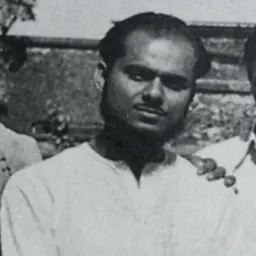
Contemporaries
People whose lives overlapped Nikhil Banerjee's

Frequently asked questions
Who was Nikhil Banerjee?
Indian sitar player (1931–1986)
When was Nikhil Banerjee born?
Nikhil Banerjee was born on 14 October 1931 in Kolkata.
When did Nikhil Banerjee die?
Nikhil Banerjee died on 27 January 1986 in Kolkata.
What was Nikhil Banerjee's occupation?
Nikhil Banerjee was a sitarist and composer.
What nationality was Nikhil Banerjee?
Nikhil Banerjee was Indian.
Sources & further reading
Cite this page
APA: Biography.guide. (2026). Nikhil Banerjee. https://biography.guide/nikhil-banerjee/
MLA: "Nikhil Banerjee." Biography.guide, https://biography.guide/nikhil-banerjee/.
Chicago: "Nikhil Banerjee." Biography.guide. https://biography.guide/nikhil-banerjee/.
Data last updated: 2026-09-20 · Spot an error? Report a correction.
Page generated 2026-09-27 05:21 UTC