
Nikephoros Kallistos Xanthopoulos
Byzantine ecclesiastical historian (c.1256-c.1335)
About Nikephoros Kallistos Xanthopoulos
Lived 1256 – 1335 (aged 78–79). Nikephoros Kallistos Xanthopoulos was a Byzantine church historian, historian, writer and cleric.
A Greek and Latin copy of Xanthopoulos' Ecclesiastica Historia ("Church History"); published in 1630. Nikephoros Kallistos Xanthopoulos (; Latinized as Nicephorus Callistus Xanthopulus; ) was a Greek ecclesiastical historian and litterateur of the late Byzantine Empire. His most popular work, the voluminous Ecclesiastica historia, constitutes a significant documentary source on primitive Christianity and its doctrinal controversies, as well as for hagiographical, liturgical, and legendary texts from Byzantine culture.
Life Most of our knowledge of Xanthopoulos' biography comes from the opening of his ecclesiastical history. The preface says that he began working on his history at age thirty-six. Nicephorus was trained in the florid, rhetorical style of Renaissance Byzantine historiography. He became a priest at Hagia Sophia and thus gained access to the patriarchal library. He also gave lessons in rhetoric and theology for which he prepared many new progymnasmata (exercises). Xanthopoulos was a friend of Theodoros Metochites, who dedicated his Poem 12 to him. During his later years it is possible that he became a monk.
Works
Ecclesiastica Historia Xanthopoulos' 23-volume Ecclesiastica Historia (; "Church History"), of which only the first eighteen volumes are known, starts the historical narrative from the time of Christ and continues until the execution of the emperor Phokas in 610. The work includes descriptions of secular events, such as the accession of emperors and military campaigns, but emphasizes ecumenical councils, doctrinal disputes, and the four eastern patriarchates.
Xanthopoulos began his project around 1310 using the basilica's manuscript library, and he completed it sometime after 1317. For the first four centuries, the author is largely dependent on his predecessors, Eusebius, Socrates Scholasticus, Sozomen, Theodoret and Evagrius, his additions showing very little critical faculty.p Also relied heavily on a collection of church histories in the Baroccianus Graecus 142, which contains the histories of Sozomen, Evagrios, and a variety of other excerpts on church history. Among the comments and notes that were added by Xanthopoulos, the book contains the phrase ("Lord help your slave Nikephoros Kallistos"), which served as both a prayer and a signature. The work was dedicated to the emperor Andronicus II Palaeologus and it contributed to the monarch's nationalist movement exalting Greek culture and Orthodoxy above Latin Christianity.
The Greek text was first printed by Fronton de Duc in 1630. This edition was reprinted by Migne in his Patrologia Graeca, vols.145-7. The Austrian Academy of Sciences commissioned a new edition in 2022, of which one volume has already (2026) appeared.
Other Among Xanthopoulos' other works are commentaries on the writings of the patristic Greek theologian Gregory of Nazianzus and of the Byzantine monk John Climacus. He was also the author of lists of the emperors and patriarchs of Constantinople, of a poem on the capture of Jerusalem, and of a synopsis of the Scriptures, all in iambics; and of commentaries on liturgical poems. As a hagiographer, his writings include a history of miracles that occurred at the shrine of Zoödochos Pege, as well as the lives of Saint Nicholas of Myra and Euphrosyne the Younger. He also wrote many of the synaxaria in use in the Eastern Orthodox Church.
Don’t just read it —
keep it.
Full-length biographies made to live with: read them, listen on the way to work, watch them tonight.
- E-book
- Audio
- Video
Instant download · yours to keep · every purchase keeps this site free
Important facts
People in Nikephoros Kallistos Xanthopoulos's life
Named in this biography and alive at the same time
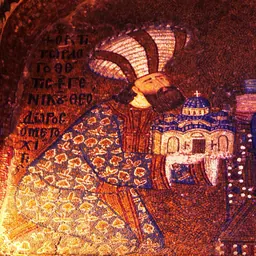
Related people
Same field, nearest in time


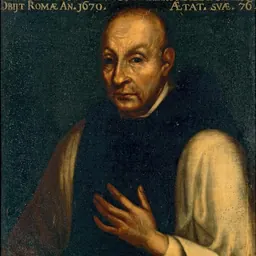
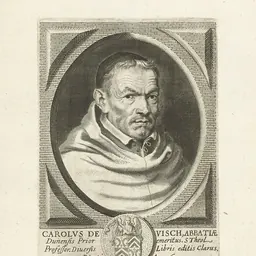
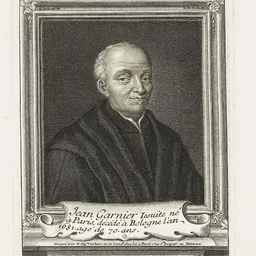
Contemporaries
People whose lives overlapped Nikephoros Kallistos Xanthopoulos's



Frequently asked questions
Who was Nikephoros Kallistos Xanthopoulos?
Byzantine ecclesiastical historian (c.1256-c.1335)
When was Nikephoros Kallistos Xanthopoulos born?
Nikephoros Kallistos Xanthopoulos was born in 1256.
When did Nikephoros Kallistos Xanthopoulos die?
Nikephoros Kallistos Xanthopoulos died in 1335 in Constantinople.
What was Nikephoros Kallistos Xanthopoulos's occupation?
Nikephoros Kallistos Xanthopoulos was a church historian, historian, writer and cleric.
What nationality was Nikephoros Kallistos Xanthopoulos?
Nikephoros Kallistos Xanthopoulos was Byzantine.
Sources & further reading
· Wikipedia: Nikephoros Kallistos Xanthopoulos
· DBpedia: Nikephoros Kallistos Xanthopoulos
Cite this page
APA: Biography.guide. (2026). Nikephoros Kallistos Xanthopoulos. https://biography.guide/nikephoros-kallistos-xanthopoulos/
MLA: "Nikephoros Kallistos Xanthopoulos." Biography.guide, https://biography.guide/nikephoros-kallistos-xanthopoulos/.
Chicago: "Nikephoros Kallistos Xanthopoulos." Biography.guide. https://biography.guide/nikephoros-kallistos-xanthopoulos/.
Data last updated: 2026-09-20 · Spot an error? Report a correction.
Page generated 2026-09-27 05:29 UTC