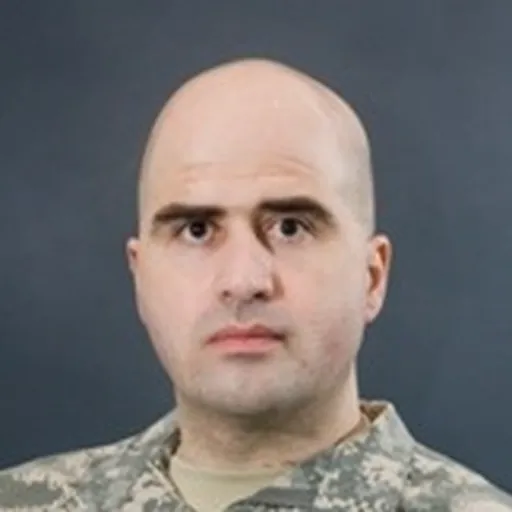
Nidal Malik Hasan
American Army officer and mass murderer (born 1970)
About Nidal Malik Hasan
Born 1970. Nidal Malik Hasan is an American psychiatrist, military physician and mass murderer.
Early life Nidal Hasan was born on September 8, 1970, at Virginia Hospital Center in Arlington County, Virginia. His parents were naturalized American citizens of Palestinian origin; they had immigrated years earlier from al-Bireh, a city in the West Bank near Jerusalem.
Raised in the Muslim faith with his two younger brothers, Hasan attended Wakefield High School in Arlington for his freshman year in 1985. His family moved to Roanoke in 1986, where his father had moved a year before to set up what would become a number of successful family-owned businesses which included a market, restaurant and olive bar.
Hasan graduated from Roanoke's William Fleming High School in 1988. His father died in 1998 at the age of 51; his mother died three years later at the age of 49. Upon graduation in 2003, Hasan completed his internship and residency in psychiatry at the Walter Reed Army Medical Center (WRAMC). He completed his psychiatry training with a two-year fellowship in disaster and preventive psychiatry, earning a master's degree in public health. During his training at Walter Reed, he received counseling and extra supervision. He suggested the U.S. Department of Defense "should allow Muslims Soldiers the option of being released as 'Conscientious objectors' to increase troop morale and decrease adverse events." On a previous slide, he explained "adverse events" could be refusal to deploy, espionage, or killing of fellow soldiers.
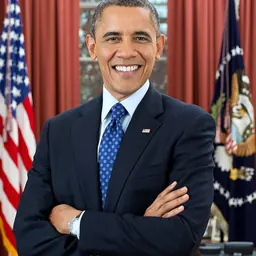
Retired Colonel Terry Lee, after working with Hasan, recalled the fatal shooting of two recruiters in Little Rock, Arkansas, greatly affected Hasan. Lee told Fox News that Hasan made "outlandish" statements against the American military presence in Iraq and Afghanistan, reportedly saying that "the Muslims should stand up and fight against the aggressor", referring to American soldiers. Hasan expressed hope U.S. president Barack Obama would withdraw troops. He was frequently agitated and argumentative with other Army personnel.
Despite these problems, in May 2009, Hasan was promoted to major. Despite concerns, his former boss, Lt. Col. Ben Phillips, graded his performance as "outstanding".
Hasan's cousin, Virginia attorney Nader Hasan, disputed the assertion that he was "disenchanted with the military," but said Hasan dreaded war after counseling soldiers with post-traumatic stress disorder. He was "mortified by the idea" of deploying after he heard on a "daily basis the horrors they saw over there". Nader also stated Hasan was harassed by his fellow soldiers. "He hired a military attorney to try to have the issue resolved, pay back the government, to get out of the military. He was at the end of trying everything."
In August 2009, according to a Killeen police report, someone vandalized Hasan's automobile with a key; repair was estimated at $1000. Police charged a soldier; a neighbor claimed the vehicle was vandalized because of Hasan's religion. Al-Awlaki said Hasan first e-mailed him on December 17, 2008. By way of introduction, Hasan said: "Do you remember me? I used to pray with you at the Virginia mosque."
Former CIA officer Bruce Riedel says "E-mailing a known al-Qaeda sympathizer should set-off alarm bells. Even if he was exchanging recipes, the bureau should have put out an alert."
Al-Awlaki had a website with a blog to share his views.
An unidentified Muslim officer at Fort Hood said Hasan's eyes "lit up" while speaking about al-Awlaki's teachings. Some investigators believe Hasan's contacts with al-Awlaki pushed him toward violence at a time he was depressed and stressed.
Prior to the Fort Hood shooting Internet activity The government agents monitoring Islamic websites believe Hasan, using the screenname 'NidalHasan', posted about suicide bombings in May 2009, although, during this period, government agents did not link the posts to Hasan.
Hasan's business card left in his apartment describes him as a psychiatrist specializing in Behavioral Health – Mental Health – Life Skills, and contains the acronyms SoA (SWT). According to investigators, the acronym "SoA" is used on jihadist websites as an acronym for "Soldier of Allah" or "Servant of Allah." SWT is commonly used to mean "subhanahu wa ta'ala" (Glory to God). A review of Hasan's computer and e-mail accounts show visits to Internet sites espousing radical Islamist ideas, according to a press-release from an anonymous government agent.
Emails to superiors Hasan expressed concern about the former actions by some of the soldiers he evaluated as a psychiatrist. Days before his attacks on Fort Hood in 2009, Hasan asked his supervisors and Army legal advisers how to handle reports of soldiers' deeds in Afghanistan and Iraq that disturbed him. In a press-release from Jeff Sadoski, spokesman for U.S. senator Kay Bailey Hutchison, "Hasan was upset about his deployment". (the phrase means "God is great"), and opened fire on armed forces in the Soldier Readiness Center of Fort Hood, located in Killeen, Texas, killing thirteen people and wounding over thirty others in the worst shooting against armed forces on an American military base. Department of the Army police officer Mark Todd shot Hasan several times. Todd kicked the pistol out of Hasan's hand, then cuffed Hasan. The attack lasted about ten minutes.
Post-shooting Medical condition To save his life, Hasan was hospitalized in the intensive care unit at Brooke Army Medical Center at Fort Sam Houston in San Antonio, Texas. In mid-December, Galligan indicated Hasan was moved from intensive care to a private hospital room. Galligan said doctors indicated Hasan would need at least two months in the hospital to learn "to care for himself".
Court-martial On November 7, 2009, while Hasan was communicative, he refused to talk to law enforcement officials. On November 12 and December 2, respectively, Hasan was charged with thirteen counts of pre-meditated murder and thirty-two counts of attempted murder under the Uniform Code of Military Justice, thus making him eligible for the death penalty.
At the time, authorities did not specify if they would seek the death penalty; Colonel Michael Mulligan would serve as the Army's lead prosecutor. Mulligan was lead prosecutor on the Hasan Akbar case, in which a soldier was sentenced to death for the murder of two members of the US military. The Army dictated Hasan speak only in English on the phone or with visitors unless an interpreter was present. Hasan was moved from Brooke Army Medical Center to the Bell County Jail in Belton, Texas, on April 9, 2010. Fort Hood negotiated a renewable $207,000 contract with Bell County in March to house Hasan for six months.
In a press release, Galligan announced prosecutors would seek the death penalty, stating, "It is the first 'formal notice' but, of course, it is a virtual given from the start. In short, the Army has been pursuing death from the git-go." The prosecutors filed a memo on April 28, 2010, stating the "aggravating factor" necessary for pursuit of the death penalty will be satisfied if Hasan is found guilty of more than one murder.
On October 12, 2010, Hasan was due to appear for his first broad military hearing into the attack. The hearing, formally called an Article 32 proceeding, akin to a grand jury hearing but open to the public, was expected to span six weeks. The hearing, designed to help the top Army commander at Ft. Hood determine whether there was enough evidence to court-martial Hasan, was scheduled to begin calling witnesses, but was delayed by technicality disputes. The hearing proceeded on October 14 with witness testimonies from survivors of the attacks. On November 15, the military hearing ended after Galligan declined to offer a defense case, on the grounds the White House and Defense Department refused to release documents he requested pertaining to an intelligence review of the shootings. Neither the defense nor prosecution offered to deliver a closing argument.
On November 18, Colonel James L. Pohl, investigating officer for the Article 32 hearing, recommended Hasan be court-martialed and face the death penalty. His recommendation was forwarded to another U.S. Army colonel at Fort Hood, who, after filing his report, presented his recommendation to the post commander. The post commander decided Hasan would face a trial and the death penalty. On July 6, 2011, the Fort Hood post commander referred the case to a general court-martial authorized to consider the death penalty. On July 27, 2011, Fort Hood Chief Circuit Judge Colonel Gregory Gross set a March 5, 2012, trial date. Hasan declined to enter any plea, and Judge Gross granted a request by Hasan's attorneys to defer the plea. Hasan notified Gross he had released John Galligan, his civilian attorney during previous court appearances, choosing to be represented by three military lawyers.
On February 2, 2012, a military judge delayed the trial until June 12, 2012. Lieutenant Colonel Kris Poppe, Hasan's lead attorney, said the request to delay the trial was "purely a matter of necessity of adequate time for pre-trial preparation".
On April 10, 2012, Hasan's lawyers requested another continuance to move the trial start date from June to late October to investigate paperwork and evidence and interview witnesses. Gross agreed to take the request under advisement. Judge Gross denied a defense motion seeking a Defense Initiated Victim Outreach specialist to testify, Fort Hood officials said. The new program is intended to help the defense respond to the needs of survivors and victims' families, and possibly change their attitudes if they support the death penalty. Gross also denied a defense request to force prosecutors to provide notes from meetings and conversations with President Barack Obama, the defense secretary, and other government agents after the November 5, 2009, attacks. Defense attorneys argued they want to determine if anything unlawfully influenced Hasan's chain of command to prosecute him. On April 18, 2012, Judge Gross granted in part the defense motion for a continuance, scheduling the trial for August 20, 2012.
In July 2012, after directing Hasan to shave his beard, the judge found Hasan in contempt of court and fined him. He was fined once more for retaining his beard, and was warned by Judge Colonel Gregory Gross he could be force-shaved prior to his court-martial. On August 15, Hasan was scheduled to enter pleas to the charges brought against him before the beginning of the court-martial; he would not be allowed to plead guilty for the premeditated murder charges because prosecutors pursued the death penalty.
The court-martial was delayed by Hasan's objections to being shaved against his will, and his appeal to the United States Court of Appeals for the Armed Forces regarding the matter; through his attorneys, Hasan said his beard is part of his religious beliefs. The prosecutors argued Hasan was simply trying to delay his trial.
On August 27, the Appeals Court announced the trial could continue, but did not rule whether Hasan could be force-shaved nor did they set a new date for the start of the trial. The Appeals Court rejected attempts by Hasan to receive "religious accommodation" to grow a beard. On September 6, Colonel Gross ruled Hasan be force-shaved after he determined the 1993 Religious Freedom Restoration Act did not apply to this case; however, the force-shave will not be enforced until Hasan's appeals are exhausted. During the September 6 hearing, Hasan twice offered to plead guilty; however, U.S. Army rules prohibit judges from accepting a guilty plea in a death penalty case.
On June 3, 2013, a military judge allowed Hasan to represent himself. His attorneys were to remain on the case, but only if he asked for their help. Jury selection was set to start on June 5, and opening arguments were scheduled to begin on July 1. On June 14, 2013, U.S. Army Colonel Tara Osborn dictated Hasan could not claim he was defending the Taliban. In a press-release, Hasan justified his actions during the Fort Hood attacks by claiming the US military was at war against Islam.
During the first day of the trial on August 6, Hasan, representing himself, admitted he was the attacker during the Fort Hood attacks in 2009, and stated the evidence would show he was the attacker. He also told the panel hearing he "switched sides", and regarded himself as a Mujahideen waging "jihad"—waging war—against the US military. By August 7, disagreements between Hasan and his stand-by defense team led Judge Osborn to suspend the trial. Hasan's defense attorneys were concerned Hasan was trying to help prosecutors achieve a death sentence. Because the prosecutors sought the death penalty, his defense team sought to prevent this.
On August 8, Judge Osborn ruled Hasan could continue to represent himself during the trial, then rejected his stand-by defense team's requests they take over Hasan's defense or have their roles reduced. The judge also declined the defense lawyers' request they be removed from the case. On August 9, Hasan allowed two of his three stand-by defense lawyers—Lieutenant Colonel Christopher Martin and Major Joseph Marcee—to seek leave to prepare an appeal arguing the defendant was seeking the death penalty, thus undermining their rules of "professional conduct". His third attorney Lieutenant Colonel Kris Poppe remained behind to observe the court proceedings. Court proceedings also resumed with the prosecution presenting testimonies from several survivors of the Fort Hood attacks. By August 14, more than sixty prosecution witnesses testified, and each identified Hasan as the attacker. Court proceedings were speedy because Hasan raised few objections and declined to cross-examine most witnesses.
By August 13, prosecutors shifted to presenting forensic evidence with FBI agents present at the crime scene testifying they had so much evidence at the crime scene, they ran out of markers. This evidence included one hundred forty-six cartridge cases and six magazines. The New York Times published remarks by Hasan from a mental health report supplied by the defendant's civil attorney John Galligan. According to these documents, Hasan told mental health professionals he "would still be a martyr" if he was convicted and executed. Hasan, acting as his defense lawyer, offered to share the report with prosecutors during his court-martial. However, on August 14, Judge Osborn blocked prosecutors from seeing the report. On August 19, she also excluded prosecuting evidence relating to Hasan's early radicalization, plus evidence which presented the Fort Hood attacks as a "copycat" based on the actions of Hasan Akbar, U.S. Army soldier sentenced to death.
On August 20, 2013, prosecutors rested their case against Hasan. They called nearly ninety witnesses over eleven days with the fast pace of proceedings attributed to Hasan's refusal to cross-examine most witnesses. Throughout the proceedings, he only questioned three witnesses. While the defense was scheduled to present his case on Wednesday, Hasan indicated he had no plans to call any defense witnesses. Earlier, he planned to call two defense witnesses: one a mitigation expert in capital murder cases, and the other a California university professor specializing in philosophy and religion. Hasan also formally declined to argue prosecutors failed to prove their case. Hasan did not call any witnesses or testify in his defense; he rested his defense on August 21, 2013. On August 22, 2013, Hasan declined to give a closing argument.
Verdict and sentencing On August 23, 2013, the military jury consisting of nine colonels, three lieutenant colonels, and one major convicted Hasan of all charges, making him eligible for the death penalty. Those deliberations began on August 26, 2013. By August 27, the thirteen-member panel of jurors heard testimony from twenty-four victims and family members of those wounded and killed during the 2009 Fort Hood attacks against American armed forces. Throughout the proceedings, Hasan declined to speak in his defense or question any of the witnesses. He also did not provide any material explaining his decision to not mount a defense throughout the trial and sentencing. At the end, Hasan, acting as his attorney, told jurors the defense rested his case. Judge Tara Osborn accepted Hasan's decision. In his final statement, lead prosecutor Colonel Mike Mulligan said
[Hasan] can never be a martyr because he has nothing to give ... Do not be misled; do not be confused; do not be fooled. He is not giving his life. We are taking his life. This is not his gift to God, it's his debt to society. He will not now and will not ever be a martyr.
The jurors re-convened to decide sentencing. On August 28, 2013, the jurors recommended Hasan be sentenced to death. The panel also recommended Hasan forfeit his military pay and be dismissed from the Army, a separation for officers carrying the same consequences as a dishonorable discharge. Due to mandatory appeals and the military's historical reluctance to execute convicts, USA Today noted in 2019 that an execution would still be years away.
Reaction Praise from Islamic extremists Some Muslims claimed the events in Islamist terms for political purposes. After the Fort Hood attacks, Anwar al-Awlaki praised Hasan's actions:
Al-Awlaki posted this as part of a lengthy Internet message.
In March 2010, Al Qaeda spokesman Adam Yahiye Gadahn praised Hasan, saying, although he was not a member of Al Qaeda, the
Hours before the attacks, CNN posted an interview and video of a New York city organization called Revolution Muslim, in which Younes Abdullah Mohammed (a Jew converted to Islam) spoke outside a New York mosque, saying U.S. armed forces are "legitimate targets", and Osama bin Laden was their model. The evening after the attacks, Revolution Muslim posted support for Hasan on their website, one of the few American sites to do so. In the video, RM described American armed forces as "slain terrorists in the eternal hellfire". Some Muslims condemned the organization.
A November 2009 press-release from the Ansar Al-Mujahideen Network cited Hasan as a role model. They congratulated him for his "brave and heroic deed" for standing up to the "modern Zionist-Christian Crusades" against Muslims.
The Dallas Morning News reported on November 17 that law enforcement officials suspected the attacks were triggered by the refusal of Hasan's superiors to process his requests seeking to have some of his patients prosecuted for war crimes based on statements they made during psychiatric sessions with him. Dallas attorney Patrick McLain, a former Marine, opined that Hasan was lawfully justified in sharing privileged information from his patients, but it was impossible to be sure without knowing that information. Some fellow psychiatrists complained to superiors Hasan's requests violated physician–patient privilege.
Shortly after the attacks, General George Casey, Chief of Staff of the Army, said the "real tragedy" would be harming the cause of diversity, saying, "As great a tragedy as this was, it would be a shame if our diversity became a casualty as well." Several months later, in a February 2010 interview, Casey said, "Our diversity—not only in our Army, but in our country, is a strength. And as horrific as this tragedy was, if our diversity becomes a casualty, I think that's worse."
FBI Director Robert Mueller appointed William Webster, a former director of the FBI, to conduct an independent review of the bureau's handling of investigations related to Hasan and whether they missed indicators of an attack. Webster was selected for the job due to, as Mueller stated, being "uniquely qualified" for such a review, and the Webster Commission's press-release includes several recommendations including written policies to the ownership of leads, integration of databases, and acquiring search capabilities for all relevant databases based on computational analysis of textual data to replace simple keyword searches[...]".
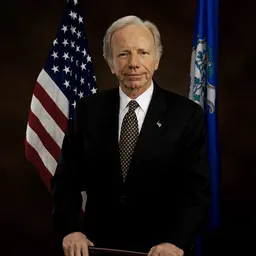
Media analysis and political statements On the November 9, 2009, Fox News Sunday show, U.S. Senator Joe Lieberman called for a probe by his Senate Committee on Homeland Security and Governmental Affairs. In his press-release, Lieberman said,
if the reports we're receiving of various statements he made, acts he took, are valid, he turned to Islamist extremism[...] if that is true, the murder of these thirteen people was a terrorist act[...] I think it's very important to let the Army and the FBI go forward with this investigation before we reach any conclusions.
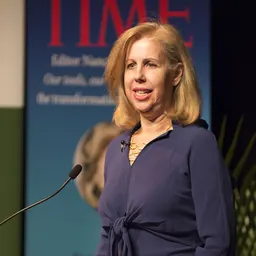
The November 23 cover of the European and U.S. editions of Time magazine featured a photograph of Hasan, with the title "Terrorist?" over his eyes. Nancy Gibbs reported the cover story: "Hasan matched the classic model of the lone, strange, crazy killer: the quiet and gentle man who formed few close human attachments."
On November 14, The New York Times stated, "Major Hasan may be the latest example of an increasingly common type of terrorist, self-radicalized with the help of the Internet, and wreaks havoc without support from overseas networks and without having to cross a border to reach his target."
Post-conviction life Following his conviction and sentencing, Nidal Hasan was incarcerated at the United States Disciplinary Barracks at Fort Leavenworth in Kansas to await execution. According to Chris Haug, Fort Hood's Chief of Media Relations, Hasan was stripped of his rank and dismissed from the U.S. Army. Although no new photos of Hasan have been released since his incarceration, military authorities confirmed that a video recording of the force-shaving exists, as per military regulations. In response, John Galligan, Hasan's former civilian lawyer, planned to sue the military for violating his religious beliefs. Galligan argued a military council in 2012 allowed Hasan to keep his beard for the duration of the trial, and dismissed the Army's actions as vindictive.
On August 28, 2014, Hasan's attorney said Hasan wrote to Abu Bakr al-Baghdadi, then head of the Islamic State of Iraq and the Levant (ISIL). In the letter, Hasan requested to be made a citizen of the Islamic State, and included his signature and the abbreviation SoA (Soldier of Allah).
In January 2015, it was reported that despite the lengthy appeals process, Hasan was "eager to follow his path to martyrdom" as soon as possible.
Appeals and subsequent developments On December 7, 2020, the U.S. Army Court of Criminal Appeals upheld Hasan's death penalty.
On September 11, 2023, the U.S. Court of Appeals for the Armed Forces upheld Hasan's death penalty.
On March 31, 2025, the United States Supreme Court denied Hasan's final petition for a writ of certiorari, thereby confirming his death sentence. On September 24, 2025, Secretary of Defense Pete Hegseth announced that he was seeking formal approval for Hasan's execution from President Donald Trump.
In popular culture The Israeli singer Eric Berman, in his album "Oh Pathetic Ridiculous Heart," composed the song "Not A Simple Story" following the background of the attacks. The song describes Hasan's biography and his deterioration leading him to attack.
Don’t just read it —
keep it.
Full-length biographies made to live with: read them, listen on the way to work, watch them tonight.
- E-book
- Audio
- Video
Instant download · yours to keep · every purchase keeps this site free
Important facts
People in Nidal Malik Hasan's life
Named in this biography and alive at the same time




Related people
Same field, nearest in time




Contemporaries
People whose lives overlapped Nidal Malik Hasan's




Frequently asked questions
Who is Nidal Malik Hasan?
American Army officer and mass murderer (born 1970)
When was Nidal Malik Hasan born?
Nidal Malik Hasan was born on 8 September 1970 in Arlington County.
What is Nidal Malik Hasan's occupation?
Nidal Malik Hasan is a psychiatrist, military physician and mass murderer.
What nationality is Nidal Malik Hasan?
Nidal Malik Hasan is American.
Sources & further reading
· Wikipedia: Nidal Malik Hasan
Cite this page
APA: Biography.guide. (2026). Nidal Malik Hasan. https://biography.guide/nidal-malik-hasan/
MLA: "Nidal Malik Hasan." Biography.guide, https://biography.guide/nidal-malik-hasan/.
Chicago: "Nidal Malik Hasan." Biography.guide. https://biography.guide/nidal-malik-hasan/.
Data last updated: 2026-09-22 · Spot an error? Report a correction.
Portrait: Wikimedia Commons · author & licence
Page generated 2026-09-27 05:04 UTC