
About Nicolas de Pellevé
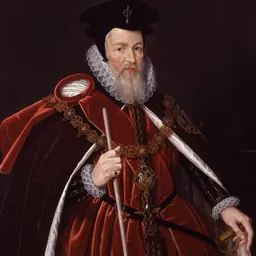
Lived 1518 – 1594 (aged 75). Nicolas de Pellevé was a French diplomat, catholic priest and archbishop.
Nicolas de Pellevé (18 October 1518 – 24 March 1594) was a French archbishop and Cardinal. He was a major figure of the Catholic League.
Early life
Nicolas de Pellevé, the second son of Charles de Pellevé, Sieur de Jouy and Hélène du Fay, was born on 18 October 1518. His brother Robert was Bishop of Pamiers (1553-1579). He obtained the degree of Doctor of Laws from the University of Bourges. With a law degree he obtained an appointment as Councillor of the Parliament of Paris. He then became Master of Requests. He enjoyed the benefice of the Abbey of S. Corneille de Compiègne from 1550 to June 1552, when he was promoted to the Episcopacy.
Episcopacy
He was a courtier of Henry II of France (died 10 July 1559), and then of the Cardinal de Lorraine, Charles de Guise (died 26 December 1574).
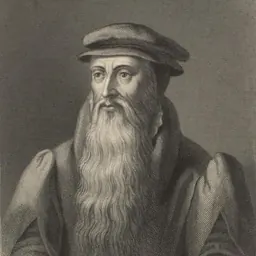
He was named bishop of Amiens in 1552 by Henri II, with the patronage of Cardinal Charles de Lorraine-Guise. King Henri died on 10 July 1559. But Bishop Nicolas continued to serve the Monarchy, as an agent of Francis I of France and Mary, Queen of Scots in Scotland from October 1559 to 15 July 1560 during the Scottish Reformation. The famous Calvinist preacher, John Knox, had returned to Scotland from Geneva on 2 May 1559 and had roused the Protestant Lords against the Catholic supporters of the French Mary of Guise, the mother of the six-year-old Mary, Queen of Scots. Pellevé's intervention was unsuccessful, and in any event a Peace (the Treaty of Edinburgh) was worked out between France and Scotland following the death of the Regent Mary of Guise (10 June 1560), which made a military expedition impossible. He returned to France, without having achieved any notable success against the Calvinist supporters of John Knox. As Bishop of Amiens, he accompanied the Cardinal de Lorraine to the Council of Trent in 1562. He was promoted archbishop of Sens in 1562. During his absence in Rome from 1574 until 1592, his diocese was administered for him from 1579 by Christophe de Chéfontaine, titular bishop of Caesarea, former Minister General of the Friars Minor.
Cardinalate
Pellevé was named a Cardinal Priest by Pius V on 17 May 1570 but he did not travel to Rome until summoned to Rome on the death of the Pope on 1 May 1572. The Conclave of 1572 lasted only three days, and he did not arrive in time to participate. The new pope, Gregory XIII, in fact sent a galley to fetch him on 20 June. He received the titulus of SS. John and Paul on 4 July 1572 from Gregory XIII. He remained at the Papal Curia in Rome for the next twenty years, working as the Protector of Scotland and Ireland, as well as a business agent for the King of France, Henri III, at least until the King's excommunication. He was appointed by Gregory XIII to the post of Prefect of the Sacred Congregation of Bishops.
In 1592 Pellevé was named archbishop of Reims by the Pope, without any notification on the part of the King of France, Henri IV. He took possession of the diocese under the mandate of the Duc de Mayenne on 4 October 1593. In 1593 he obtained the benefice of the Abbey of Toronetum (S. Maria de Floregia) in the Diocese of Frejus.
When he returned to France he took up the cause of the Holy League against Henri de Navarre (King Henri IV of France), refusing to recognize an apostate and heretic as legitimate king. In January–August 1593, as First Peer of France, Pellevé was First President for the Clergy of the Estates General (États de la Ligue), summoned to elect a King of France, since the Throne had become vacant (in their view) upon the assassination of Henri III on 2 August 1589. When Henri de Navarre renounced his heresy and apostasy in July 1593, the Cardinal was in a very difficult position politically and the "Estates" in confusion.
His death, in Paris in the Hotel of the Bishops of Sens, on 24 March 1594, removed those difficulties. He was buried in the Church of the Celestines. Four years later the body was removed to Reims, where it was interred in the Cathedral, next to the altar of S. Mary Magdalene.
Don’t just read it —
keep it.
Full-length biographies made to live with: read them, listen on the way to work, watch them tonight.
- E-book
- Audio
- Video
Instant download · yours to keep · every purchase keeps this site free
Important facts
People in Nicolas de Pellevé's life
Named in this biography and alive at the same time
Related people
Same field, nearest in time



Contemporaries
People whose lives overlapped Nicolas de Pellevé's




Frequently asked questions
Who was Nicolas de Pellevé?
Catholic cardinal
When was Nicolas de Pellevé born?
Nicolas de Pellevé was born on 18 October 1518 in France.
When did Nicolas de Pellevé die?
Nicolas de Pellevé died on 28 March 1594 in Paris.
What was Nicolas de Pellevé's occupation?
Nicolas de Pellevé was a diplomat, catholic priest and archbishop.
What nationality was Nicolas de Pellevé?
Nicolas de Pellevé was French.
Sources & further reading
· Wikipedia: Nicolas de Pellevé
Cite this page
APA: Biography.guide. (2026). Nicolas de Pellevé. https://biography.guide/nicolas-de-pelleve/
MLA: "Nicolas de Pellevé." Biography.guide, https://biography.guide/nicolas-de-pelleve/.
Chicago: "Nicolas de Pellevé." Biography.guide. https://biography.guide/nicolas-de-pelleve/.
Data last updated: 2026-09-20 · Spot an error? Report a correction.
Page generated 2026-09-27 05:25 UTC