
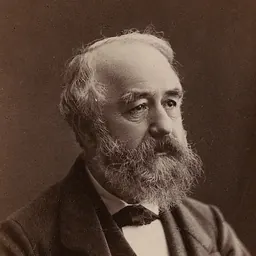
Nicolas Coccola
French missionary to British Columbia
About Nicolas Coccola
Lived 1854 – 1943 (aged 88). Nicolas Coccola was a French missionary and missionary Oblates of Mary Immaculate.
Nicolas Coccola (December 12, 1854–March 1, 1943) was a French Oblate missionary in British Columbia, Canada from 1880 until his death in 1943.
He spent 63 years in different regions of the province, working among the Shuswap, Kootenai, Dakelh, Sekani, Gitxsan, Hagwilget, Babine and Lheidli T'enneh First Nations.
British Columbia Nicholas Coccola left France for British Columbia on June 6, 1880, aboard the SS Gascoigne, arriving in New York City thirteen days later. After taking a train to San Francisco, he boarded a small sidewheel sternwheeler and arrived in New Westminster on July 26.
At the St. Mary's Mission, Coccola continued his studies and on Passion Sunday, 1881, he was ordained a Roman Catholic priest and sent to Kamloops.
Pielle and Father Coccola both sold their claims in 1895 for $12,000. Father Coccola became known as the "miner priest" and he used the profits to construct a hospital and a new gothic church in the St. Eugene Mission as well as another church in Moyie.
Throughout the next decade the St. Eugene Mine produced more than $10,000,000 in ore and was the catalyst for the Consolidated Mining and Smelting Company, later known as Cominco.
Fort George
By 1911, Nicolas Coccola was visiting the First Nations Lheidli T'enneh village at Fort George, later Prince George, regularly and he began to grow concerned over the bad influences of the railway construction workers and settlers in the nearby townsite of South Fort George, where there was a large licensed hotel. The First Nations village was a valuable property, as it had been decided that the railway was going to pass through Fort George. Several different concerns tried to purchase the property, among them Charles Vance Millar of the BC Express Company. Eventually the railway succeeded in negotiating for the property and with Nicolas Coccola as the band's spokesman, the village was sold for $125,000 and a new reservation was built north on the Fraser River. By the summer of 1913, the old First Nations village was burned and only the church was left standing.
At Easter in 1940, although retired from missionary work, Coccola was summoned to Moricetown as the residents had found themselves without a priest for the holiday and they didn't want to go without Mass and Communion.
Don’t just read it —
keep it.
Full-length biographies made to live with: read them, listen on the way to work, watch them tonight.
- E-book
- Audio
- Video
Instant download · yours to keep · every purchase keeps this site free
Important facts
People in Nicolas Coccola's life
Named in this biography and alive at the same time

Related people
Same field, nearest in time


Contemporaries
People whose lives overlapped Nicolas Coccola's



Frequently asked questions
Who was Nicolas Coccola?
French missionary to British Columbia
When was Nicolas Coccola born?
Nicolas Coccola was born on 12 December 1854 in Corsica.
When did Nicolas Coccola die?
Nicolas Coccola died on 1 March 1943 in Smithers.
What was Nicolas Coccola's occupation?
Nicolas Coccola was a missionary and missionary Oblates of Mary Immaculate.
What nationality was Nicolas Coccola?
Nicolas Coccola was French.
Sources & further reading
Cite this page
APA: Biography.guide. (2026). Nicolas Coccola. https://biography.guide/nicolas-coccola/
MLA: "Nicolas Coccola." Biography.guide, https://biography.guide/nicolas-coccola/.
Chicago: "Nicolas Coccola." Biography.guide. https://biography.guide/nicolas-coccola/.
Data last updated: 2026-09-22 · Spot an error? Report a correction.
Page generated 2026-09-27 05:17 UTC