
About Nick Carbó
Lived 1964 – 2024 (aged 59–60). Nick Carbó was a poet.
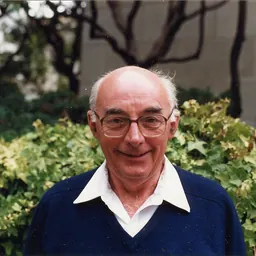
Nick Carbó (1964 – October 16, 2024) was a Filipino-American writer. He wrote poetry, essays, and edited magazines and anthologies. He is primarily known for his book of poetry titled Secret Asian Man Tia Chucha Press which won the Asian American Writers Workshop's Readers Choice Award. He also won the 2005 Calatagan Award from the Philippine American Writers & Artists for his book Andalusian Dawn (2004) Cherry Grove Collections. His most noted award is the 1999 Gregory Millard/New York City Department of Cultural Affairs New York Foundation for the Arts Fellowship.
Carbó spent most of his early career developing contemporary Filipino-American literature as a genre and he is credited by scholars such as Elisabetta Marino as playing an instrumental role in its modern conception. Through his anthologies Returning a Borrowed Tongue, Babaylan, and Pinoy Poetics, he consolidates both Filipino and Filipino-American experiences. The Nobel Library of the Swedish Academy owns seven of his publications.
Life and career Early life Carbó was born in Legazpi City, where he and his younger sister Maribri were adopted by Sophie and Alfonso Carbó. At age 7, the family moved from their large home in Bicol to Makati. He attended the International School of Manila for Grades 2–12, putting him in direct contact with Filipino, American, and international elite. Carbó has stated that some of his early poems, such as "Civilizing the Filipino," stem from his experiences with the injustice of white administrators. and he began to write poetry that Carbó calls "silly love poetry that rhymes a lot."
Works and reception Literary reviewers such as Vince Gotera and critics such as M. Evelina Galang With 175 indigenous languages and both Spanish and American imperialism giving them new languages, Philippine authors split their readerships when choosing which language to write in. Carbó's conscious decision to amass Filipino-American writers into his anthology Returning A Borrowed Tongue intended to base Filipino-American literature in the English language to keep their audience whole, which literary critics such as Al Camus Palomar appreciate. The anthology includes poetry that recounts symbols of Filipino and Filipino-American life, such as jeepneys and cuisine, and use them as vehicles to convey the issues of their united identity. Palomar comments that the poets, who range from the early 1900s to 1990, are masters of English nuance and idioms and the volume as a whole being a stylish testament to Filipino poetry. His introduction serves as an unbiased account of the Philippine colonial history, and the role Spaniards and Americans played in the creation of Philippine culture and identity. His contemporary colleague Eileen Tabios's introduction serves as an artist's take on history, starkly contrasting Carbó's with her inclusion of emotion and experience as a Filipina. The verse and prose celebrate the Filipina and their struggle, and Carbó uses Babaylan to establish Filipino-American literary tradition further.
Published works
Poetry Running Amok (1992) El Grupo McDonald's (1995) Secret Asian Man (2000) Andalusian Dawn (2004) Chinese, Japanese, What are These? (2009)
Anthologies (editor) Returning A Borrowed Tongue (1995) Babaylan (2000) Pinoy Poetics (2004)
Accolades
Awards Readers Choice Award from the Asian American Writers Workshop (2001) Calatagan Literary Award from the Philippine American Writers & Artists, Inc. (2005)
Fellowships National Endowment for the Arts $20,000 (1997) New York Foundation for the Arts $7,000 (1999)
Grants Artist Relief Grant $5,000 (2020) Academy of American Poets Emergency Fund $4,000 (2019) Authors League Fund $16,000 (2017), $6,000 (2019) PEN America Writers Emergency Fund $3,000 (2018)
Residencies Le Chateau de Lavigny Maison d' Ecrivain (1998, Switzerland) Fundacíon Valparaiso (1995, 2001, Spain) The Corporation of Yaddow (1992, 1995, 2002) The MacDowell Colony (1997, 2000) Moulin á Nef (2007, France) Virginia Center for the Creative Arts (2003, 2005) Kimmel Harding Nelson Center for the Arts (2007) Convento Mertola (2008, 2009, Portugal) KunsternaLogies (2009, Netherlands)
Don’t just read it —
keep it.
Full-length biographies made to live with: read them, listen on the way to work, watch them tonight.
- E-book
- Audio
- Video
Instant download · yours to keep · every purchase keeps this site free
Important facts
People in Nick Carbó's life
Named in this biography and alive at the same time



Related people
Same field, nearest in time

Contemporaries
People whose lives overlapped Nick Carbó's


Frequently asked questions
Who was Nick Carbó?
Filipino-American poet (1964–2024)
When was Nick Carbó born?
Nick Carbó was born in 1964.
When did Nick Carbó die?
Nick Carbó died on 16 October 2024.
What was Nick Carbó's occupation?
Nick Carbó was a poet.
What nationality was Nick Carbó?
Nick Carbó's recorded nationality: España, Filipino-American.
Sources & further reading
Cite this page
APA: Biography.guide. (2026). Nick Carbó. https://biography.guide/nick-carbo/
MLA: "Nick Carbó." Biography.guide, https://biography.guide/nick-carbo/.
Chicago: "Nick Carbó." Biography.guide. https://biography.guide/nick-carbo/.
Data last updated: 2026-09-22 · Spot an error? Report a correction.
Page generated 2026-09-27 05:27 UTC