
About Nick Brandt
Born 1964. Nick Brandt is a British photographer.
Nick Brandt (born 1964) is an English photographer and music video director. His photographs focus on the impact of environmental destruction and climate breakdown, for both some of the most vulnerable people across the planet and for the animal and natural world.
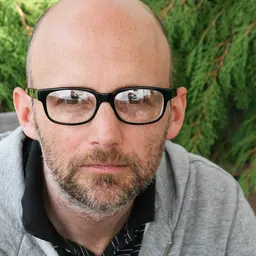
Background and early career Born in 1964 and raised in London, England, Brandt studied painting, and then Film at Saint Martin's School of Art. He moved to California in 1992 and directed many award-winning music videos for the likes of Michael Jackson ("Earth Song", "Stranger in Moscow"), Whitney Houston ("I Will Always Love You"), Moby ("Porcelain"), Jewel ("Hands"), Grayson Hugh ("Talk It Over"), + XTC ("Dear God") among others.
It was in 1995 while directing "Earth Song" in Tanzania that Brandt fell in love with the animals and land of East Africa. In 2001, frustrated that he could not capture on film his feelings about the destruction of the natural world, he realized there was a way to achieve this through photography.
Photography On This Earth In 2001, Brandt embarked upon his first photographic project: a trilogy of work to memorialize the vanishing natural grandeur of East Africa.
This work bore little relation to the typical, color, documentary-style wildlife photography.
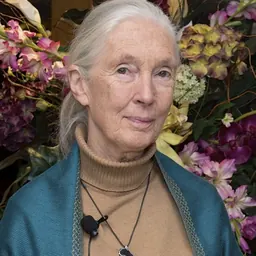
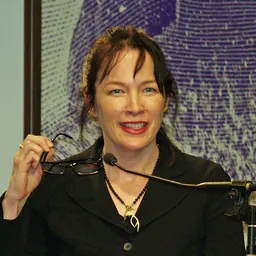
A book of the resulting photography, On This Earth, was released in 2005 and constituted 66 photos taken from 2000 to 2004 with introductions by the conservationist and primatologist Jane Goodall, author Alice Sebold, and photography critic Vicki Goldberg.
In the afterword, Brandt explained the reasons for the methods he used at the time: "I'm not interested in creating work that is simply documentary or filled with action and drama, which has been the norm in the photography of animals in the wild. What I am interested in is showing the animals simply in the state of Being. In the state of Being before they are no longer are. Before, in the wild at least, they cease to exist. This world is under terrible threat, all of it caused by us. To me, every creature, human or nonhuman, has an equal right to live, and this feeling, this belief that every animal and I are equal, affects me every time I frame an animal in my camera. The photos are my elegy to these beautiful creatures, to this wrenchingly beautiful world that is steadily, tragically vanishing before our eyes."
A Shadow Falls Returning to Africa repeatedly from 2005 to 2008, Brandt continued the project. The second book in the trilogy, A Shadow Falls, was released in 2009 and featured 58 photographs taken during the preceding years.
Writing in the introduction, Goldberg states: "Many pictures convey a rare sense of intimacy, as if Brandt knew the animals, had invited them to sit for his camera, and had a prime portraitist’s intuition of character...as elegant as any arranged by Arnold Newman for his human high achievers."
In additional introductions, philosopher Peter Singer, author of Animal Liberation, explains why Brandt's photographs speak to an increasing human moral conscience about our treatment of animals: "The photographs tell us, in a way that is beyond words, that we do not own this planet, and are not the only beings living on it who matter".
Across the Ravaged Land Ranger with Tusks of Elephant Killed at the Hands of Man, Amboseli, 2011In 2013, Brandt completed the trilogy On This Earth, A Shadow Falls, Across the Ravaged Land (the titles designed to form one consecutive sentence) with Across the Ravaged Land. A book of the photography was released the same year.
Across the Ravaged Land introduced humans in Brandt's photography for the first time. One such example is Ranger with Tusks of Elephant Killed at the Hands of Man, Amboseli, Kenya 2011. This photograph features a ranger employed by Big Life Foundation, a foundation started by Brandt in 2010 to help preserve critical ecosystems in Kenya and Tanzania. The ranger holds the tusks of an elephant of the Amboseli region killed by poachers.
Inherit the Dust In 2014, Brandt returned to East Africa to photograph the escalating changes to the continent's natural world.
A book of the work, Inherit the Dust, was published in 2016. In the book, Brandt writes, "We are living through the antithesis of genesis right now. It took billions of years to reach a place of such wondrous diversity, and then in just a few shockingly short years, an infinitesimal pinprick of time, to annihilate that."
Writing in LensCulture, editor Jim Casper stated: "The resulting wall-size prints are impeccably beautiful and stunning, as well as profoundly disturbing. They convey the vast spaces and light of contemporary Africa with a cinematic immersion and incredible detail. When standing in front of his images, the viewer is transported into the scenes – sometimes with wonder and awe and joy, and other times with overwhelming sadness, despair and disgust." Photography critic Michelle Bogre further noted: "Nick Brandt’s new photographic work, Inherit the Dust, is his visual cry of anguish about the looming apocalypse for animals habitats in Africa... The resulting images are simultaneously beautiful and horrifying, because they illustrate the irreconcilable clash of past and present".
This Empty World Brandt's next project, This Empty World, was released in February 2019. The series was published in book form by Thames & Hudson. This new project, "addresses the escalating destruction of the African natural world at the hands of humans, showing a world where, overwhelmed by runaway development, there is no longer space for animals to survive. The people in the photos also often helplessly swept along by the relentless tide of 'progress.'”
Representing a thematic and technical evolution, the series required Brandt to develop and perfect a demanding new process.
All the elements of the sets were recycled from one set into the next, and at the end back into the supply chain.
Says Brandt, "People still think the major issue with the destruction of wildlife in Africa is poaching, but especially in East Africa it's no longer the biggest problem. The biggest problem is the population explosion that is happening. With that comes an invasion of humanity and development into what was not so long ago wildlife habitat."
The Day May Break
In September 2021, Brandt released a project titled The Day May Break, the first chapter in a global series of photographs portraying people and animals that have been impacted by environmental degradation and destruction. The photographs for this series were taken by Brandt in Kenya and Zimbabwe late in 2020. Each photo captures threatened animals living in wildlife sanctuaries alongside people in those countries who have suffered from the effects of climate change such as farmers displaced and impoverished by years-long severe droughts. The people and animals were photographed together in the same frame at the same time, and were taken at five sanctuaries and conservancies.
In October 2021, LA Weekly art critic Shany Nys Dambrot said of the question the project poses “is whether the day will break like sunrise, or like glass. For as gorgeous, rich and operatic as the images are, this is not an Edenic vision of coexistence, it’s an urgent plea for taking action.” in New York and at Polka Galerie in Paris.
The people in the photographs were found across Bolivia, and like in Chapter One, had all been negatively impacted by the effects of climate change, from extreme droughts to flooding. The animals were all rescues as a result of habitat destruction and wildlife trafficking, and live at Senda Verde Animal Sanctuary in the Yungas Mountains where the photographs were taken.
As in Chapter One, the people and animals, largely habituated to humans, were photographed together in the same frame.
The book of the work was published in spring 2023 by Hatje Cantz Verlag in Germany.
SINK / RISE (The Day May Break, Chapter Three) (2023)
SINK / RISE is the third chapter of The Day May Break, the ongoing global series portraying people and animals that have been impacted by environmental degradation and destruction. The themes in Nick Brandt's work always relate to the destructive environmental impact that humankind is having on both the natural world and humans themselves. This third chapter was released in September 2023.
This third chapter focuses on South Pacific Islanders impacted by rising oceans from climate change. The local people in these photos, photographed underwater in the ocean off the coast of the Fijian islands, are representatives of the many people whose homes, land and livelihoods will be lost in the coming decades as the water rises.
Spread across the planet, there is a common link between the countries in which each chapter of The Day May Break is photographed : They are among the countries that are the least responsible for climate breakdown. Their global carbon emissions are tiny compared to industrial nations. Yet they are disproportionately harmed by its effects. In an article by CNN's Catherine Shoichet, Brandt describes the work as “pre-apocalyptic”.
Everything is shot in-camera underwater.
In the book's Foreword, author Zoe Lescaze writes, "Faced with a seemingly impossible task, Nick Brandt has created a profoundly original body of work, one that represents an entirely new approach to climate-conscious photography…although they are several meters below the surface, the subjects of Brandt’s mesmerizing photographs do not float or swim. Incredibly, they sit on sofas, stand on chairs, use seesaws, and pose in ways they might on land. The effect is otherworldly, as though the familiar laws of physics have stalled in this strange, liminal zone between land and sea."
The first large institutional exhibition featuring all three chapters of The Day May Break simultaneously took place at Newlands House Gallery in the United Kingdom.
THE ECHO OF OUR VOICES (The Day May Break, Chapter Four) (2024)
The Echo of Our Voices is the fourth chapter in the ongoing series The Day May Break. This latest chapter was released in September 2024, and ties in with an exhibition at Fahey/Klein Gallery in Los Angeles.
The photographs feature rural families, who fled the war in Syria, now living in Jordan. Living lives of continuous displacement due to climate change, the Syrians photographed are forced to move their homes up to several times a year, moving to where there is available agricultural work, to wherever there has been sufficient rainfall to enable crops to grow.
The stacks of boxes that the families sit and stand together on aim skyward - a verticality implying a strength or defiance - and provide pedestals for those that in our society are typically unseen and unheard.
In a CNN feature in October 2024 about the work, CNN journalist Alaa Elassar writes: “Brandt strikes a flawless balance when bringing together harsh and soft elements, in this case the delicate reunion between the roughness of the desert - and the refugees stories - with the warmth of family. The refugees come alive through his photos; the physical connection to emanate affection, and in the eyes of the children are crystal-clear dreams. Some of the women look straight into the camera with expressions that scream resilience...In a world that so frequently dehumanizes Arabs, especially Arab woman who fall victim to stereotypical depictions of oppressed voiceless beings, Brandt has made an effort to give these women a platform to reclaim their power.” Nick Brandt and Richard Bonham co-founded the non-profit organization Big Life Foundation, dedicated to the conservation of Africa's wildlife and ecosystems.
With one of the most spectacular elephant populations in Africa being rapidly diminished by poachers, the Amboseli ecosystem—which straddles both Kenya and Tanzania—became the foundation's large-scale pilot project.
Headed up in Kenya by conservationist Richard Bonham, multiple fully equipped teams of anti-poaching rangers have been placed in newly built outposts in the critical areas throughout the more than area. This effort has resulted in a dramatically reduced incidence of killing and poaching of wildlife in the ecosystem.
Don’t just read it —
keep it.
Full-length biographies made to live with: read them, listen on the way to work, watch them tonight.
- E-book
- Audio
- Video
Instant download · yours to keep · every purchase keeps this site free
Important facts
Family & relationships
People in Nick Brandt's life
Named in this biography and alive at the same time




Related people
Same field, nearest in time


Contemporaries
People whose lives overlapped Nick Brandt's


Frequently asked questions
Who is Nick Brandt?
English photographer (born 1964)
When was Nick Brandt born?
Nick Brandt was born in 1964 in London.
What is Nick Brandt's occupation?
Nick Brandt is a photographer.
What nationality is Nick Brandt?
Nick Brandt is British.
Sources & further reading
Cite this page
APA: Biography.guide. (2026). Nick Brandt. https://biography.guide/nick-brandt/
MLA: "Nick Brandt." Biography.guide, https://biography.guide/nick-brandt/.
Chicago: "Nick Brandt." Biography.guide. https://biography.guide/nick-brandt/.
Data last updated: 2026-09-25 · Spot an error? Report a correction.
Page generated 2026-09-27 05:12 UTC