
About Nicholas Walsh
Lived 1542 – 1615 (aged 72–73). Nicholas Walsh was a judge and politician.
Sir Nicholas Walsh (1542–1615) was an Irish judge, politician and landowner of the late Tudor and early Stuart era. He was Speaker of the Irish House of Commons in the Parliament of 1585–86 and a close ally of the Lord Deputy of Ireland, Sir John Perrot. Perrot's downfall did some short-term damage to Walsh's career, but he soon regained his influence, as he was noted for his loyalty to the English Crown, and enjoyed the Queen's personal regard.
He was appointed Chief Justice of the Irish Common Pleas in 1597. He also sat on the Privy Council of Ireland, on which he held an office which has been compared to that of a Minister without portfolio. His loyalty to the Crown led to his being attacked and narrowly escaping death during a serious riot in his home town of Waterford in 1603. Remarkably by modern standards, he was elected an MP while also serving as a High Court judge.
He acquired a great fortune and was called "the richest commoner in Munster". He took some interest in traditional Gaelic culture: the well-known Irish poem, Labhrann ar Iongaibh Éireann, by Tuileagna Ó Maoil Chonaire, was addressed to him.
Early life
He was born in Waterford, son of James Walsh, who was Mayor of Waterford in 1539 and 1547, and grandson of Patrick Walsh, who was also Mayor of the town in 1528 and 1532.
Early career His first official post was Recorder of Waterford, which he held for life. After the settlement of Munster, he was one of the three commissioners charged with the government of the province. He was accused of shameless "grabbing" of former rebels' lands, thus adding to his considerable fortune. He acquired lands in County Cork, County Kilkenny and Kinsalebeg in County Waterford. His estates at Clonmore, County Kilkenny were the main source of food for Waterford city.
Walsh became second justice of the Provincial Court of Munster in 1570 and Chief Justice of Munster in 1576. He was on good terms with Lord Deputy FitzWilliam and was a regular correspondent of Lord Burghley, the elder statesman of Queen Elizabeth I's court.
It was a sign of Perrot's regard for him, and that of the Queen herself, that Walsh was appointed to the Privy Council in 1587, though he had no specific functions on it. Crawford describes the appointment as unique. and paved the way for several similar elections – Sir Gerard Lowther the elder, Sir John Blennerhassett and Sir Christopher Sibthorpe – to the Parliament of 1613–15. Walsh as Recorder tried to persuade Waterford Corporation to proclaim James as King, but a riot broke out in which Walsh might have been killed had not his relatives on the Corporation intervened to quell the violence. Walsh, despite his record of service to the Crown, had never been popular, even in his native Waterford, and many of his acquaintances in the city sympathised with the rebels. The result was a fiasco since the jury, despite being composed largely of Protestants of undoubted loyalty to the Crown, insisted, despite strenuous efforts to coerce them to convict, on bringing in a verdict of not guilty. Fynes Moryson, then secretary to the Lord Deputy of Ireland, with the wisdom of hindsight, said that no one who knew anything about Ireland should have expected an Irish jury to convict him. Meade proved the Crown's suspicions about his loyalty true by fleeing to Italy.
By the ethical standards which are now expected of an Irish judge, Walsh acted improperly by sitting as a judge at Meade's trial; given his own experience in Waterford, where he had almost been killed, he could hardly be viewed as an impartial judge at a trial concerning what was essentially the same rebellion.
Last years In April 1605 he was instructed, with others, to carry out an inquisition into the lands of Sir Edmond Butler of Cloghgrenan, deceased. The commission is now in the National Library of Ireland. In 1607, Walsh was one of the senior judges who entered the King's Inns, thus helping to revive an institution which had become almost moribund. In 1612 he was allowed to resign on health grounds; he died three years later.
There is a story, originating with David Rothe, Bishop of Ossory, that Walsh converted to Roman Catholicism on his deathbed, and that his funeral was conducted according to the Catholic ritual, much to the embarrassment of the Crown which he had served so loyally. Rothe told a similar story about Walsh's brother-in-law and judicial colleague, Gerald Comerford. Later generations of the Walsh family were mostly Protestant (and were thus able to hold on to their lands), although Nicholas's eldest son was a Catholic. Sir Nicholas Walsh the elder founded the dynasty of Walsh of Piltown, Co. Kilkenny. Through his successful and influential roles in the Ormonde administration, he acquired extensive property in Munster in the aftermath of the Desmond Rebellion after 1579.
He had at least one son, his namesake Sir Nicholas Walsh the younger of Piltown (1590–1643), who is often confused with his father, sometimes being wrongly described as Judge Walsh. On the outbreak of the Irish Rebellion of 1641, Sir Nicholas Walsh the younger (of Piltown and Ballykeroge) became one of the leaders of Confederate Ireland and died fighting to protect his property from the threatened English plantation. He married Mary Colclough of Tintern Abbey, a niece of his stepmother Jacquetta. His eldest son Thomas (1624–1670), remained at Clonmore until the 1640s: he married Eleanor, daughter of John de la Poer or Power, 5th Baron Power of Curraghmore and his wife Ruth Pyphoe, and sister of Richard Power, 1st Earl of Tyrone.
Through their high-level connections the Piltown Walshes, in the person of Thomas, avoided transplantation to Connacht, which was the fate of most of their neighbours, and by converting to the Protestant faith and petitioning through the courts, Thomas succeeded in retrieving much of his father's lost property, which passed on his death to his eldest son John. The family used the suffix 'of Piltown' into the 18th century when the senior line of descent became extinct with the death of Col. Robert Walsh at Bath in 1788. However, recent research shows that at least one lesser cadet branch, the Walshes (or Welshes) of Canty and Woodstock, County Waterford, continued in occupation of Piltown lands into the late 19th century.
Patron of the Irish language
Tuileagna Ó Maoil Chonaire addressed to Sir Nicholas Walsh his poem Labhrann ar iongaibh Éireann. This related the true story of a judgment given in the eighth century by Niall Frossach, King of Aileach, concerning a mother and her fatherless child. The choice of Walsh as the addressee of the poem suggests that he not only spoke Irish but had some interest in Gaelic culture, perhaps fulfilling the traditional role of "patron".
Personality and reputation
Crawford describes Walsh as a highly successful politician and jurist, who through his diligence and loyalty to the Crown overcame what was then the serious handicap of Irish birth in attaining high office.
Don’t just read it —
keep it.
Full-length biographies made to live with: read them, listen on the way to work, watch them tonight.
- E-book
- Audio
- Video
Instant download · yours to keep · every purchase keeps this site free
Important facts
People in Nicholas Walsh's life
Named in this biography and alive at the same time





Related people
Same field, nearest in time
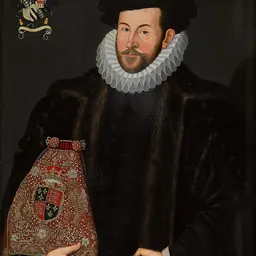
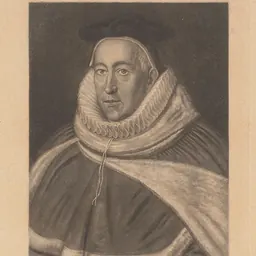
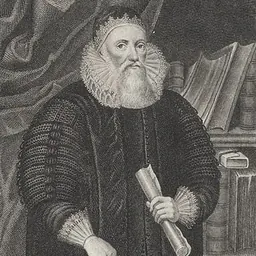
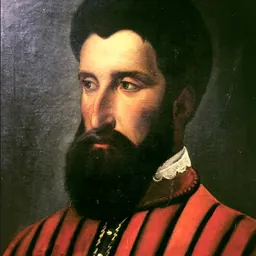
Contemporaries
People whose lives overlapped Nicholas Walsh's


Frequently asked questions
Who was Nicholas Walsh?
Irish judge
When was Nicholas Walsh born?
Nicholas Walsh was born in 1542.
When did Nicholas Walsh die?
Nicholas Walsh died in 1615.
What was Nicholas Walsh's occupation?
Nicholas Walsh was a judge and politician.
Sources & further reading
· DBpedia: Nicholas Walsh (judge)
Cite this page
APA: Biography.guide. (2026). Nicholas Walsh. https://biography.guide/nicholas-walsh-judge/
MLA: "Nicholas Walsh." Biography.guide, https://biography.guide/nicholas-walsh-judge/.
Chicago: "Nicholas Walsh." Biography.guide. https://biography.guide/nicholas-walsh-judge/.
Data last updated: 2026-09-20 · Spot an error? Report a correction.
Page generated 2026-09-27 05:26 UTC