
About Nicholas Riccardi
Lived 1585 – 1639 (aged 53–54). Nicholas Riccardi was a theologian.
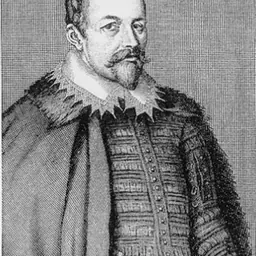
Niccolò Riccardi (born at Genoa, 1585; died at Rome, 30 May 1639) was an Italian Dominican theologian, writer and preacher, known today mostly for his role in the Galileo affair.
Life Physically he was unprepossessing, but he was encouraged by his parents who sent him to study with Tomas de Lemos (1545–1629) at University of Valladolid. He entered the Dominican Order and was invested with its habit in the Convent of St. Paul, where he studied philosophy and theology. After completing his studies he was made a professor of Thomistic theology at Pincia. While discharging his academic duties, he acquired a reputation as a preacher: Philip III of Spain named him "padre Mostro" ("The Marvel-Priest" or "the Monster-Priest"), a sobriquet by which he was subsequently known in Spain and at Rome. Whether this was due to his prodigious learning and culture, or to his obesity, is not certain.
In Rome from 1621, he acquired the confidence of Pope Urban VIII. He was made regent of studies and professor of theology at the College of St. Thomas, the future Pontifical University of Saint Thomas Aquinas, Angelicum. On 13 January 1622 he was also made consultant to the Congregation of the Index. He was soon in prison again, this time for rebellion against Philip IV of Spain, King of Naples, where he remained for twenty-seven years until the personal intercession of Pope Urban VIII had him released. He was brought to Rome in 1626, where he became Urban VIII's consultant on astrology. The Church thus feared that the work in fact promoted heresy while appearing to argue for orthodoxy. Permission to print was denied.
When Campanella came to Rome several years later, he renewed his attempt to have the work printed. Riccardi was once again called on to work with others to review the manuscript, and again their response was negative. This time however Urban VIII intervened personally and ensured that Atheismus Triumphatus, together with Campanella's other works, were authorised for printing. Riccardi continued to work on revisions, but there were more delays before the work finally appeared in 1631, whereupon it was immediately seized and banned. Campanella now embarked on a campaign of vengeance against Riccardi, accusing him of being the cause of all the delays in publishing; exiled to France, he continued his harassment from there, writing directly to the Pope and to other people of influence, making ever wilder accusations about Riccardi for several years. There is no evidence that anyone took his claims seriously, but Riccardi could do nothing but refuse to release the manuscripts Campanella had entrusted to him.
Galileo finished his manuscript of the Dialogue, came to Rome on 3 May 1630, and presented it to Urban himself. Urban may not have read much of it, but he crossed out Galileo's working title, “De Fluxu et Refluxu Maris” on the grounds that it did not properly reflect the main purpose of the work – a comparison of the world-views of Ptolemy and Copernicus. Besides requiring a new title, Urban reiterated that the subject was to be treated only hypothetically, and that his own favoured argument about God's infinite capacity to organise the universe any way he liked must be inserted at the end. He passed the manuscript to Riccardi for review, Galileo accepted the Pope's conditions, and the manuscript was approved by Riccardi after only a few alterations had been made by his assistant.
Galileo then left Rome and returned to Florence, whereupon his plans took a turn for the worse. The founder of the Accademia dei Lincei, Prince Cesi, died, meaning Galileo no longer had a patron to cover the cost of publication. At the same time, an outbreak of the plague in Florence meant that Galileo could not longer send manuscripts to Rome for review. Instead, he decided to publish in Florence. Riccardi wrote that he nevertheless expected Galileo to make the agreed amendments, after which a licence to publish in Florence or elsewhere could be issued.
In March 1631, Riccardi proposed that instead of Galileo sending him the entire manuscript – impossible because of the risk of it carrying the plague – he should send only the revised preface and conclusion, and the rest would be reviewed by the church authorities in Florence. Eventually the Tuscan ambassador's wife, his cousin, was able to broker an arrangement in April 1631 whereby Riccardi agreed to issue a licence to print, subject to certain written conditions. Eventually, after more angry correspondence from Galileo. Riccardi wrote to Clemente Egidi, the Inquisitor of Florence, summarising the process so far from his point of view, and granting him authority to proceed – either to publish or not – as he thought best, thereby effectively washing his hands of the matter.
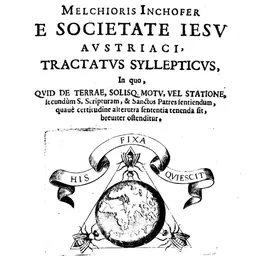
Death Riccardi died of a stroke in Rome on 30 May 1639 and was buried in the church of Santa Maria sopra Minerva. The funeral oration was delivered by Melchior Inchofer, member of the commission revising Galileo's Dialogue.
Works His extant works number twenty. Besides several volumes of sermons for Advent, Lent, and special occasions, his writings treat of Scripture, theology, and history. One of his best-known works is the "History of the Council of Trent" (Rome, 1627). His commentaries treat of all the books of Scripture; two other commentaries treat of the Lord's Prayer and the Canticle of Canticles.
Don’t just read it —
keep it.
Full-length biographies made to live with: read them, listen on the way to work, watch them tonight.
- E-book
- Audio
- Video
Instant download · yours to keep · every purchase keeps this site free
Important facts
People in Nicholas Riccardi's life
Named in this biography and alive at the same time

Related people
Same field, nearest in time



Contemporaries
People whose lives overlapped Nicholas Riccardi's


Frequently asked questions
Who was Nicholas Riccardi?
Italian theologian
When was Nicholas Riccardi born?
Nicholas Riccardi was born in 1585 in Genoa.
When did Nicholas Riccardi die?
Nicholas Riccardi died on 30 May 1639 in Rome.
What was Nicholas Riccardi's occupation?
Nicholas Riccardi was a theologian.
Sources & further reading
· Wikipedia: Nicholas Riccardi
Cite this page
APA: Biography.guide. (2026). Nicholas Riccardi. https://biography.guide/nicholas-riccardi/
MLA: "Nicholas Riccardi." Biography.guide, https://biography.guide/nicholas-riccardi/.
Chicago: "Nicholas Riccardi." Biography.guide. https://biography.guide/nicholas-riccardi/.
Data last updated: 2026-09-20 · Spot an error? Report a correction.
Page generated 2026-09-27 05:29 UTC