
About Nicholas M. Nolan
Lived 1835 – 1883 (aged 48). Nicholas M. Nolan was a military personnel.
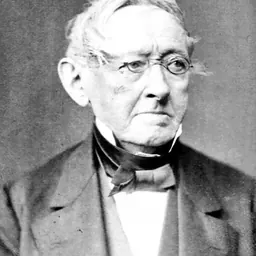
Nicholas Merritt Nolan (March 10, 1835 – October 24, 1883) was a United States Army major. An Irish immigrant, he began his military career in New York on December 9, 1852, with the 4th Artillery, and subsequently served in New York's 2nd Dragoons. He enlisted as a private and rose through the ranks becoming a first sergeant. He was commissioned an officer in late 1862 in the Regular Army, while serving with the 6th U.S. Cavalry Regiment during the American Civil War. He participated in 16 campaigns with the 6th and most of its battles. He was slightly wounded at the Battle of Fairfield and seriously wounded at the Battle of Dinwiddie Court House. He was brevetted twice and noted at least twice for gallantry during combat. He was slightly wounded when captured at the end of March 1865, and was later paroled. After the Civil War, he served with the 10th U.S. Cavalry, known as the Buffalo Soldiers, for 14 years. Nolan is also noted for his pluses and minuses during the Buffalo Soldier tragedy of 1877 that made headlines in the Eastern United States. He was the commanding officer of Henry O. Flipper in 1878, the first African American to graduate from the United States Military Academy at West Point. He commanded several frontier forts before his untimely death in 1883.
Early life Nolan emigrated from Ireland in 1852, and not much is known about his family. He described himself a "bull-headed" Irish lad of 17-1/2 when he enlisted at Fort Hamilton in New York. He was assigned to Battery M, 4th Artillery on December 9, 1852, as a private.
American Civil War
Nolan took a demotion on September 5, 1861, to become a sergeant in Troop B, 6th U. S. Cavalry. Nolan was trained as light cavalry with the primary function of scouting, then acting as dismounted light infantry. The reality of prewar cavalry and Civil War cavalry use was dramatic. Nolan and others like him had a steep learning curve that proved difficult and frustrating during the first year of the conflict. He participated in the Peninsula Campaign and chased the audacious JEB Stuart's cavalry that went completely around the Union Army (June 13–15 1862). This caused great psychological concerns to the Union cavalry commanders and men. The "horse soldiers" were a far second-best compared to the Confederate cavalry.
Rapid expansion of the Union cavalry in the East was chaotic. At the beginning of the War, officers were elected by the men or appointed politically. This resulted in many misguided and inept commanders. The tools and techniques of prewar cavalry often seemed inadequate, resulting in a steep learning curve that was costly in men and supplies. Slowly, out of the chaos came the tactics and leaders like Nolan who proved worthy of the challenge. Union "horse soldiers" became cavalry troopers under this tough regimen and proved adept, dismounted and mounted on horseback, with their carbines, pistols, and sabers, and confident under their battle-proven leaders.
Nolan was given a battlefield commission or appointed as a lieutenant on July 17, 1862. His later formal commission may have come as reluctance; when Nolan was later asked about it, he stated he had been a "very good first sergeant." This may indicate he was encouraged in some manner to become an officer in the Regular Army. On September 22, 1862 he was commissioned a second lieutenant in the Regular U. S. Army. Beverly Ford, Virginia, June 9, at the Battle of Brandy Station. The 6th was under Buford's right wing. The Battle of Upperville: Harper's Weekly, issue date July 18, 1863. Benton's Mill, Virginia, June 17, an engagement near Middleburg. Middleburg, Virginia, June 21, at the Battle of Middleburg. Upperville, Virginia, June 21, at the Battle of Upperville Fairfield, Pennsylvania, July 3, at the Battle of Fairfield Williamsport, Maryland, July 6, an engagement. Funkstown, Maryland, July 7, a small engagement. Boonesboro, Maryland, July 8 and 9, at the Battle of Boonesboro. Funkstown, Maryland, July 10, at the Battle of Funkstown.
Battle of Brandy Station
On June 9, 1863, opposing cavalry forces met at Brandy Station, near Culpeper, Virginia. The 9,500 Confederate cavalrymen under Major General J.E.B. Stuart were surprised at dawn by Major General Alfred Pleasonton's combined arms force of two cavalry divisions of some 8,000 cavalry troops (including the 6th U.S. Cavalry Regiment with Nolan) and 3,000 infantry. The 6th U.S. Cavalry was on the northern edge of the battle and crossed Beverly Ford before engaging the enemy. Stuart barely repulsed the Union attack and required more time to reorganize and rearm after this battle. This inconclusive battle was the largest predominantly cavalry engagement of the war to that time. This battle proved for the first time that the Union horse soldiers, like Nolan, were equal to their Southern counterparts. Nolan was brevetted first lieutenant on August 1, 1863, for his gallant and meritorious service during that battle. He ordered the 6th U.S. Cavalry under Major Samuel H. Starr to scout Fairfield and locate the wagons, resulting in the Battle of Fairfield.
Nolan's next action was with Major Samuel H. Starr on July 3, 1863. Starr had his 400 troopers dismount in a field and an orchard on both sides of the road near Fairfield. Union troopers directed by their officers took up hasty defensive positions on this slight ridge. Nolan's troops and others threw back a mounted charge of the 7th Virginia Cavalry, just as the Confederate Chew's Battery unlimbered and opened fire on the Federal cavalrymen. Supported by the 6th Virginia, the 7th Virginia charged again, clearing Starr's force off the ridge and inflicting heavy losses. General "Grumble" Jones, outnumbering the Union forces by more than 2 to 1, pursued the retreating Federals for three miles to the Fairfield Gap, but was unable to eliminate his quarry. Major Starr who was wounded in the first attack was unable to escape and was captured. Small groups of the 6th Cavalry," ... reformed several miles from the field of action by Lt. Louis H. Carpenter," harassed the Virginia troopers giving the impression of the vanguard of a much larger force. alt=A computer generated reproduction of the insignia of the Union Army cavalry branch. The insignia is displayed in gold and consists of two sheafed swords crossing over each other at a 45 degree angle pointing upwards
Nolan, in this fight with others of his small regiment at Fairfield, stood against two of the crack brigades of Stuart's cavalry. The 6th Cavalry's stand was considered one of the most gallant in its history and helped influence the outcome the battles being fought around Gettysburg. While the 6th Cavalry regiment was cut to pieces, it fought so well that its squadrons were regarded as the advance of a large body of troops. The senior officer of those brigades was later criticized severely for being delayed by such an inferior force. Had the 6th Cavalry regiment not made their stand, the two brigades of Virginians could have caused serious problems to the Union rear areas.
Lieutenant Nolan was slightly wounded during this battle but avoided capture. He was one of only three officers of the 6th U.S. Cavalry to escape from the deadly melee at Fairfield on July 3, 1863. Nolan assisted Carpenter with the wounded and helped reorganize the men. Private George Crawford Platt, later Sergeant, an Irish immigrant serving in Carpenter's Troop H, was awarded the Medal of Honor on July 12, 1895, for his actions that day at Fairfield. His citation reads, "Seized the regimental flag upon the death of the standard bearer in a hand-to-hand fight and prevented it from falling into the hands of the enemy." His "commander", Carpenter was an eyewitness and documented Private Platt's "beyond the call of duty" behavior that day.
Sergeant Martin Schwenk also received the Medal of Honor for his actions at Fairfield under Nolan's command. He miraculously survived a desperate, unsuccessful search for any other Federal officer, and was later cited for his "bravery in an attempt to carry a communication through the enemy's lines" and for rescuing "an officer from the hands of the enemy".
W.I.A. On October 11, 1863, the 6th U.S. Cavalry engaged enemy forces near Culpeper, Virginia in the morning and later that day near Brandy Station. After a mounted scout on the morning of October 14, 1863, he was seriously wounded in action in the shoulder (side not given) while carrying dispatches back to his company. He was carried on the roster as "sick on account of wounds" until January 1864. On January 17, 1867, he was certified medically and psychologically fit for duty with no limitations. However, Nolan would suffer from a loss of grip strength thereafter per a medical report dated October 4, 1878, in his file. Throughout the course of the war, Nolan served in most of the 16 campaigns and many of the 166 battles related to them from the 1861 Peninsula Campaign, the 1862 Maryland Campaign, Campaign at Fredericksburg, the 1863 Gettysburg campaign, Chancellorsville (in Stoneman's raid to the rear of Lee's army), the 1864 The Wilderness and to the final 1865 Appomattox Campaign. Nolan received a brevet promotion to the ranks of first lieutenant and captain during the Civil War.
Post Civil War After the Civil War and until his death in 1883, Nolan served on the western frontier. He engaged many Native American tribes, dealt with many types of renegades and helped explore vast areas of uncharted territory from Texas to Arizona.
After the fighting stopped and Reconstruction began, Nolan went with the 6th Cavalry to Texas in October 1865. On November 29, 1865, the 6th Cavalry headquarters was established in Austin, Texas, where it was part of the Fifth Military District that covered Texas and Louisiana under Generals Philip Sheridan and later under Winfield Scott Hancock.
In mid March 1866, Nolan was "mustered out" and reverted to his Regular Army rank of first lieutenant and was granted leave. Nolan went to Philadelphia to visit for a short period with his comrade in arms, L. H. Carpenter. They may have talked what they would do next. Later they would apply and be accepted in the same regiment.
Indian Wars and frontier service alt=A color photograph of the Buffalo Soldier Monument at Fort Leavenworth, Kansas. The sculpture was undertaken by Eddie Dixon and sits atop a waterfall. It consists of a cavalry trooper mounted on a galloping horse The Buffalo Soldier Monument at Fort Leavenworth, Kansas. It honors the African-American troopers and those who led them.
10th Cavalry Regiment–The Buffalo Soldiers After his extended leave, Nolan, as a first lieutenant in the Regular U.S. Army, volunteered for cavalry duty with "Negro Troops" that were being raised on the frontier.
Nolan accepted the rank of captain in the Regular Army on July 28, 1866, and began training associated with a new unit as recruits slowly came in. He was selected as the first company commander of the Regiment on February 18, 1867. Nolan with his quick wit became one of Grierson's favorite officers and described him as a "very fine and soldier-like" with a large black "overhanging moustache." was stopped in September 1869 and every penny was attached to pay the $5,217.33 due. At that monthly rate it would take almost 30 (or 24) months of his pay to settle the debt. His allowances as befitting his rank did not seem to be attached. While Carpenter, with Troops H and L, patrolled the area aggressively, Nolan provided a mobile interior defense against the prairie fires being set upwind of the settlement and at different points. Further and increasingly violent assaults were made by the Native Americans, in numbers ranging from 50 to 500 at different points of the defensive lines. The decisive feature of the engagement was a charge made by Captain Carpenter's troopers. His men routed a body of over 150 warriors, who were about to take up a commanding position in rear of Nolan's defenders. On June 5, 1872, the 10th left Fort Sill to elements of the 3rd Infantry and proceeded back to Fort Gibson.
Another important factor would include Quanah Parker, a Kwahada leader, who rode into the situation with an Army pass, to seek out the raiding Indians and to convince them to return to the reservation. Parker and the primary buffalo hunter scout Jose Piedad Tafoya, a former Comanchero, would come to an understanding despite previous difficulties between the two. Tafoya would help confound the search by the buffalo hunters and the soldiers led by Nolan in return for what he wanted.
Henry O. Flipper
alt=Cadet Henry O. Flipper in his West Point cadet uniform. It has three large round brass buttons left, middle and right showing five rows. The buttons are interconnected left to right and vice versa by decorative thread. He is wearing a starched white collar and no tie. He is a lighter colored African-American with plaited corn rows of neatly done hair. He is facing the camera and looking to the left of the viewer.
Second Lieutenant Henry Ossian Flipper was the first African-American graduate of the United States Military Academy at West Point, New York. In July 1877 he reported to Fort Sill for assignment with the 10th Cavalry. But the 10th was not at Fort Sill, they were at Fort Concho. He was not assigned to a cavalry troop but given work assignments including engineering a ditch to drain a swamp. Finally he received orders to report to Fort Concho in west Texas in October 1877. He was assigned to A Troop. He was the first non-white officer to lead the Buffalo Soldiers of the 10th Cavalry.
Captain Nicholas Nolan, the commander of A troop, was the officer assigned to teach him what was needed to know about being a cavalry officer. Nolan was censured by several white officers for allowing Flipper into his quarters for dinner, where his daughter Kate was present. Nolan defended his action by stating that Flipper was an "officer and a gentleman" just like any other officer present. This was when Nolan and the 10th Cavalry Regiment was engaged a series of operations against the Apache who had escaped from the military authorities in New Mexico.
Rattlesnake Springs alt=A color photograph with a tall thin Ocotillo plant standing forlorn in the middle ground of the gravely sanded Chihuahuan desert of Big Bend National Park in south-west Texas. In the background is part of the Chinati Mountains under the clear light blue desert sky. Ocotillo (Fouquieria splendens) in Big Bend NP, part of the Chihuahuan desert of south-west Texas with a portion of Chinati Mountains in the background. Colonel Grierson, commander of the 10th Cavalry, traversed the hot Chihuahuan Desert and then the narrow valleys of the Chinati Mountains, reaching Rattlesnake Springs on the morning of August 6, 1880. Nolan with cavalrymen from Troops A & C with their mounts were worn down from the forced march of over 65 miles in 21 hours. After resting and getting water, Grierson & Nolan carefully placed their men in ambush positions. Carpenter, with his two cavalry troops H & B, arrived as reinforcements and were posted in reserve a short distance south of the spring. The cavalrymen settled down to wait as Indian scouts brushed away any sign of their presence.
A little after two o'clock in the afternoon, Victorio and his Apaches slowly approached the springs. Victorio somehow sensed danger and halted his men. With the hostile Apaches in their sights appearing ready to bolt, the soldiers did not wait and opened fire on their own initiative; Victorio's men scattered and withdrew out of carbine range. Victorio's people needed water and believing that there were only a few soldiers present, regrouped and attacked immediately. As the battle progressed, Victorio sent his warriors to flank the soldiers. Carpenter charged forward with companies B and H and a few massed volleys from their carbines sent the hostiles scattering back up the canyon. Stunned by the presence of such a strong force but in desperate need of water, Victorio repeatedly charged the cavalrymen in attempts to reach the spring. Grierson's & Nolan's cavalry defenders, now bolstered by Carpenter's two companies, stood firm. The last such attempt to break the soldiers was conducted near nightfall and when it failed, Victorio and his followers withdrew into the westward into the mountains. Carpenter with his two companies remounted in pursuit until darkness halted the effort.
Promotion and death
On December 19, 1882, Nolan was promoted to a major in the Regular Army and transferred to the 3rd U.S. Cavalry Regiment. His second wife, Annie E. Dwyer died on July 11, 1907, and is interred at Arlington National Cemetery as the "Widow of Major Nicholas M. Nolan 3rd U S Cavalry."
Don’t just read it —
keep it.
Full-length biographies made to live with: read them, listen on the way to work, watch them tonight.
- E-book
- Audio
- Video
Instant download · yours to keep · every purchase keeps this site free
Important facts
People in Nicholas M. Nolan's life
Named in this biography and alive at the same time



Related people
Same field, nearest in time


Contemporaries
People whose lives overlapped Nicholas M. Nolan's




Frequently asked questions
Who was Nicholas M. Nolan?
United States Army officer
When was Nicholas M. Nolan born?
Nicholas M. Nolan was born on 10 March 1835 in Ireland.
When did Nicholas M. Nolan die?
Nicholas M. Nolan died on 24 October 1883 in Holbrook.
What was Nicholas M. Nolan's occupation?
Nicholas M. Nolan was a military personnel.
Sources & further reading
· Wikipedia: Nicholas M. Nolan
Cite this page
APA: Biography.guide. (2026). Nicholas M. Nolan. https://biography.guide/nicholas-m-nolan/
MLA: "Nicholas M. Nolan." Biography.guide, https://biography.guide/nicholas-m-nolan/.
Chicago: "Nicholas M. Nolan." Biography.guide. https://biography.guide/nicholas-m-nolan/.
Data last updated: 2026-09-20 · Spot an error? Report a correction.
Page generated 2026-09-27 05:08 UTC