
About Nicholas De Genova
Born 1968. Nicholas De Genova is an American scientist and anthropologist.
Nicholas De Genova is a professor in the Department of Comparative Cultural Studies at the University of Houston, where he served as department chair from 2018 to 2024. During the 2024–25 academic year, he is a Member of the Institute for Advanced Study at Princeton. His research centers primarily on migration, borders, citizenship, and race.
De Genova was the host of the first four episodes of the Metropolis Rising podcast (first launched in February 2021).
Education and career De Genova received his BA, MA, and PhD in anthropology from the University of Chicago.
De Genova was previously a Reader in Geography at King's College London (2013–16) and Reader in Anthropology at Goldsmiths, University of London (2011–2013). He held the Swiss Chair in Mobility Studies during the Fall semester of 2009 as a visiting professor at the Institute of Social Anthropology at the University of Bern in Switzerland, and was a Visiting research professor in the Institute of Migration and Ethnic Studies at the University of Amsterdam in 2010. From 2000 to 2009, he was assistant professor of anthropology and Latino Studies at Columbia University. De Genova said that he hoped the U.S. would experience "a million Mogadishus," a reference to the Battle of Mogadishu, an incident in which 18 American soldiers were killed in 1993, which brought about the end of the U.S. involvement in Somalia. He also stated that “U.S. patriotism is inseparable from imperial warfare and white supremacy" and that "The only true heroes are those who find ways to defeat the U.S. military."
Criticism De Genova's comments drew sharp criticism from a number of sources:
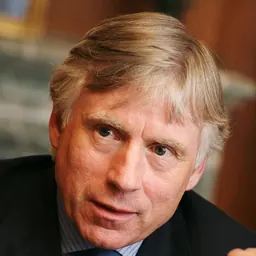
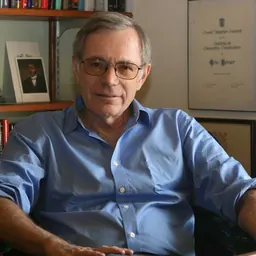
Historian Alan Brinkley, who was also at the teach-in, sharply criticized De Genova, stating that: "I was appalled by what he said, and ashamed to be on the same platform with him. I certainly defend his right to say whatever he wishes, but the rest of us have an equal right to disassociate ourselves from his abhorrent remarks." Professor Eric Foner, who helped organize the teach-in, stated that "Professor De Genova's speech did not represent the views of the organizers. I personally found it quite reprehensible." and that "The antiwar movement does not desire the death of American soldiers. We do not accept his view of what it means to be a patriot. I began my talk, which came later, by repudiating his definition of patriotism, saying the teach-in was a patriotic act, that I believe patriots are those who seek to improve their country." Lee C. Bollinger, the president of Columbia University, declared to the press that he was “shocked” and that “this one crosses the line.” In a subsequent iteration, Bollinger declared that he was “appalled” and summarily denounced Professor De Genova's comments as “outrageous.” Arizona Congressman J. D. Hayworth submitted a letter, signed by 103 Republican Congressmen, to Columbia President Lee Bollinger urging him to fire De Genova. Hayworth argued that "the issue is not whether De Genova has the right to make idiotic and hateful comments - he surely does - but whether he has the right to a job teaching at Columbia University after making such comments."
In addition, De Genova was subjected to numerous aggravated and repeated death threats and underwent major disruptions in his ordinary personal and professional life as a result of security considerations. In that context of public adversity, the untenured professor granted an interview to The Chronicle of Higher Education, which dubbed De Genova as "The most hated professor in America." Later, with respect to Bollinger's hostility to a campaign by Columbia University faculty for divestment from the Israeli military, De Genova stated that Bollinger "has set himself up as an apologist of war crimes and apartheid,” and called upon Bollinger to resign.
Response from De Genova In a letter to the Columbia Spectator, published a few days after the teach-in, De Genova wrote that "imperialism and white supremacy have been constitutive of U.S. nation-state formation and U.S. nationalism" and called for "repudiating all forms of U.S. patriotism" and urged "the defeat of the U.S. war machine." He also stated that "my rejection of U.S. nationalism is an appeal to liberate our own political imaginations such that we might usher in a radically different world in which we will not remain the prisoners of U.S. global domination."
De Genova has published a book chapter discussing the "million Mogadishus" controversy and its significance for academic freedom and free speech. As recently as 2021 his personal website stated he was writing a memoir on free speech during wartime in which he would examine the context in which he made his statements regarding the war as well as the pressure he came under in their aftermath.
Don’t just read it —
keep it.
Full-length biographies made to live with: read them, listen on the way to work, watch them tonight.
- E-book
- Audio
- Video
Instant download · yours to keep · every purchase keeps this site free
Important facts
People in Nicholas De Genova's life
Named in this biography and alive at the same time

Related people
Same field, nearest in time


Contemporaries
People whose lives overlapped Nicholas De Genova's




Frequently asked questions
Who is Nicholas De Genova?
academic
When was Nicholas De Genova born?
Nicholas De Genova was born in 1968 in Chicago.
What is Nicholas De Genova's occupation?
Nicholas De Genova is a scientist and anthropologist.
What nationality is Nicholas De Genova?
Nicholas De Genova is American.
Sources & further reading
· Wikipedia: Nicholas De Genova
Cite this page
APA: Biography.guide. (2026). Nicholas De Genova. https://biography.guide/nicholas-de-genova/
MLA: "Nicholas De Genova." Biography.guide, https://biography.guide/nicholas-de-genova/.
Chicago: "Nicholas De Genova." Biography.guide. https://biography.guide/nicholas-de-genova/.
Data last updated: 2026-09-20 · Spot an error? Report a correction.
Page generated 2026-09-27 05:16 UTC