
About Nicholas Bacon
Lived 1510 – 1579 (aged 68). Nicholas Bacon was an English politician, judge and jurist.
Sir Nicholas Bacon (28 December 1510 – 20 February 1579) was Lord Keeper of the Great Seal during the first half of the reign of Queen Elizabeth I of England. He was the father of the philosopher and statesman Sir Francis Bacon.
Life He was born at Chislehurst, Kent, the second son of Robert Bacon (1479–1548) of Drinkstone, Suffolk, by his wife Eleanor (Isabel) Cage.
He graduated from Corpus Christi College, Cambridge in 1527. The college law society at Corpus, the Nicholas Bacon Law Society, founded in 1972, is named after him.
There is a story that he evaded ordination by going into hiding "with the help of a rich uncle", and he seems to have entered an Inn of Chancery before being admitted to Gray's Inn five years later after a period in Paris; he was called to the Bar in 1533. and Gorhambury, Hertfordshire. Gorhambury belonged to St Albans Abbey and lay near the site of the vanished Roman city of Verulamium (modern day St Albans). From 1563 to 1568 he built a new house, Old Gorhambury House (now a ruin), which later became the property of Francis Bacon, his youngest son, who also built a nearby property, Verulam House, to his own designs.
In 1545 he became a Member of Parliament, representing Dartmouth. The following year, he was made Attorney of the Court of Wards and Liveries, a prestigious and lucrative post, and by 1552 he had risen to become treasurer of Gray's Inn.
As a Protestant, he lost preferment under Queen Mary I. However, on the accession of her younger sister Elizabeth in 1558, he was appointed Lord Keeper of the Great Seal, largely owing to the influence of his brother-in-law William Cecil. Shortly afterwards, Bacon was knighted.
Bacon helped secure the position of Archbishop of Canterbury for his friend Matthew Parker, and in his official capacity presided over the House of Lords when Elizabeth opened her first parliament. Though an implacable enemy of Mary, Queen of Scots, he opposed Cecil's policy of war against France, on financial grounds; but he favoured closer links with foreign Protestants, and was aware of the threat to England from the alliance between France and Scotland. In 1559 he was authorized to exercise the full jurisdiction of Lord Chancellor. In 1564 he fell temporarily into the royal disfavour and was dismissed from court, because Elizabeth suspected he was concerned in the publication of a pamphlet, A Declaration of the Succession of the Crowne Imperial of Ingland, by John Hales, which favoured the claim of Lady Katherine Grey (sister of Lady Jane Grey) to the English throne.
Bacon's innocence having been admitted, he was restored to favour, and replied to a writing by Sir Anthony Browne, who had again asserted the rights of the House of Suffolk, to which Lady Katherine belonged. He thoroughly distrusted Mary, Queen of Scots; objected to the proposal to marry her to Thomas Howard, 4th Duke of Norfolk; and warned Elizabeth that serious consequences for England would follow her restoration. He seems to have disliked the proposed marriage between the English queen and Francis, Duke of Anjou, and his distrust of the Roman Catholics and the French was increased by the St Bartholomew's Day massacre. As a loyal English churchman he was ceaselessly interested in ecclesiastical matters, and made suggestions for the better observation of doctrine and discipline in the church.
Death and legacy
He died in London there were many tributes to him. His grave and monument were destroyed in the Great Fire of London in 1666. A modern monument in the crypt lists his as one of the important graves lost.
He had been an eloquent speaker, a learned lawyer, a generous friend; and his interest in education led him to make several gifts and bequests for educational purposes, including the foundation of a free grammar school at Redgrave in Suffolk.
Marriages and issue Nicholas Bacon's first marriage was to Jane Ferneley (d.1552). Nicholas and Jane had six surviving children, three sons and three daughters: (whose inscribed ledger stone is in Redgrave Church) one of the daughters and co-heiresses of Henry Bures (d.1528) of Acton, Suffolk. Anne Butts was the heir of her uncle Sir William Butts (d.1583), junior, of Thornage, Norfolk, Sheriff of Norfolk and Suffolk in 1563, whose Easter Sepulchre monument survives in Thornage Church. Three of the daughters and co-heiresses of Henry Bures married three of the sons of Sir William Butts, senior. Sir Nathaniel Bacon (c.1546 – November 1622), who first married, in July 1569, Anne Gresham (d.1594), the illegitimate daughter of Sir Thomas Gresham, founder of the Royal Exchange, by Anne Dutton; secondly, on 21 July 1597 he married Dorothy Hopton (c.1570–1629), daughter of Arthur Hopton and widow of William Smith of Burgh Castle, Suffolk. Elizabeth Bacon, who married: Sir Robert Doyley; Sir Henry Neville, Sir William Peryam. Anne Bacon, who married Sir Henry Woodhouse (d.1624), by whom she was the mother of Sir Henry Woodhouse. Elizabeth Bacon, who married: Francis Wyndham, the son of Sir Edmund Wyndham.,
Sir Nicholas Bacon's second marriage, in 1553, was to Anne Cooke (1528–1610), one of the daughters of Sir Anthony Cooke, by whom he had two sons: Anthony Bacon (1558–1601) Francis Bacon (1561–1626), who became Lord Chancellor and was also a philosopher, author and scientist.
Jane's widowed younger sister, Anne Ferneley (d.1596), married secondly in 1544 to Sir Thomas Gresham.
Don’t just read it —
keep it.
Full-length biographies made to live with: read them, listen on the way to work, watch them tonight.
- E-book
- Audio
- Video
Instant download · yours to keep · every purchase keeps this site free
Important facts
Family & relationships
People in Nicholas Bacon's life
Named in this biography and alive at the same time
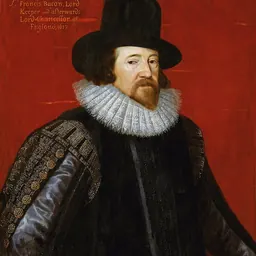

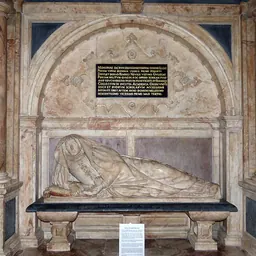



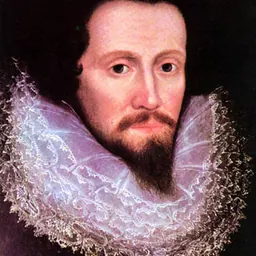

Related people
Same field, nearest in time
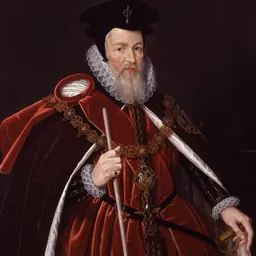
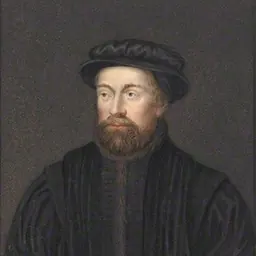
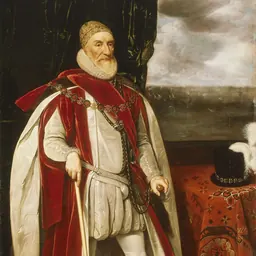
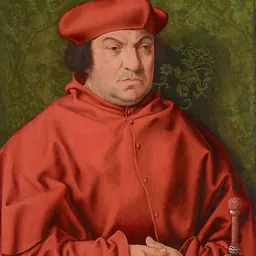

Contemporaries
People whose lives overlapped Nicholas Bacon's
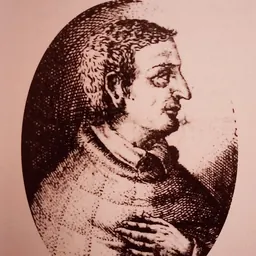




Frequently asked questions
Who was Nicholas Bacon?
English politician (1510-1579)
When was Nicholas Bacon born?
Nicholas Bacon was born on 28 December 1510 in Chislehurst.
When did Nicholas Bacon die?
Nicholas Bacon died on 20 February 1579 in London.
What was Nicholas Bacon's occupation?
Nicholas Bacon was a politician, judge and jurist.
What nationality was Nicholas Bacon?
Nicholas Bacon was English.
Sources & further reading
· DBpedia: Nicholas Bacon (Lord Keeper)
Cite this page
APA: Biography.guide. (2026). Nicholas Bacon. https://biography.guide/nicholas-bacon/
MLA: "Nicholas Bacon." Biography.guide, https://biography.guide/nicholas-bacon/.
Chicago: "Nicholas Bacon." Biography.guide. https://biography.guide/nicholas-bacon/.
Data last updated: 2026-09-20 · Spot an error? Report a correction.
Page generated 2026-09-27 05:29 UTC