
About Newton Bateman
Lived 1822 – 1897 (aged 75). Newton Bateman was an American politician.
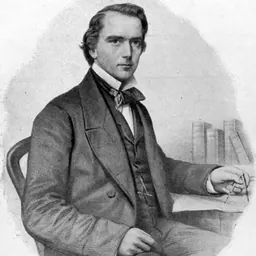
Newton Bateman (July 27, 1822 – October 21, 1897) was an American academic, educational administrator, and editor from New Jersey. Raised in poverty, Bateman came with his family to Illinois at a young age then earned his way into Illinois College. After graduating, he again struggled to make ends meet before an anonymous donor sent him a large sum of money. He used it to establish a private school in St. Louis, Missouri. He was later elected superintendent of schools in Morgan County, Illinois, then served as Illinois Superintendent of Public Instruction (1859–63, 1865–1875). He resigned to become president of Knox College. Late in his life, he published an encyclopedia of the state. Bateman was an associate of Abraham Lincoln and is the source of a controversial account of his religious views.
Biography Newton Bateman was born in Bridgeton, New Jersey on July 27, 1822. His father was a weaver who struggled with the growth of industrialization. He moved the family west when Bateman was eleven. His mother died of Asiatic cholera on their way to their new home in Meredosia, Illinois. The family continued to struggle through poverty. To help support the family, Bateman took a job as an errand-boy for a prominent jurist in Jacksonville, Illinois. He fell in love with the jurist's daughter, but was not of proper social class to ask her hand in marriage. However, this inspired Bateman to pursue an education.
Bateman cut timber to raise money for schooling. He then attended the preparatory department of Illinois College before matriculating there in 1839. Bateman's classmates appreciated his sense of humor. He taught his first class while studying there, a Latin course for the preparatory department. Bateman graduated in June 1843, intending to become a Presbyterian minister. He briefly studied at Lane Seminary in Cincinnati, Ohio, but was forced to drop out due to a lack of funds. He then worked for a book agency, selling maps, but again fell into poverty. An anonymous donor sent Bateman some money and he used the funds to build a private school in northern St. Louis, Missouri, in 1845. Although he continued to struggle financially, he earned a reputation as a local leader in education.
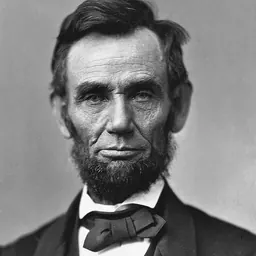
Bateman and Lincoln Newton Bateman was a friend and political ally of Abraham Lincoln. When Lincoln would visit the Illinois State Capitol in Springfield, Illinois, on political business, he would stay in the room next to the superintendent's. Lincoln jokingly referred to Bateman as his "little friend", as Bateman was short and Lincoln was tall. The two became close during a seven-month stay by Lincoln in 1860 during his presidential candidacy. An interaction between Bateman in Lincoln is of interest to biographers because of the way it portrays Lincoln's religious beliefs. When Josiah Gilbert Holland was seeking material for his Life of Lincoln, he interviewed Bateman.
According to Bateman, Lincoln asked him into his office one day to discuss a political canvass of Springfield. The canvass showed the intended votes of all Springfield voters, and Lincoln was vexed: Here are twenty-three, ministers, of different denominations, and all of them are against me but three; are here are a great many prominent members of the churches, a very large majority of whom are against me. Mr. Bateman, I am not Christian—God knows I could be one—but I have carefully read the Bible, and I do not so understand this book [the New Testament]. These men will know that I am for freedom in the territories, freedom everywhere as far as the Constitution and laws will permit, and that my opponents are for slavery. They know this, and yet, with this book in their hands, in the light of which human bondage cannot live a moment, they are going to vote against me. I do not understand it at all.
Lincoln paused, then paced around the room. He then continued: I know there is a God, and that He hates injustice and slavery. I see the storm coming, and I know that His hand is in it. If He has a place and work for me—and I think He has—I believe I am ready. I am nothing, but truth is everything. I know I am right because I know liberty is right, for Christ teaches it, and Christ is God. I have told them that a house divided against itself cannot stand, and so Christ and reason say the same; and they will find it so. Douglas don't care whether slavery is voted up or voted down, but God cares, and humanity cares, and I care; and with God's help I shall not fail. I may not see the end; but it will come, and I shall be vindicated; and these men will find that they have not read their Bibles aright.
Holland's Life of Lincoln used this story to color Lincoln as a religious man. However, as soon as 1872, the story faced criticism. Ward Hill Lamon, a close associate of Lincoln, dismissed the story as inconsistent with Lincoln's character. Likewise, Lincoln's former law partner William Herndon found the story hard to believe even though he approved of the rest of Holland's biography. Herndon sought out Bateman and the two discussed the interview with Holland. Bateman repudiated that Lincoln claimed that "Christ is God", but supported Holland's interpretation. Herndon wrote about the discussion: On my word, the world may take for granted that Holland is wrong; that he does not state Mr. Lincoln's views correctly. Mr. Bateman, if correctly represented in Holland's Life of Lincoln, is the only man, the sole and only man, who dare say that Lincoln believed in Jesus as the Christ of God, as the Christian world represents.
Bateman largely maintained a public silence on the issue. When Isaac N. Arnold asked Bateman about the incident when writing his The Life of Abraham Lincoln, Bateman replied that it was "substantially correct" without further elaboration. Bateman's interview with Lincoln is generally not included in modern biographies.
Don’t just read it —
keep it.
Full-length biographies made to live with: read them, listen on the way to work, watch them tonight.
- E-book
- Audio
- Video
Instant download · yours to keep · every purchase keeps this site free
Important facts
People in Newton Bateman's life
Named in this biography and alive at the same time
Related people
Same field, nearest in time




Contemporaries
People whose lives overlapped Newton Bateman's





Frequently asked questions
Who was Newton Bateman?
American educator (1822-1897)
When was Newton Bateman born?
Newton Bateman was born on 27 July 1822 in Bridgeton, Fairfield Township.
When did Newton Bateman die?
Newton Bateman died on 21 October 1897 in Jacksonville.
What was Newton Bateman's occupation?
Newton Bateman was a politician.
What nationality was Newton Bateman?
Newton Bateman was American.
Sources & further reading
Cite this page
APA: Biography.guide. (2026). Newton Bateman. https://biography.guide/newton-bateman/
MLA: "Newton Bateman." Biography.guide, https://biography.guide/newton-bateman/.
Chicago: "Newton Bateman." Biography.guide. https://biography.guide/newton-bateman/.
Data last updated: 2026-09-26 · Spot an error? Report a correction.
Page generated 2026-09-27 05:15 UTC