
About Neville Alexander
Lived 1936 – 2012 (aged 75). Neville Alexander was a South African linguist, university teacher, pedagogue and literary scholar, known for Linguapax Prize.
Neville Edward Alexander OLS (22 October 1936 – 27 August 2012) was a proponent of a multilingual South Africa and a former revolutionary who spent ten years on Robben Island as a fellow prisoner of Nelson Mandela.
Early life Alexander was born in Cradock, Eastern Cape, South Africa to David James Alexander, a carpenter, and Dimbiti Bisho Alexander, a schoolteacher. His maternal grandmother, Bisho Jarsa was an Ethiopian from ethnic Oromo, rescued from slavery by the British.
He was educated at Holy Rosary Convent, Cradock, and matriculated in 1952. He spent six years at the University of Cape Town. He obtained a BA in German and History in 1955 and his Honours in German a year later. He completed an MA in German in 1957. he gained his PhD in 1961 for a dissertation on style change in the dramatic work of Gerhart Hauptmann.
The Apartheid years
Marxist activism By 1957, Alexander was a member of the Cape Peninsula Students' Union, an affiliate of The Non-European Unity Movement of South Africa. He joined the African Peoples Democratic Union of Southern Africa (APDUSA) which was established in 1960. However he was ejected from APDUSA in 1961 and with Dulcie September, Ottilie Abrahams, and Andreas Shipinga, among others, formed a study group of nine members in July 1962, known as the Yu Chi Chan Club (YCCC); Yu Chi Chan is the Chinese name for guerrilla warfare, which Mao Zedong used. The YCCC disbanded in late 1962 and was replaced by the National Liberation Front (NLF), which Alexander co-founded.
Imprisonment on Robben Island Between 1964 and 1974, Neville Alexander was imprisoned on Robben Island, where he shared his captivity with Nelson Mandela, Walter Sisulu and Mac Maharaj, amongst others. Despite the conditions of their imprisonment, the prisoners organised a vibrant intellectual life, often referred to as the "Robben Island University". Neville Alexander taught history there, took part in informal seminars and encouraged the study of African languages as well as critical reflection on South African history. He later regarded this experience as a defining moment in his intellectual development, having taught him the principles of democratic dialogue and cooperation between activists from different political backgrounds. He also played an important role in the National Languages Project, which promotes African languages in education and public life. In 1981, he was appointed Director of the South African Committee for Higher Education (SACHED). At the time of his death, he had retired from being director of PRAESA at the University of Cape Town.
Alexander received the Linguapax Prize for 2008. The prize is awarded annually (since 2000) in recognition of contributions to linguistic diversity and multilingual education. The citation noted that he had devoted more than twenty years of his professional life to defend and preserve multilingualism in the post-apartheid South Africa and had become one of the major advocates of linguistic diversity.
Death Alexander died from cancer following a short period of ill-health on 27 August 2012, aged 75. His personal archive was donated to the University of Cape Town's Special Collections library. In 2014, the Neville Alexander Papers were included in the library's Manuscripts and Archives collections. The university has also named a building on its lower campus after him.
Don’t just read it —
keep it.
Full-length biographies made to live with: read them, listen on the way to work, watch them tonight.
- E-book
- Audio
- Video
Instant download · yours to keep · every purchase keeps this site free
Important facts
People in Neville Alexander's life
Named in this biography and alive at the same time





Related people
Same field, nearest in time


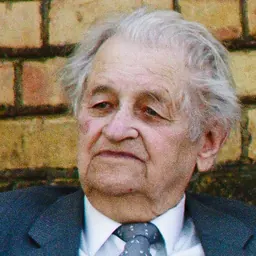
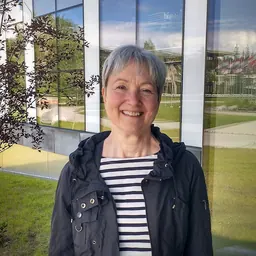
Contemporaries
People whose lives overlapped Neville Alexander's




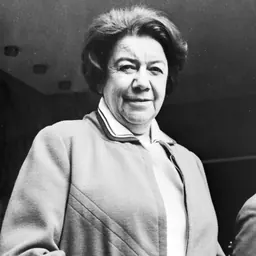
Frequently asked questions
Who was Neville Alexander?
South African activist (1936–2012)
When was Neville Alexander born?
Neville Alexander was born on 22 October 1936 in Cradock.
When did Neville Alexander die?
Neville Alexander died on 27 August 2012 in Cape Town.
What was Neville Alexander's occupation?
Neville Alexander was a linguist, university teacher, pedagogue and literary scholar.
What was Neville Alexander known for?
Neville Alexander was known for Linguapax Prize.
What nationality was Neville Alexander?
Neville Alexander was South African.
Sources & further reading
· Wikipedia: Neville Alexander
Cite this page
APA: Biography.guide. (2026). Neville Alexander. https://biography.guide/neville-alexander/
MLA: "Neville Alexander." Biography.guide, https://biography.guide/neville-alexander/.
Chicago: "Neville Alexander." Biography.guide. https://biography.guide/neville-alexander/.
Data last updated: 2026-09-22 · Spot an error? Report a correction.
Page generated 2026-09-27 05:26 UTC