
About Neri di Bicci
Lived 1418 – 1492 (aged 73–74). Neri di Bicci was a painter.
Neri di Bicci (1419–1491) was an Italian painter active in his native Florence. A prolific painter of mainly religious themes, he studied under his father, Bicci di Lorenzo, who had in turn studied under his father, Lorenzo di Bicci. The three thus formed a lineage of great painters that began with Neri's grandfather.
Neri di Bicci's main works include a fresco of Saint John Gualbert Enthroned with Ten Saints (1455) for the church of San Pancrazio, Florence (now in the nearby church of Santa Trinita), an Annunciation (1464) for Santa Maria alla Campora (now in the Florentine Academy), two altarpieces (one dated 1452) in the Diocesan Museum of San Miniato, a Coronation of the Virgin (1472) on the high altar of the abbey church at San Pietro a Ruoti (Bucine), and the Madonna with Child with Four Female Saints (1474) on loan to the Sacred Art Museum in Casole d'Elsa from the Pinacoteca Nazionale in Siena.
Neri is most famous for his Ricordanze, a series of journals he kept from 1453 until 1475 in which he chronicled the numerous types of commissions he accepted (altarpieces, small devotional panels, frescoes, shop signs, candlesticks, painted sculpture, etc.) and the rates of remuneration for his work, as well as his pupils, collaborators and patrons. The Ricordanze are the most extensive such document from the fifteenth century. They are today preserved in the library of the Uffizi Gallery.
Early life When Neri was born in 1419, he was the third in line of the Bicci family of artists. His grandfather Lorenzo di Bicci was a contemporary of Jacopo di Cione and Niccolò di Pietro Gerini, and a prolific painter of altarpieces (Empoli, Collegiata di Sant'Andrea; Florence, Galleria dell'Accademia; Loro Ciuffena, Santa Maria Assunta), frescoes and small-scale devotional panels for domestic interiors (Baltimore, Walters Art Museum; Nashville, Vanderbilt University Fine Arts Gallery; San Francisco, Legion of Honor; Rome, Museo di Palazzo Venezia). Neri's father and teacher, Bicci, was also an artist who was even more prolific than his father. Neri spent much of his youth in Bicci's workshop painting in a very similar style. In 1434, at the age of fifteen, Neri joined the Florentine painters' confraternity the Compagnia di San Luca.
Works These two Archangel Raphael and Tobias pieces were most likely created one after the other. 1.1 was created in the workshop between 1457 and 1463, while 1.2 was created in the early 1460s. The subject of the Archangel was extremely popular in Florence in the 1460s, and artists such as Francesco Botticini and Piero del Pollaiuolo illustrated this bible story. Although some works similar to the two seen here can be attributed to Jacopo da Sellaio, a higher proportion are from Neri's workshop. 1.1 and 1.2 are clearly very similar in terms of style and the way the characters are arranged. They are both by Neri and were created in his shop, possibly with the help of some assistants. Both works feature the Archangel on the left looking back at Tobias while holding his hand. There is also a small white dog in both, and the Archangel is holding a box in his right hand. In 1.1, the chin, forehead, and hair of Tobias and the face of the Archangel have all been reinforced, and the fingers of the Archangel's right hand and Tobias's left hand are modern. The painting is overall covered with dirt and unevenly preserved, and only the subsidiary parts of the picture are well preserved. The box and upper part of the fish have also been regilt. Virgin and Child with Six Saints (1456). Chapel of St. James Cathedral, Seattle. http://www.stjames-cathedral.org/Tour/renaissance.htm
On 6 August 1456, Neri di Bicci received a commission from Bartolomeo di Lucha Martini for an altarpiece of the Virgin and child with six saints. This commission has been identified with the painting now hanging in the chapel of St. James Cathedral in Seattle. It is one of the few works of Neri di Bicci in the United States. The painting underwent significant restoration at the Seattle Art Museum in 2004. The St. James Cathedral altarpiece depicts the Virgin and Child in the center, flanked by saints: Luke, Bartholomew, and Lawrence on the left, John the Baptist, Martin, and Sebastian on the right. The bent arm of the infant Christ is unusual in Neri di Bicci's work—the nursing infant reaches into his mother's blouse, suggesting the Virgin lactans, or nursing Virgin.
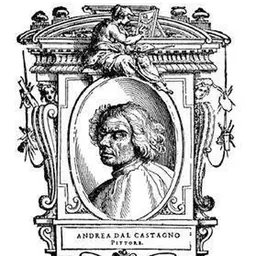
On 6 June 1460, Neri was commissioned by Bartolommeo Lenzi to create an altarpiece for the church of the Innocents. Neri chose to depict a Coronation of the Virgin with Saints. This panel was clearly inspired by works of Andrea del Castagno, with the figures portrayed as freer than normal and other stylistic similarities.
In 1471, Neri was commissioned to create an altarpiece for the Palla family chapel in the Santo Spirito in Florence. In this time period, it was very common for families of a high status to have their personal chapel in a larger church. The chapels would typically be located on the left and right sides of the aisle where they could be easily viewed by worshippers. Having a personal chapel showed off a family's personal wealth and at the same time showed how charitable they were by creating a chapel that the people of their city could use. Historians know that 1.4 was truly painted by Neri due to a record made in his workshop book on May 7, 1471, which states, “began to paint for Mariotto di marco della palla an altarpiece on which will appear the Angel Raphael and Tobias, to the right the Angel Michael, and to the left Angel Gabriel; in addition below the feet of Angel Raphael, a small picture representing the crucifixion with St. John and the Virgin.” It was also recorded that three smaller pictures were supposed to be underneath the main one, but they have been lost. This picture is famous for the way Neri expertly depicts the energetic figure of Angel Michael versus the quiet thoughtfulness of Angel Gabriel and the helpfulness of Angel Raphael. This picture was created using tempera on panel and has red undertones throughout. These red undertones are important because they contrast with the gold, making it seem brighter. This particular subject was most likely chosen because the Palla family had a young family member who was going off to a job or to university. It was very common at this time that when a younger member of the family left home, a picture would be ordered and Tobias would be depicted as the person who was about to leave. The Archangel Raphael helps Tobias in his life, and the family hopes the same will happen for their child.
Raphael and Tobit also appear in the predella of the artist's Madonna and Child with Two Saints (c.1475). One of the last records we have of Neri is from April first, 1488, when he received 8 bushels of grain in Santa Maria Monticelli as payment for a painting. Later on May tenth, the same year, he was paid for an untraceable frontal portraying the "Legend of St Francis" and the "Building of the Santa Maria degli Angeli". Francesco Botticini also began studying art at Neri's workshop after signing a one-year contract. Despite this contract, Francesco decided to leave Neri's workshop in July 1460 after only nine months of training, presumably due to some prior training from his father, who was a painter. Botticini would go on to become an extremely successful artist mentioned in Vasari's Lives of the Artists and painting the famous Assumption of the Virgin with Saints and the Angelic Hierarchies. Neri's pupils also include Stagio di Taddeo d'Antonio, Dionigi d'Andrea di Bernardo di Lottino, and Giosuè di Santi. The workshop is recorded as creating more than fifty Madonna and child paintings and the Virgin with the girdle seven times. The workshop was so popular, in fact, that on 22 November 1458, Neri had to rent a second workshop at the Porta Rossa in the centre of Florence. This gave him and his pupils more room to work on larger paintings and to take on more clients.
The Recordanze (The Records) The records are an 189-page-long workshop diary that began on 10 March 1453 and continued until 24 April 1475. These are the most extensive 15th-century documents historians have relating to a 15th-century painter and are still preserved in the library of the Uffizi Gallery. The one that is preserved is likely the fourth diary labelled "D" and referring to diary "C" often. The record included all types of information about the art pertaining to the workshop, including commissions for paintings, the names, professions and social status of patrons, descriptions and dimensions of works, techniques and colours used, type of carpentry, the style of frames, the scenes depicted, and prices. Because of this record, we know of many of the works of Neri, even ones that to this day have not been located. We also know that the workshop took commissions from all types of people in Italy, such as artisans of the Chianti region, noble families like the Spini, Soderini and Rucellai, small Florentine shopkeepers, abbots of the Vallombrosans of Santa Trìnita and S Pancrazio, and ordinary parish priests from the surrounding countryside. Neri died in 1491 and left behind a legacy in his pupils and in his four sons and two daughters. None of his children became artists, ending the legacy started by his grandfather, and instead turned to the mercantile business. Neri is buried in the Saint Mary of Carmine church. To this day, he is less famous for being an artist of talent, but instead for keeping these meticulous records of his works and for the sheer number of works his workshop created.
Posthumous reputation None of Neri di Bicci's sons became painters, making the painter the last in the artistic dynasty founded by his father. Giorgio Vasari devoted a joint biography to the Bicci in his "Lives of the Artists," in which he confusedly described Neri as Lorenzo's second son and thus the brother of Bicci. Much of Bicci's work was wrongly attributed by Vasari to Neri. These false attributions were corrected in 1768, with Domenico M. Manni's edition of Baldinucci's Notizie dei professori del disegno. This mistake was reiterated by Gaetano Milanesi in his 1878 commentary on Vasari's Vite, and by the early twentieth-century scholars who assembled Neri's corpus, such as Bernard Berenson.
Don’t just read it —
keep it.
Full-length biographies made to live with: read them, listen on the way to work, watch them tonight.
- E-book
- Audio
- Video
Instant download · yours to keep · every purchase keeps this site free
Important facts
more
di bicci, Neri, Bicci di NériPeople in Neri di Bicci's life
Named in this biography and alive at the same time






Related people
Same field, nearest in time

Contemporaries
People whose lives overlapped Neri di Bicci's
Frequently asked questions
Who was Neri di Bicci?
Italian renaissance painter (1418-1492)
When was Neri di Bicci born?
Neri di Bicci was born in 1418 in Florence.
When did Neri di Bicci die?
Neri di Bicci died in 1492 in Florence.
What was Neri di Bicci's occupation?
Neri di Bicci was a painter.
Sources & further reading
Cite this page
APA: Biography.guide. (2026). Neri di Bicci. https://biography.guide/neri-di-bicci/
MLA: "Neri di Bicci." Biography.guide, https://biography.guide/neri-di-bicci/.
Chicago: "Neri di Bicci." Biography.guide. https://biography.guide/neri-di-bicci/.
Data last updated: 2026-09-20 · Spot an error? Report a correction.
Page generated 2026-09-27 05:18 UTC