
Neil Cohn
American cognitive scientist
About Neil Cohn
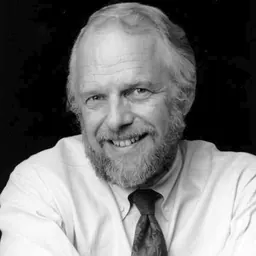
Born 1980. Neil Cohn is an American cognitive scientist, known for Comics theory and Emoji.
Neil Cohn (; born 1980) is an American cognitive scientist and comics theorist. His research focuses on the cognition of understanding comics, and uses an interdisciplinary approach combining aspects of theoretical and corpus linguistics with cognitive psychology and cognitive neuroscience.
Cohn’s work argues that common cognitive capacities underlie the processing of various expressive domains, especially verbal and signed languages and what he calls “visual language”—the structure and cognition of drawings and visual narratives, particularly those found in comics. His 2020 book, Who Understands Comics? explored the proficiency required to understand visual narratives, and was nominated for a 2021 Eisner Award for Best Academic/Scholarly Work. His theories on visual language provided the foundation for the creation of automatically generated news comics for the BBC.
Cohn's research has also examined the comprehension and linguistic status of emoji. He has also helped propose and design several emoji.
Biography
Cohn began developing his theories as an undergraduate at UC Berkeley where he graduated in 2002. He then spent several years as an independent scholar before studying under linguist Ray Jackendoff and psychologists Gina Kuperberg and Phillip Holcomb at Tufts University where he received his PhD in psychology in 2012. He then did a postdoctoral fellowship at UC San Diego working with Marta Kutas and Jeff Elman. In 2016, he joined the faculty of the Tilburg center for Cognition and Communication at Tilburg University. He is the son of Leigh Cohn and Lindsey Hall.
Visual language theory Cohn’s work challenges many of the existing conceptions of both language and drawing. He argues that language involves an interaction between an expressive modality, meaning, and a grammar. Just as sign languages differ from gestures in that they use a vocabulary and grammar, “visual languages” differ from individual drawings because they have a vocabulary of patterned graphic representations and a grammar constraining the coherence of sequential images. Full visual languages primarily appear alongside written languages in comics of the world, though they also appear outside of comics, such as in sand drawings used by Australian Aboriginals. Just as spoken languages differ, so do visual languages: Japanese manga are written in “Japanese Visual Language” while American comics are written in “American Visual Language.” In addition, Cohn has argued that the development of visual languages may follow similar constraints as learning spoken and signed languages, and that most people do not learn how to draw proficiently because they do not acquire visual vocabularies within a critical period.
Cohn's primary research program with visual language theory emphasizes that a narrative structure operates as a “grammar” to sequential images analogously to syntactic structure in sentences. While narrative grammar uses a discourse level of information, its function and structure is similar to syntax in that it organizes categorical roles in hierarchic constituents in order to express meaning. Cohn’s work in cognitive neuroscience has suggested that manipulation of this narrative grammar elicits similar brain responses as manipulations of syntax in language (i.e. N400, P600, and Left Anterior Negativity effects).
In 2020, Cohn was awarded a Starting Grant from the European Research Council to study cross-cultural diversity in the structures of the visual languages used in comics around the world by building a multicultural corpus of annotated comics, and to examine the relationship of those structures to those in spoken languages.
Comic authorship Cohn began working in the comic industry at age 14 by helping to run convention booths for Image Comics and Todd McFarlane Productions throughout his teenage years. Beyond illustrating his academic books, Cohn’s creative work appears in several graphic novels, like We the People: A Call to Take Back America (2004) with Thom Hartmann, and illustrations for academic works, including Ray Jackendoff’s A User’s Guide to Thought and Meaning (2012), and the comic strip “Chinese Room” with philosopher Daniel Dennett.
Selected works
Don’t just read it —
keep it.
Full-length biographies made to live with: read them, listen on the way to work, watch them tonight.
- E-book
- Audio
- Video
Instant download · yours to keep · every purchase keeps this site free
Important facts
People in Neil Cohn's life
Named in this biography and alive at the same time






Related people
Same field, nearest in time




Contemporaries
People whose lives overlapped Neil Cohn's





Frequently asked questions
Who is Neil Cohn?
American cognitive scientist
When was Neil Cohn born?
Neil Cohn was born on 11 January 1980.
What is Neil Cohn's occupation?
Neil Cohn is a cognitive scientist.
What is Neil Cohn known for?
Neil Cohn is known for Comics theory and Emoji.
What nationality is Neil Cohn?
Neil Cohn is American.
Sources & further reading
Cite this page
APA: Biography.guide. (2026). Neil Cohn. https://biography.guide/neil-cohn/
MLA: "Neil Cohn." Biography.guide, https://biography.guide/neil-cohn/.
Chicago: "Neil Cohn." Biography.guide. https://biography.guide/neil-cohn/.
Data last updated: 2026-09-20 · Spot an error? Report a correction.
Page generated 2026-09-27 05:34 UTC