
About Neil Ardley
Lived 1937 – 2004 (aged 66). Neil Ardley was a British pianist, composer, jazz musician, writer, young adult author and musician.
Neil Richard Ardley (26 May 1937 – 23 February 2004) was a prominent English jazz composer and pianist, who from 1964 to 1970 was director of the New Jazz Orchestra. He also made his name as the author of more than 100 popular books on science and technology, and on music.
Early years Neil Ardley was born in Wallington, Surrey. He attended Wallington County Grammar School and at the age of 13 started to learn the piano and later the saxophone. He read Chemistry at Bristol University, where he also played both piano and saxophone in jazz groups, and from which he graduated in 1959 with a BSc degree.
Career Music Ardley moved to London and studied arranging and composing with Ray Premru and Bill Russo from 1960 to 1961. He joined the John Williams Big Band as pianist, writing both arrangements and new compositions, and from 1964 to 1970 was the director of the newly formed New Jazz Orchestra, which employed some of the best young musicians in London, including Ian Carr, Jon Hiseman, Barbara Thompson, Dave Gelly, Mike Gibbs, Don Rendell, and Trevor Tomkins.
In the late 1960s, encouraged by record producer and impresario Denis Preston, Ardley began composing in earnest, combining classical and jazz methods. The New Jazz Orchestra album Le Déjeuner sur l'Herbe (1969), taking some inspiration from the orchestral jazz of Gil Evans, is now considered a classic of British jazz. While it includes intricate arrangements of "Nardis" by Miles Davis and "Naima" by John Coltrane, the rest of the pieces on the album tend to look beyond the dominant African-American influences and were composed by young writers associated with the orchestra – including Ardley himself on the extended title track, Michael Garrick, Mike Gibbs, Howard Riley and Mike Taylor. Although not issued under the New Jazz Orchestra name, Ardley's subsequent releases Greek Variations and Other Aegean Exercises (1970) and Symphony of Amaranths (1972) continued the orchestra and its aesthetic in all but name, and were critically acclaimed. reached number 22 in the New Musical Express top 24 albums of 1976. Duncan Heining judges it to be "his masterpiece". However, as he began work on an all-electronic album in 1980, Ardley's recording contract was suddenly terminated, and he fell back on his writing and publishing career. He continued to play and compose, especially with Zyklus, the electronic jazz group he formed with composer (and former student) John L. Walters, Derbyshire musician Warren Greveson and Ian Carr.
Singing in local choirs in the later 1990s led Ardley to start composing choral music, and this occupied most of his musical attention until his death.
Just as his composing and performance had been moved forward by the introduction and development of technology, so too with his publishing career, as computers began to become more and more important. In 1984, Ardley began to write mainly for publishing company Dorling Kindersley, producing a series of books that included the best-selling (more than three million copies worldwide) and award-winning The Way Things Work (1988), illustrated by David Macaulay, He died in Milford, Derbyshire, where Vivien still lives. She published a full-length biography of Neil Ardley in 2023.
Works Selected choral compositions include:
Creation Mass (2001), a setting of 11 poems by long-term collaborator Patrick Huddie Cantabile (2003), commissioned by Bakewell Choral Society to mark its 25th anniversary
Discography 1965: The New Jazz Orchestra, Western Reunion (Decca, 1965) 1971: A Symphony of Amaranths (Regal Zonophone, 1972) 1971: The New Jazz Orchestra, On The Radio: BBC Sessions 1971 (Dusk Fire, 2017) 1973: Mike Taylor Remembered with Jon Hiseman, Barbara Thompson, Ian Carr, Henry Lowther, Dave Gelly, Norma Winstone (Trunk, 2007) 1975: Kaleidoscope of Rainbows - QEH, 20th October 1975 (Jazz In Britain, 2021) [2CD] – live at the Queen Elizabeth Hall 1975: Will Power - includes Ardley's "Shall I Compare Thee", Southwark Cathedral, 27 April 1974 (Argo, 1975) 1978: Harmony of the Spheres (Decca, 1989) 1991?: Zyklus, Virtual Realities (AMP, 1991) 2000: Creation Mass words by Patrick Huddie
Don’t just read it —
keep it.
Full-length biographies made to live with: read them, listen on the way to work, watch them tonight.
- E-book
- Audio
- Video
Instant download · yours to keep · every purchase keeps this site free
Important facts
People in Neil Ardley's life
Named in this biography and alive at the same time




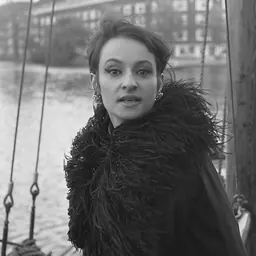


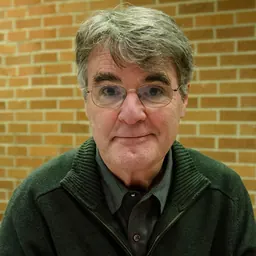
Related people
Same field, nearest in time



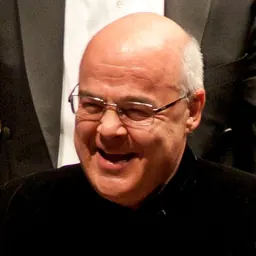
Contemporaries
People whose lives overlapped Neil Ardley's
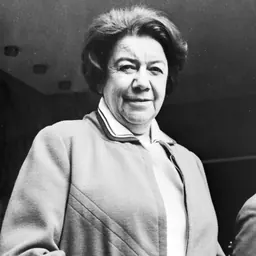

Frequently asked questions
Who was Neil Ardley?
British jazz musician (1937–2004)
When was Neil Ardley born?
Neil Ardley was born on 26 May 1937 in Wallington.
When did Neil Ardley die?
Neil Ardley died on 23 February 2004 in Bakewell.
What was Neil Ardley's occupation?
Neil Ardley was a pianist, composer, jazz musician, writer, young adult author and musician.
What nationality was Neil Ardley?
Neil Ardley was British.
Sources & further reading
Cite this page
APA: Biography.guide. (2026). Neil Ardley. https://biography.guide/neil-ardley/
MLA: "Neil Ardley." Biography.guide, https://biography.guide/neil-ardley/.
Chicago: "Neil Ardley." Biography.guide. https://biography.guide/neil-ardley/.
Data last updated: 2026-09-20 · Spot an error? Report a correction.
Page generated 2026-09-27 05:11 UTC