
About Neferhotep I
Lived 1800 BC – 1730 BC. Neferhotep I was an Egyptian statesperson.
Khasekhemre Neferhotep I was an Egyptian pharaoh of the mid Thirteenth Dynasty ruling in the second half of the 18th century BC during a time referred to as the late Middle Kingdom or early Second Intermediate Period, depending on the scholar. One of the best attested rulers of the 13th Dynasty, Neferhotep I reigned for 11 years according to the Turin King List.
The grandson of a non-royal townsman from a Theban family with a military background, Neferhotep I's relation to his predecessor Sobekhotep III is unclear and he may have usurped the throne. Neferhotep I was likely contemporaneous with kings Zimri-Lim of Mari and Hammurabi of Babylon. Little is known of his activities during his decade-long reign and the most important document surviving from his rule is a stela from Abydos recounting the fashioning of an image of Osiris and Neferhotep's determination that it be made "as instructed by the gods at the beginning of time".
Origins Neferhotep I seems to have come from a non-royal family of Thebes with a military background. He also possibly had another son named Wahneferhotep.
Sobekhotep IV, whose reign marks the apex of the 13th Dynasty, mentions on a stela (Cairo JE 51911) that was placed in the temple of Amun at Karnak that he was born in Thebes: My majesty [came] to the Southern City since I wanted to see the august god; it is my city in which I was born. ... I saw the vigor of his majesty (i.e. Amun) at every single feast when I was a child who could not yet conceive. Similarly, Neferhotep I could well have been born in Thebes; even though the capital of Egypt during the 13th Dynasty was still Itjtawy in the north, near the modern village of el-Lisht.
Reign
Attestations Two naoses housing two statues each of Neferhotep, as well as a pedestal bearing Neferhotep's and Sobekhotep IV's cartouches, have been found in Karnak. There are also a few attestations from the Faiyum region where the capital of Egypt was located at the time, in particular a statuette of the king dedicated to Sobek and Horus of Shedet, now on display in the Archaeological Museum of Bologna. as well as the 7th column, 25th row of the Turin canon. The Turin king list credits Neferhotep with a reign of 11 years and 1 to 4 months, the second or third longest of the dynasty after Merneferre Ay (23 years) and Sobekhotep IV (9–12 years).
On the other hand, the absolute chronological position of Neferhotep is debated, with Ryholt and Baker seeing him respectively as the 26th and 27th pharaoh of the 13th Dynasty while Detlef Franke and Jürgen von Beckerath contend that he was only the 22nd ruler. Similarly, the absolute dating of Neferhotep's reign varies by as much as 40 years between the scholars, with Kim Ryholt dating the beginning of his reign and Thomas Schneider . it is rejected by others, including Manfred Bietak, Daphna Ben-Tor and James and Susan Allen, who contend that Neferhotep I reigned over the whole of Egypt. Examples of evidence for this point of view are the several attestations of Neferhotep found northeast of Egypt, in the Levant, in particular the stela of the Governor of Byblos Yantinu possibly indicating that the two were contemporary. If this is so, Neferhotep I would have been contemporary with either Khyan or one of his predecessors, such as Sakir-Har, and would not have reigned over the Nile Delta. This conclusion is strongly debated at the moment since Sobekhotep IV and Khyan are separated by 100 years in the conventional Egyptian chronology.
Activities In spite of the numerous attestations known for Neferhotep I, relatively little is known of the activities he undertook during his decade-long reign. The pedestal indicate that he undertook some building works there.
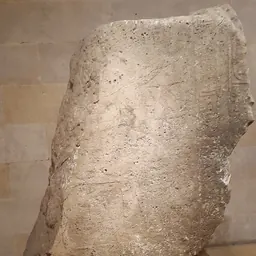
The most important monument of the king surviving to this day is a large, heavily eroded stela dating to his second regnal year and found in Abydos. The inscription on the stela is one of the few ancient Egyptian royal texts to record how a king might conceive of and order the making of a sculpture. As usual, the stela begins with Neferhotep's titulary: The Majesty of the Horus: Founder of the Two Lands, He of the Two Ladies: Revealing the Truth, Falcon of Gold: Lasting of Love, King of Upper and Lower Egypt Khasekhemre, Son of Ra Neferhotep, born to the king's mother Kemi, granted life, stability, and dominion like Ra forever. It then describes how Neferhotep, residing in his palace "Exalted of Beauty" likely located in Itjtawy, desires that an image of Osiris be made in order for it to participate in the yearly festival held in the god's honour in Abydos in Upper Egypt. To this end, Neferhotep first enquires to his officials about instructions regarding the making of divine images said to be contained in "the primeval writings of Atum". and especially in sculpture some remarkably high quality art works were produced.
Tomb
As of 2017, the tomb of Neferhotep I has not been formally identified, although a strong case now exists for it to be in Abydos. Since 2013 a team of archaeologists from the University of Pennsylvania under the direction of Josef W. Wegner has been excavating a Late Middle Kingdom—Second Intermediate Period royal necropolis in Abydos, at the foot of a natural hill known to the ancient Egyptians as the Mountain of Anubis. The necropolis is located just next to the massive funerary complex of Senusret III of the 12th Dynasty and comprises two further large tombs, likely to have been pyramids built during the mid-13th Dynasty, as well as no less than eight royal tombs, possibly dating to the Abydos Dynasty. One of the large tombs, which was extensively plundered of goods and stones during the Second Intermediate Period, known today as tomb S10, is now believed to belong to king Sobekhotep IV, Neferhotep's brother, on the basis of several finds showing Sobkehotep's name from the nearby royal tombs, such as that of Woseribre Senebkay. As a corollary, Wegner has suggested that the anonymous, large, neighboring tomb S9 could have belonged to Neferhotep I. Egyptologists have also noted that both kings were very active in the Abydos region during their reigns.
Older hypotheses concerning the location of Neferhotep's tomb included that proposed by Nicolas Grimal, that Neferhotep was buried in a pyramid at el-Lisht, close to that of Senusret I, an opinion shared by Michael Rice. The shawabti was wrapped in linen and placed in a miniature coffin, which is dated to the 13th Dynasty on stylistic grounds. This together with the name of Wahneferhotep and his title of "King's son" indicate that Wahneferhotep was likely a son of Neferhotep I,
Coregencies
Don’t just read it —
keep it.
Full-length biographies made to live with: read them, listen on the way to work, watch them tonight.
- E-book
- Audio
- Video
Instant download · yours to keep · every purchase keeps this site free
Important facts
People in Neferhotep I's life
Named in this biography and alive at the same time
Related people
Same field, nearest in time



Contemporaries
People whose lives overlapped Neferhotep I's
Frequently asked questions
Who was Neferhotep I?
Egyptian pharaoh
When was Neferhotep I born?
Neferhotep I was born in 1800 BC.
When did Neferhotep I die?
Neferhotep I died in 1730 BC.
What was Neferhotep I's occupation?
Neferhotep I was a statesperson.
What nationality was Neferhotep I?
Neferhotep I was Egyptian.
Sources & further reading
Cite this page
APA: Biography.guide. (2026). Neferhotep I. https://biography.guide/neferhotep-i/
MLA: "Neferhotep I." Biography.guide, https://biography.guide/neferhotep-i/.
Chicago: "Neferhotep I." Biography.guide. https://biography.guide/neferhotep-i/.
Data last updated: 2026-09-20 · Spot an error? Report a correction.
Page generated 2026-09-27 05:18 UTC