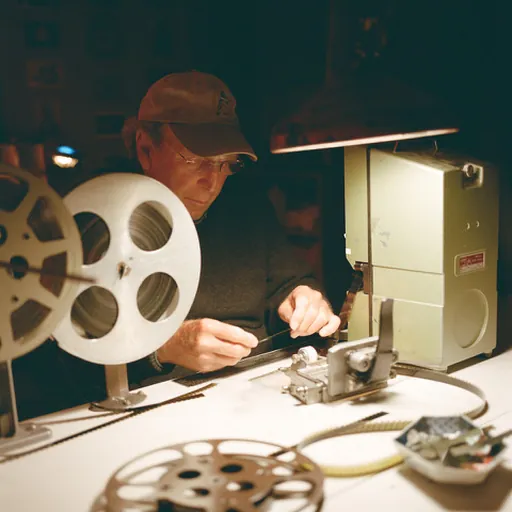
Nathaniel Dorsky
Filmmaker, film editor, author (born 1943)
About Nathaniel Dorsky
Born 1943. Nathaniel Dorsky is an American film director, film editor and filmmaker.
Nathaniel Dorsky (born 1943) is an American experimental filmmaker and film editor. His film career began during the New American Cinema movement of the 1960s, when he met his partner Jerome Hiler. He won an Emmy Award in 1967 for his work on the film Gauguin in Tahiti: Search for Paradise.
After moving to San Francisco in the 1970s, Dorsky eventually edited some of his earlier footage to create the 1982 film Hours for Jerome, which was inducted into the United States National Film Registry. Through his short lyric films, he developed the style of polyvalent montage for which he is known. In addition to his own films, Dorsky has worked as an editor or film doctor on other projects, particularly documentaries.
Early life Dorsky was born in New York City in 1943 and grew up in Millburn, New Jersey. Growing up, Dorsky learned about Buddhism through attending study groups with his father. He made 8 mm nature films inspired by Disney's True-Life Adventures series.
Dorsky attended Antioch College for a year, and through a work-study program he edited sound at WNYC at KPFA. He moved to New York City to study film at NYU.
Career
In New York, Dorsky was exposed to the local experimental film scene and made a trilogy of films about his childhood. Shortly after premiering the first film of the trilogy, Ingreen, he met Jerome Hiler at the Film-Makers' Cooperative. He won an Emmy Award for the film Gauguin in Tahiti: Search for Paradise which was directed by Martin Carr in 1967. Ralph Steiner hired Dorsky to edit three of his final films: A Look at Laundry, Beyond Niagara, and Look Park.
Dorsky continued shooting footage during his time in New Jersey but stopped editing and releasing films for many years. Both were projectionists and programmers at the local branch of the Sussex County Area Reference Library, which commissioned them to make an industrial film. The resulting piece Library features a minimalist soundtrack by Tony Conrad and narration by Beverly Grant.
Dorsky and Hiler stayed in New Jersey until 1971 when they moved to San Francisco.
In the early 1980s, he edited his films from living at Lake Owassa to make Hours for Jerome, a two-part film structured around the seasons. He experimented with silent speed in making the film, and since then he has made silent films which are screened at a reduced frame rate.
Dorsky's other short films from the 1980s concentrated on the film grain, texture, and color. Ariel, like Pneuma, was made without the use of a camera. 17 Reasons Why is composed of unslit 8 mm footage, resulting in a four-image arrangement.
Dorsky co-directed the 1986 documentary What Happened to Kerouac? with Richard Lerner, director of Revenge of the Cheerleaders. Lerner brought him onto the project to shoot footage that would accompany tapes of Jack Kerouac reading his own poems. Dorsky has since continued working as a film doctor, particularly for documentary films supported by the Film Arts Foundation in San Francisco.
Kodachrome, the color reversal film stock preferred by Dorsky since childhood, was discontinued in the late 2000s. His films Sarabande and Compline were made as explorations of the stock's properties. As he shifted to color negative film in the 2010s, Dorsky adjusted to working with the new stocks by incorporating in-camera improvisations, Dorsky shot a series of seven films at the San Francisco Botanical Garden in 2017. These comprise the Arboretum Cycle, which captures the natural light propagating through plants at the arboretum over the course of a year.
Dorsky was a visiting instructor at Princeton University in 2008 and he has been the recipient of many awards including a Guggenheim Fellowship 1997 and grants from the National Endowment of the Arts, two from the Rockefeller Foundation, and one from the LEF Foundation, the Foundation for Contemporary Arts, and the California Arts Council. He has presented films at the Museum of Modern Art, the Centre Pompidou, the Tate Modern, the Filmoteca Española, Madrid, the Prague Film Archive, the Vienna Film Museum, the Pacific Film Archive, the Harvard Film Archive, Princeton University, Yale University, and frequently exhibits new work at the New York Film Festival's Views from the Avant-Garde and the Wavelengths program of the Toronto International Film Festival. In spring 2012 Dorsky took actively part in the three-month exposition of Whitney Biennial.
Dorsky's films are available only as 16 mm film prints and are distributed by Canyon Cinema in San Francisco and Light Cone in Paris. Prints of stills from his films are available at the Gallery Paule Anglim, San Francisco, and the Peter Blum Gallery, New York City.
Style Most of Dorsky's films are silent works roughly 20 minutes long. He works with a 16 mm spring-wound Bolex camera, which limits the length of his shots to no more than thirty seconds.
Dorsky is known for working in a form of montage described as "polyvalent" or "open-form". Critic P. Adams Sitney characterizes this form as a series of static shots that act as individual, monadic units, arranged together in a basic shot-cut-shot construction. Unlike in narrative cinema, recurring images are atypical, and the procession of images does not quickly converge on a fixed subject or theme. Instead, new monadic images are continually introduced, suppressing anticipation of the future and remaining in the present moment.
Dorsky's compositions avoid over-determined images that rely on established symbols or meanings so that the audience constructs meanings while viewing.
Dorsky's work has been an influence on filmmakers including Timoleon Wilkins and Konrad Steiner.
Filmography
Ingreen (1964) Arbor Vitae (1999–00) Love's Refrain (2000–01) The Visitation (2002) Threnody (2004) Song and Solitude (2005–06) Kodachrome Dailies from the Time of Song and Solitude (Reel 1) (2005–2006) Kodachrome Dailies from the Time of Song and Solitude (Reel 2) (2005–2006) Winter (2007) Sarabande (2008) Compline (2009) Aubade (2010) Pastourelle (2010) The Return (2011) August and After (2012) April (2012) Song (2013) Spring (2013) Summer (2013) December (2014) February (2014) Avraham (2014) Intimations (2015) Prelude (2015) Autumn (2016) The Dreamer (2016) Lux Perpetua I (2000–2002/2016) Lux Perpetua II (1999–2002/2016) Other Archer (2003/2016) Death of a Poet (2003/2016) Ossuary (1995–2005/2016) Arboretum Cycle (2017, 137 min.) comprising the following films: Elohim (2017) Abaton (2017) Coda (2017) Ode (2017) September (2017) Monody (2017) Epilogue (2017) Colophon (for the Arboretum Cycle) (2018) Calyx (2018) Apricity (2019) Interlude (2019) Canticles (2019) Caracole (for Cecilia) (2019) Lamentations (2020) Temple Sleep (2020) William (2020) Emanations (2020) Ember Days (2021) Terce (2021) Interval (2021) Caracole (for Mac) (2022) Naos (2022) Dialogues (2022) Place d'Or (2023) Pavane (2023) Caracole (for Izcali) (2023) O Death (2023) Dreams Reveal a Weightless World (2016–2024)
Don’t just read it —
keep it.
Full-length biographies made to live with: read them, listen on the way to work, watch them tonight.
- E-book
- Audio
- Video
Instant download · yours to keep · every purchase keeps this site free
Important facts
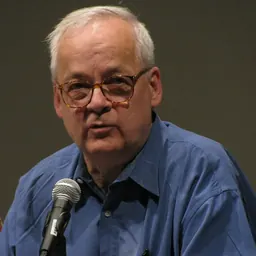
People in Nathaniel Dorsky's life
Named in this biography and alive at the same time

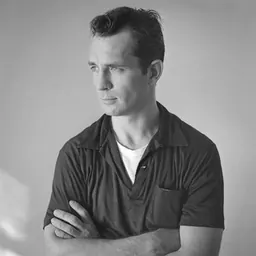




Related people
Same field, nearest in time

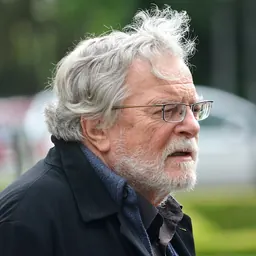

Contemporaries
People whose lives overlapped Nathaniel Dorsky's


Frequently asked questions
Who is Nathaniel Dorsky?
Filmmaker, film editor, author (born 1943)
When was Nathaniel Dorsky born?
Nathaniel Dorsky was born in 1943 in New York City.
What is Nathaniel Dorsky's occupation?
Nathaniel Dorsky is a film director, film editor and filmmaker.
What nationality is Nathaniel Dorsky?
Nathaniel Dorsky is American.
Sources & further reading
Cite this page
APA: Biography.guide. (2026). Nathaniel Dorsky. https://biography.guide/nathaniel-dorsky/
MLA: "Nathaniel Dorsky." Biography.guide, https://biography.guide/nathaniel-dorsky/.
Chicago: "Nathaniel Dorsky." Biography.guide. https://biography.guide/nathaniel-dorsky/.
Data last updated: 2026-09-20 · Spot an error? Report a correction.
Portrait: Wikimedia Commons · author & licence
Page generated 2026-09-27 04:58 UTC